Absorption vs Adsorption: Key Differences You Need to Know
Introduction to Absorption and Adsorption
When studying chemical and physical processes, it's easy to confuse absorption and adsorption due to their similar spelling and both being mass transfer phenomena. However, these two processes are fundamentally different in how materials interact with each other. Have you ever wondered why activated charcoal is so effective at removing odors or why your body can absorb medicine? The answers lie in understanding these two distinct processes.
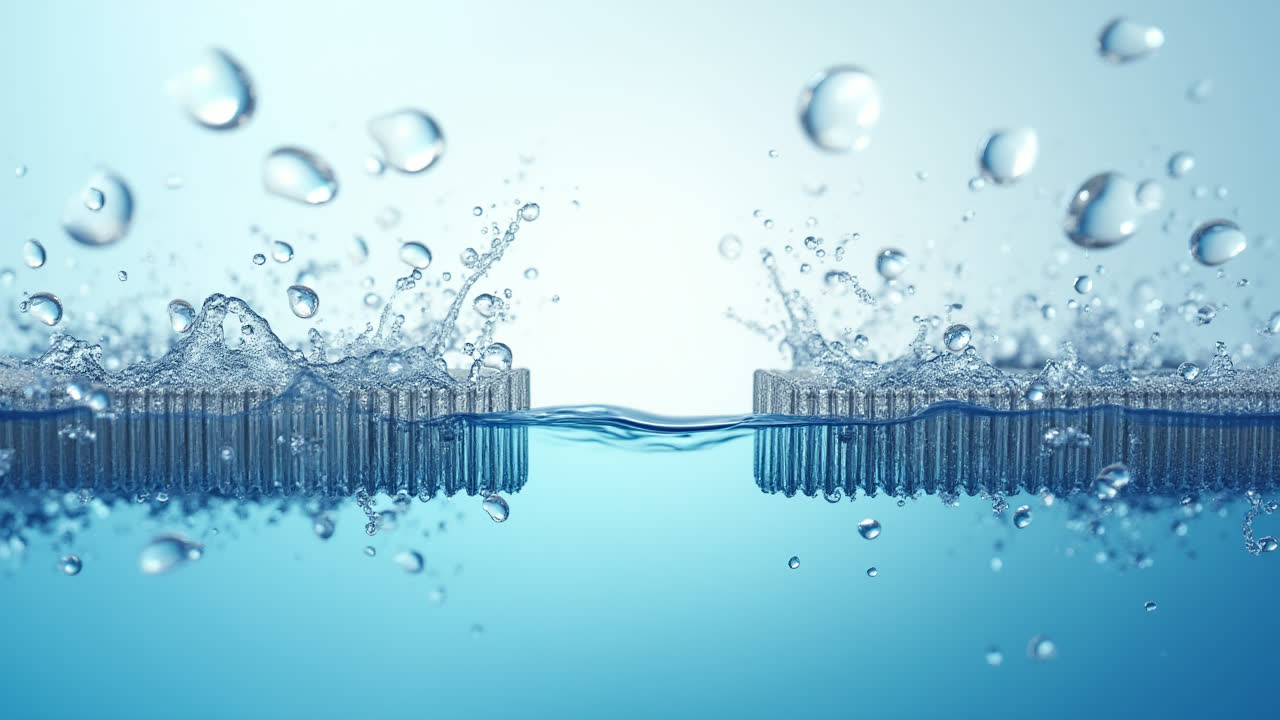
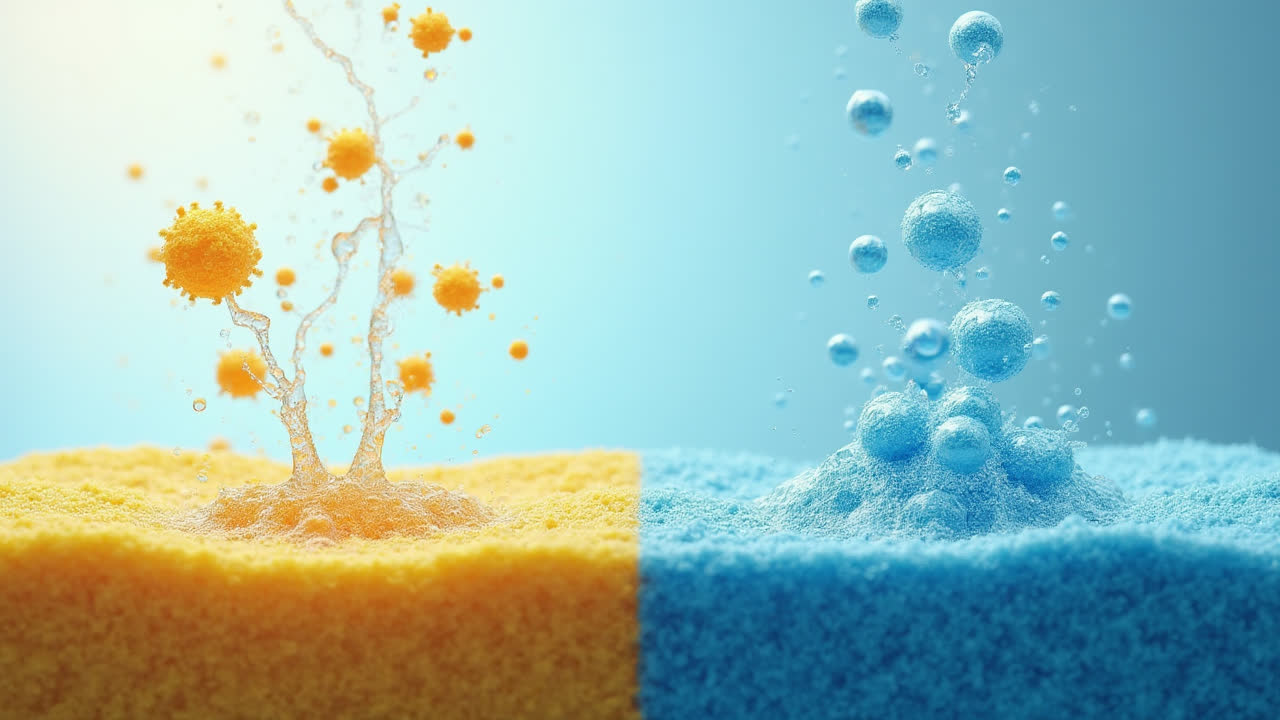
Both absorption and adsorption are physio-chemical processes where a relatively small quantity of one substance enters or attaches to another substance of relatively higher quantity. The key distinction is how this transfer occurs and where the transferred material ends up. In simple terms, absorption involves one substance being taken up throughout the entire volume of another, while adsorption involves substances attaching only to the surface of another material.
These processes play crucial roles in numerous applications ranging from industrial separations to environmental cleanup and even medical treatments. Understanding the difference between these two phenomena can help us better comprehend many natural processes and develop more efficient technologies. Let's dive deeper into what makes each process unique and how they work in various scenarios.
What is Absorption? Understanding the Volume Process
Absorption occurs when atoms, molecules, or ions of one substance penetrate and distribute throughout the entire volume of another substance. This process isn't limited to the surface—it's a complete integration where the absorbed material becomes distributed throughout the bulk of the absorbing medium. Think of a sponge soaking up water or your skin absorbing lotion. The water or lotion doesn't just stick to the surface but penetrates deeply.
During absorption, the absorbed substance (absorbate) enters the physical structure of the absorbent material and becomes distributed throughout its volume. This process depends heavily on the physical and chemical properties of both materials involved. For example, the absorption of oxygen into water occurs when oxygen molecules dissolve and distribute evenly throughout the water. Similarly, when you take medication orally, your digestive system absorbs the drug into your bloodstream, which then carries it throughout your body.
Absorption can be broadly categorized into physical absorption and chemical absorption. In physical absorption, the process occurs without any chemical reaction taking place—it's purely a physical transfer based on solubility, concentration gradients, and physical attractions. In contrast, chemical absorption involves a chemical reaction between the absorbed substance and the absorbent material. An example is carbon dioxide being absorbed by sodium hydroxide solution, forming sodium carbonate through a chemical reaction.
The rate and extent of absorption typically depend on several factors including the concentration difference (which drives the transfer), the surface area available for initial contact, temperature, pressure, and the specific physical or chemical properties of the materials involved. In industrial applications, engineers carefully control these parameters to optimize absorption processes for purposes like gas purification, liquid-liquid extraction, and many other separation techniques.
What is Adsorption? Understanding the Surface Phenomenon
Unlike absorption, adsorption is strictly a surface phenomenon. It occurs when atoms, molecules, or ions of a substance (adsorbate) adhere to the surface of another material (adsorbent) rather than penetrating into its bulk volume. This surface attachment results from various types of interactions between the adsorbate and the surface of the adsorbent material. It's somewhat like a magnet attracting iron filings to its surface—the filings stick to the outside but don't penetrate inside the magnet.
The science behind adsorption relates directly to surface energy. Molecules within the bulk of a material are surrounded by other similar molecules on all sides, resulting in balanced attractive forces. However, molecules at the surface have unbalanced forces since they're not completely surrounded. This creates what we call "surface energy"—an excess energy at the material's surface that makes it prone to attract other substances to minimize this energy imbalance. When substances attach to this high-energy surface, they help reduce the overall energy of the system.
Adsorption can be classified into two main types based on the nature of the attractive forces involved: physisorption (physical adsorption) and chemisorption (chemical adsorption). Physisorption occurs due to relatively weak van der Waals forces between the adsorbate and adsorbent. This type of adsorption is typically reversible and doesn't involve the formation of chemical bonds. In contrast, chemisorption involves the formation of chemical bonds between the adsorbate and the adsorbent surface, resulting in a much stronger attachment that is often irreversible under normal conditions.
The effectiveness of adsorption largely depends on the surface area of the adsorbent material. Materials with high surface areas, like activated carbon, silica gel, and zeolites, make excellent adsorbents because they provide more sites for adsorbates to attach. This explains why activated charcoal, with its enormous internal surface area, is so effective at removing toxins, odors, and impurities in various applications ranging from water filters to medical treatments for poisoning.
Key Differences Between Absorption and Adsorption
| Characteristic | Absorption | Adsorption |
|---|---|---|
| Definition | Process where substances penetrate and distribute throughout the entire volume of another material | Process where substances attach only to the surface of another material |
| Location of Process | Throughout the entire volume | Only at the surface |
| Rate Dependency | Depends on concentration difference and diffusion rate | Depends on surface area and surface energy |
| Energy Changes | Uniform throughout the material | Concentrated at the surface |
| Bonding Mechanism | Physical distribution or chemical bonding throughout | Van der Waals forces or chemical bonds at the surface |
| Temperature Effect | Typically increases with rising temperature | Typically decreases with rising temperature |
| Examples | Sponge absorbing water, oxygen dissolving in water, body absorbing nutrients | Activated charcoal removing odors, silica gel removing moisture, catalytic converters |
| Separation Process | Separation based on solubility differences | Separation based on surface affinity differences |
Applications of Absorption and Adsorption in Real Life
Both absorption and adsorption have countless applications in our daily lives and various industries. Understanding where each process is used helps clarify their fundamental differences and importance. I've seen firsthand how these processes transform everything from industrial practices to everyday products we use without thinking twice.
Industrial Applications of Absorption
- Gas Scrubbing: Removal of pollutants from industrial gas streams by passing them through liquid absorbents
- Liquid-Liquid Extraction: Separation of compounds based on their different solubilities in immiscible liquids
- Distillation Processes: Separation of mixtures based on differences in volatilities
- Refrigeration Systems: Absorption refrigerators using ammonia-water or lithium bromide-water systems
- Pharmaceuticals: Controlled release of medicines through absorption mechanisms
Common Applications of Adsorption
- Water Purification: Activated carbon filters removing contaminants through surface adsorption
- Air Purification: Zeolite filters adsorbing volatile organic compounds and pollutants
- Desiccants: Silica gel packets adsorbing moisture to keep products dry
- Catalysis: Enhancement of chemical reactions through adsorption on catalyst surfaces
- Chromatography: Separation techniques based on differential adsorption of components
- Medical Applications: Activated charcoal adsorbing toxins in poisoning treatments
A fascinating real-world example I've observed is in wastewater treatment facilities, where both processes work together. The treatment often involves activated carbon beds that adsorb organic contaminants onto their surfaces, while simultaneously, biological organisms absorb dissolved nutrients throughout their cell volume. This dual approach provides more effective purification than either process could achieve alone.
Scientific Principles Behind Absorption and Adsorption
To fully appreciate the difference between absorption and adsorption, we need to understand the scientific principles governing these phenomena. These principles explain why certain materials are better absorbers or adsorbers and how these processes can be optimized for specific applications.
Scientific Principles of Absorption
Absorption is primarily governed by principles of solubility, diffusion, and in some cases, chemical reactivity. When one substance is absorbed by another, the process typically follows Fick's laws of diffusion, which describe how the concentration gradient drives the movement of particles from regions of higher concentration to regions of lower concentration until equilibrium is reached. In chemical absorption, Henry's Law often applies, describing the relationship between the partial pressure of a gas and its concentration in the liquid absorbing it.
The thermodynamics of absorption is also important. The process may be endothermic (requiring energy) or exothermic (releasing energy), which affects how temperature changes impact absorption rates. This is why some absorption processes work better at higher temperatures while others are more effective at lower temperatures. In my experience working with industrial cooling systems, understanding these thermodynamic principles is crucial for designing efficient absorption chillers.
Scientific Principles of Adsorption
Adsorption is governed by surface chemistry and involves the interaction between the adsorbate and the adsorbent surface. These interactions are described by various adsorption isotherms, such as the Langmuir isotherm (which assumes monolayer adsorption) and the Freundlich isotherm (which accommodates multilayer adsorption). The amount of substance adsorbed depends on factors like temperature, pressure, surface area, and the nature of both the adsorbent and adsorbate.
From a thermodynamic perspective, adsorption is typically exothermic—it releases heat as substances adhere to the surface. This explains why adsorption generally decreases with increasing temperature (as the added thermal energy helps overcome the attractive forces holding the adsorbate to the surface). The electrostatic properties of surfaces also play a significant role, with charged or polar surfaces attracting oppositely charged or polar molecules more strongly.
I'm always fascinated by how these scientific principles manifest in nature. For instance, the way our lungs function involves both processes—oxygen is first adsorbed onto the surface of alveoli and then absorbed into the bloodstream. Understanding this dual mechanism has led to improvements in artificial respiration technologies and treatments for respiratory conditions.
FAQ About Absorption and Adsorption
What is a simple way to remember the difference between absorption and adsorption?
A simple memory aid is to focus on where the substance goes: in absorption, the substance goes into (is absorbed by) the entire volume of the material—think of a sponge soaking up water throughout. In adsorption, the substance sticks onto (is adsorbed to) just the surface—like Post-it notes sticking to a page. Notice also that adsorption has a "d" which can remind you of "surface" because both words contain a "d" (ad-sorption, d-surface).
Can a material undergo both absorption and adsorption simultaneously?
Yes, many materials can undergo both processes simultaneously. For example, when activated carbon is used in water filtration, some contaminants are adsorbed onto its extensive surface area, while water and certain dissolved substances may be partially absorbed into the carbon's structure. Similarly, in biological systems, cell membranes may adsorb certain molecules to their surface receptors while simultaneously absorbing other substances throughout their volume. This dual capability makes some materials particularly effective for certain applications in filtration, catalysis, and biochemical processes.
How do temperature and pressure affect absorption and adsorption differently?
Temperature and pressure affect these processes quite differently. For absorption, increasing temperature typically enhances the process because higher temperatures increase molecular movement and diffusion rates, allowing absorbed substances to distribute more readily throughout the volume. However, for adsorption, increasing temperature usually decreases effectiveness because adsorption is generally exothermic (releases heat), and higher temperatures provide energy that can break the bonds between the adsorbate and the adsorbent surface. Regarding pressure, increasing pressure generally enhances both processes for gases, but the effect is often more pronounced in adsorption, where higher pressures force more gas molecules into contact with the adsorbent surface.
Conclusion: Why Understanding the Difference Matters
Distinguishing between absorption and adsorption is not merely an academic exercise—it has significant practical implications across numerous fields and industries. When designing processes for filtration, separation, purification, or chemical reactions, choosing between absorption-based and adsorption-based approaches can dramatically affect efficiency, cost, and effectiveness.
For environmental applications, understanding whether a contaminant is likely to be absorbed or adsorbed helps in selecting the appropriate remediation strategy. For medical applications, knowing how drugs interact with tissues—whether through surface adsorption or volume absorption—influences drug delivery methods and dosage calculations. Even in everyday scenarios, this knowledge helps us make better choices about products like air purifiers, water filters, and odor eliminators.
As our scientific understanding continues to evolve, we're finding increasingly sophisticated ways to leverage both absorption and adsorption for new technologies. From advanced carbon capture systems that help combat climate change to novel drug delivery mechanisms that target specific tissues, these fundamental processes remain at the heart of many cutting-edge innovations.
The next time you use a silica gel packet to keep your electronics dry, take medication, or filter your drinking water, take a moment to appreciate the carefully engineered absorption and adsorption processes making these everyday miracles possible. Understanding the distinction between what goes in throughout and what sticks to the surface is more than just interesting science—it's knowledge that shapes our world in countless practical ways.