ASIC vs FPGA: 8 Critical Differences You Must Know Before Choosing
Have you ever wondered how the electronic devices you use daily actually work? Behind every smartphone, computer, or smart device lies sophisticated electronic circuits built using technologies like ASIC and FPGA. Understanding the differences between these technologies is crucial for engineers, hardware designers, and even tech enthusiasts looking to dive deeper into the world of electronic circuit design.
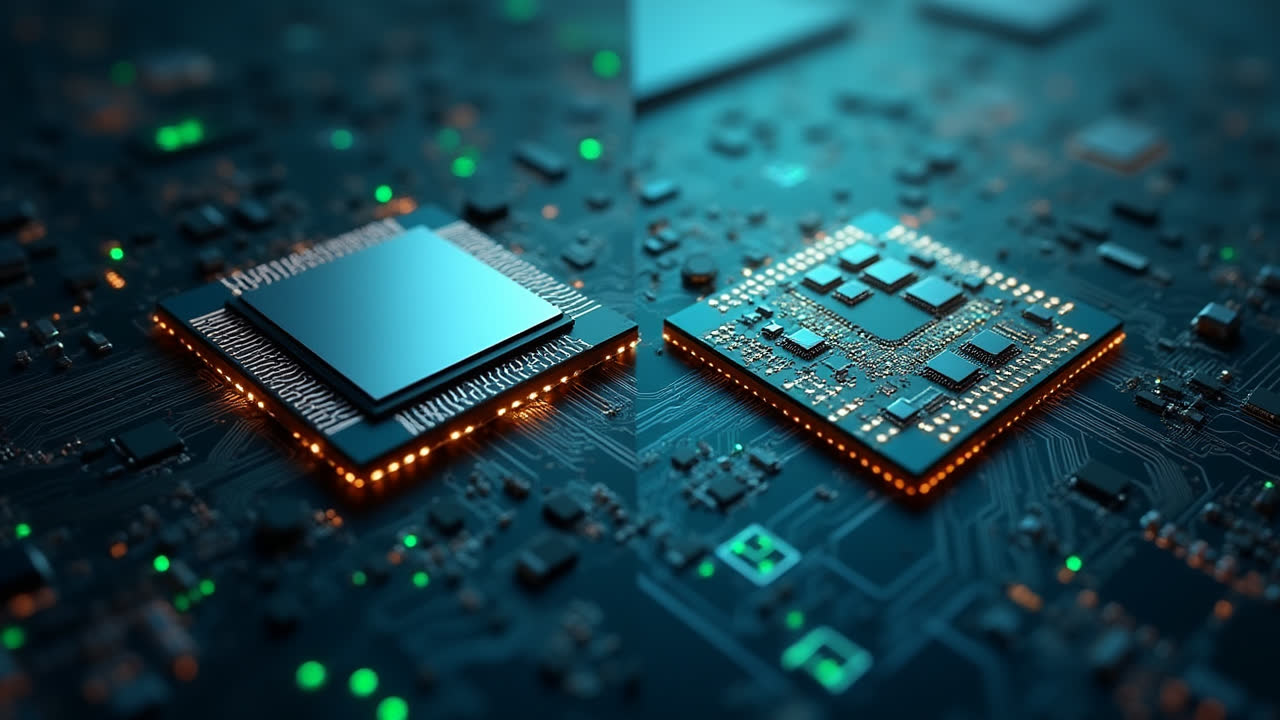
The main difference between ASIC and FPGA is that ASIC is designed to perform specific tasks with maximum efficiency, while FPGA offers flexibility to be reprogrammed for different functions even after manufacturing. This fundamental distinction drives their applications in various industries and determines which technology is right for your particular project.
What is ASIC (Application Specific Integrated Circuit)?
An Application Specific Integrated Circuit (ASIC) is a custom-designed integrated circuit tailored for a particular use rather than for general-purpose applications. These specialized chips are engineered to perform specific tasks with maximum efficiency and minimal power consumption. Modern ASICs can contain upwards of 100 million logic gates, allowing for incredibly complex operations within a single chip.
ASICs are designed using Hardware Description Languages (HDLs) such as Verilog or VHDL, which enable engineers to precisely describe the desired functionalities. The design is then manufactured into silicon wafers through a complex fabrication process. Once manufactured, the functionality of an ASIC cannot be altered – it's permanently etched into the silicon.
Most ASICs incorporate various components including microprocessors, memory units (ROM, RAM, EEPROM), and other specialized modules. When these components are integrated onto a single chip, it's commonly referred to as a System on Chip (SoC). This high level of integration makes ASICs incredibly powerful while maintaining a small physical footprint.
Due to the high initial costs of design and manufacturing, ASICs are typically most cost-effective for products with large production volumes where the development costs can be amortized across many units. Think of smartphones, which are produced in millions – the performance and power efficiency benefits of custom ASICs justify the upfront investment.
What is FPGA (Field Programmable Gate Array)?
A Field Programmable Gate Array (FPGA) represents a fundamentally different approach to integrated circuit design. As the name suggests, FPGAs can be programmed "in the field" – meaning after the manufacturing process is complete. This programmability gives FPGAs exceptional flexibility that ASICs simply cannot match.
Modern FPGAs contain approximately 330,000 logical blocks with around 1,100 inputs and outputs, providing immense resources for implementing complex digital circuits. These logical blocks can be configured and interconnected in virtually limitless ways to create the desired functionality. Engineers can reprogram FPGAs multiple times according to changing requirements, making them ideal for prototyping, testing new designs, or adapting to evolving standards.
The architecture of an FPGA consists of three primary components: programmable logic blocks that perform computational functions, reconfigurable interconnects that allow these blocks to communicate with each other, and input/output (IO) blocks that facilitate connections to external components. Most logic blocks also contain memory elements such as flip-flops to store state information.
The versatility of FPGAs is truly remarkable. They can be configured to implement simple functions like basic logical operations (AND, OR, XOR) or incredibly complex systems such as multi-core processors. This flexibility comes at a cost, however – FPGAs typically consume more power, operate at lower speeds, and cost more per unit than equivalent ASICs designed for specific tasks.
ASIC vs FPGA: Comprehensive Comparison
To make an informed decision between ASIC and FPGA for your project, you need to understand their strengths, limitations, and ideal use cases. Let's break down the key differences between these technologies to help you determine which one aligns better with your specific requirements.
| Comparison Criteria | ASIC | FPGA |
|---|---|---|
| Design Purpose | Created for a specific application with fixed functionality | General-purpose chip that can be reprogrammed for different functions |
| Modification Capability | Once manufactured, functionality cannot be changed | Can be reprogrammed repeatedly after manufacturing |
| Development Cost | High initial NRE (non-recurring engineering) costs | Lower development costs with shorter time-to-market |
| Unit Cost | Lower cost per unit in high volumes | Higher cost per unit regardless of volume |
| Performance | Superior performance with lower power consumption | Generally slower with higher power consumption |
| Ideal Production Volume | Best for high-volume production (millions of units) | Suitable for low to medium production or prototyping |
| Time-to-Market | Longer development cycle (months to years) | Faster development cycle (days to weeks) |
| Risk of Obsolescence | Higher risk - cannot adapt to changing standards | Lower risk - can be reprogrammed for new requirements |
When to Choose ASIC Over FPGA
Selecting ASIC technology makes the most sense when you're developing products that require maximum performance combined with minimal power consumption and will be manufactured in large quantities. The high initial development costs of ASICs can be justified when spread across millions of units, resulting in a lower per-unit cost compared to equivalent FPGA solutions.
ASICs excel in applications where every watt of power matters. Mobile devices like smartphones, tablets, and wearables benefit tremendously from the power efficiency of ASICs, extending battery life while delivering high performance. Similarly, cryptocurrency mining hardware relies on ASICs to maximize hash rates while minimizing electricity consumption – a critical factor in mining profitability.
Another compelling reason to choose ASICs is when your application has strict space constraints. Because ASICs are custom-designed for specific functions, they typically require less silicon area than equivalent FPGA implementations. This smaller footprint is invaluable in compact devices where every millimeter counts.
However, the inflexibility of ASICs presents significant risks. Once manufactured, an ASIC cannot be modified to fix bugs or adapt to changing standards or requirements. This means extensive verification and validation are essential before committing to production. Many companies mitigate this risk by first prototyping their designs using FPGAs before finalizing the ASIC design, combining the benefits of both technologies in their development process.
When to Choose FPGA Over ASIC
FPGAs shine in scenarios where flexibility and rapid development are prioritized over absolute performance or power efficiency. The ability to reprogram FPGAs makes them ideal for prototyping, allowing engineers to test and refine their designs without the high costs and long lead times associated with ASIC fabrication. I've personally seen projects where design iterations that would take months with ASICs were completed in just days using FPGAs.
Products with lower production volumes typically benefit from FPGA implementation. While the per-unit cost remains higher than equivalent ASICs, the significantly lower development costs make FPGAs more economical for production runs in the hundreds or thousands rather than millions. Specialized industrial equipment, advanced scientific instruments, and military applications often fall into this category.
The reconfigurability of FPGAs also makes them invaluable in rapidly evolving fields where standards and requirements frequently change. Telecommunications equipment, for instance, can be updated to support new protocols through firmware updates rather than hardware replacement. This adaptability extends the useful life of products and provides a hedge against obsolescence – something fixed-function ASICs simply cannot offer.
Additionally, FPGAs are well-suited for applications requiring hardware acceleration but benefiting from the ability to update algorithms over time. This includes areas like artificial intelligence, machine learning, and high-frequency trading, where computational demands are high but optimal algorithms continue to evolve. Rather than being locked into yesterday's approach, FPGA-based systems can implement cutting-edge techniques as they emerge.
Frequently Asked Questions About ASIC vs FPGA
Can FPGAs be converted to ASICs after design validation?
Yes, converting FPGA designs to ASICs is a common practice in the industry, often referred to as "FPGA-to-ASIC conversion" or "FPGA handoff." This approach combines the rapid prototyping advantages of FPGAs with the performance and cost benefits of ASICs for final production. Engineers first develop and thoroughly test their designs on FPGAs, then migrate the validated design to an ASIC implementation for mass production. This process requires some redesign work, as FPGAs and ASICs have different architectures and timing constraints, but modern design tools help streamline this transition. Companies typically pursue this route when they've confirmed market demand through FPGA-based products and want to scale up production while reducing unit costs.
What are the main applications where ASICs have a clear advantage over FPGAs?
ASICs have distinct advantages in several key applications. First, consumer electronics like smartphones and tablets benefit from ASICs' superior power efficiency and performance, essential for battery-powered devices produced in millions of units. Cryptocurrency mining hardware relies almost exclusively on ASICs for their energy efficiency and hash rate performance—an ASIC miner can be 100x more efficient than FPGA alternatives. Automotive applications, particularly advanced driver assistance systems (ADAS) and autonomous driving technology, leverage ASICs for their reliability, deterministic performance, and ability to meet strict automotive safety standards. Finally, high-performance computing applications requiring maximum throughput with minimal latency and power consumption often justify the high development costs of ASICs, especially when computational patterns are well-established and unlikely to change significantly over time.
How do development timelines compare between ASIC and FPGA projects?
Development timelines differ dramatically between ASIC and FPGA projects. FPGA development cycles typically range from a few weeks to a few months, with immediate feedback and iterative design improvements possible. Engineers can modify and test designs within minutes or hours, significantly accelerating the debugging process. In contrast, ASIC development usually spans 9-18 months from concept to production, involving multiple stages like RTL design, verification, physical design, tape-out preparation, manufacturing, and testing. Each design iteration in ASIC development can cost millions of dollars and add months to the timeline, making early verification critical. This time-to-market advantage makes FPGAs particularly valuable in fast-moving industries or when responding to competitive pressures, while ASICs are better suited for mature, stable products where development time can be justified by long-term benefits.
The Hybrid Approach: Using Both Technologies Together
While we've primarily discussed choosing between ASIC and FPGA, many successful companies actually leverage both technologies in complementary ways. This hybrid approach maximizes the advantages of each technology while mitigating their respective limitations. Isn't it interesting how apparent competitors can actually work together in the electronics ecosystem?
A common strategy involves using FPGAs for initial market entry and proof-of-concept, followed by an ASIC transition once volumes increase and the design stabilizes. This approach allows companies to generate revenue and gather real-world feedback with FPGA-based products while simultaneously developing ASIC versions for long-term cost optimization. The FPGA essentially serves as a living prototype, reducing risk and providing valuable insights that inform the final ASIC design.
Some sophisticated products actually incorporate both technologies within the same system. Critical, stable functions that benefit from maximum performance and efficiency might be implemented in ASICs, while features likely to evolve or require updates are handled by FPGAs. This architectural division allows for a "best of both worlds" solution, particularly in sectors like telecommunications where both cutting-edge performance and adaptability to changing standards are essential.
Future Trends in ASIC and FPGA Technologies
The landscape of electronic circuit design continues to evolve rapidly, with both ASIC and FPGA technologies advancing in fascinating ways. We're seeing the lines between these technologies blur with the emergence of structured ASICs, which aim to bridge the gap by offering some of the performance benefits of ASICs with reduced design costs and shorter development cycles.
FPGA manufacturers are increasingly focusing on specialized versions optimized for high-growth applications like artificial intelligence, machine learning, and edge computing. These domain-specific FPGAs incorporate hardened IP blocks for common functions, delivering higher performance while maintaining the flexibility that makes FPGAs attractive. Meanwhile, programming tools have become significantly more accessible, with high-level synthesis capabilities that allow designers to work in languages like C++ or Python rather than traditional HDLs.
On the ASIC front, advanced packaging technologies are enabling new levels of system integration, with multiple dies combined in a single package to create incredibly powerful, efficient systems. The rise of open-source hardware, including RISC-V processor architectures, is also democratizing ASIC design, potentially reducing development costs and fostering innovation across the industry.
Conclusion: Making the Right Choice for Your Project
Choosing between ASIC and FPGA ultimately comes down to finding the right balance between performance, flexibility, development costs, and time-to-market for your specific application. There's no one-size-fits-all answer – the optimal technology depends entirely on your project's unique requirements and constraints.
For high-volume products where maximum performance and power efficiency are critical, ASICs typically provide the best long-term solution despite higher upfront costs and longer development cycles. Conversely, when flexibility, rapid iteration, or lower initial investment are priorities, FPGAs offer compelling advantages.
Remember that these technologies aren't necessarily mutually exclusive. Many successful products leverage both, either as part of a staged development process or within the same system architecture. By understanding the strengths and limitations of each approach, you can make informed decisions that position your projects for success in today's competitive electronic design landscape.