Boat vs Ship: 8 Key Differences You Need to Know
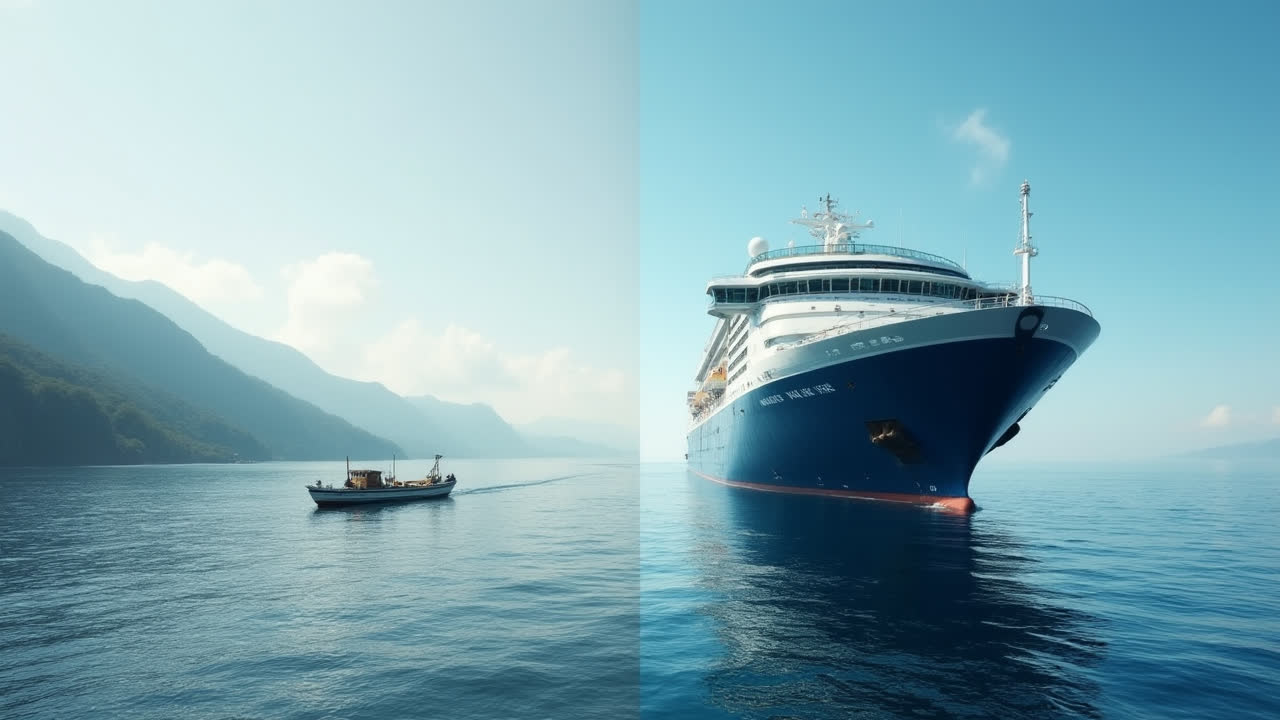
Boat vs Ship: 8 Key Differences You Need to Know
Have you ever stood at a harbor watching various watercraft and wondered what exactly makes a boat different from a ship? I know I have! Despite both being vessels designed to travel across water, boats and ships have distinct characteristics that set them apart. The confusion is understandable—I used to call everything floating on water a "boat" until a sailor friend of mine corrected me rather emphatically during a harbor tour.
The primary distinction between a boat and a ship lies in their size and capacity. While both are watercraft designed for transportation across bodies of water, a vessel's classification affects everything from its legal status to operational requirements. Understanding these differences isn't just about terminology—it matters for safety regulations, navigation rules, and maritime law.
In this comprehensive guide, I'll walk you through the fundamental differences between boats and ships, their unique characteristics, and when and why these distinctions matter. Whether you're a maritime enthusiast, planning to purchase a watercraft, or simply curious about nautical terminology, this comparison will help clarify the boat vs. ship confusion once and for all.
What Defines a Boat?
A boat is typically a smaller watercraft that can vary significantly in size, shape, and construction methods. The defining characteristic of a boat is generally its more modest dimensions compared to ships. From my experience taking weekend fishing trips on various boats, I've noticed they typically range from tiny personal watercraft to vessels up to about 100 feet in length, though there's no universally agreed-upon size cutoff.
Boats serve numerous purposes in our maritime world. They can be used for fishing (like the 20-footer my uncle operates), pleasure cruising, transportation between larger vessels and shore, racing, and various specialized tasks. The diversity in boat types is remarkable—rowboats, canoes, kayaks, motorboats, sailboats, and pontoons all fall under this category.
One distinctive characteristic I've always found interesting about boats is their propulsion method variety. They can be powered by human effort (rowing, paddling), wind (sailing), or motors (outboard, inboard, jet). This versatility makes boats accessible for different users and suitable for various water conditions and purposes.
Another key defining feature—and one that often surprises people—is that boats can typically be lifted out of water completely. Whether for storage, transportation, or maintenance, many boats can be hoisted onto trailers or drydocks. I remember helping my neighbor load his 22-foot fishing boat onto a trailer after a day on the lake—something you simply couldn't do with larger vessels.
The operational requirements for boats tend to be simpler compared to ships. Many recreational boats can be operated by a single person with basic training, though safe operation always requires proper knowledge and experience. The controls are generally straightforward enough that most people can learn the basics in a relatively short time, though mastering navigation and handling takes considerably longer.
What Defines a Ship?
Ships represent the larger end of the watercraft spectrum and come with characteristics that clearly distinguish them from their smaller counterparts. The most obvious defining feature of a ship is its substantial size—these vessels are designed for traversing oceans and carrying significant cargo or passenger loads. During my visit to the Port of Rotterdam last year, I was struck by the sheer enormity of the container ships, some extending over 1,300 feet in length!
Unlike boats, ships require a large crew to operate effectively. They're commanded by a captain (or master) who leads a hierarchy of officers and crew members, each with specialized responsibilities. The operational systems aboard ships are complex and involve sophisticated navigation equipment, propulsion systems, and communication technologies. I once toured a cruise ship's bridge and was amazed by the array of controls and monitoring systems necessary to manage such a massive vessel.
Ships are designed for extended voyages across open waters, often traveling between continents and enduring challenging weather conditions. This requirement for seaworthiness influences every aspect of ship design, from hull configuration to stability systems. The construction of modern ships involves advanced engineering and typically takes place in specialized facilities called shipyards, where thousands of workers might be involved in building a single vessel.
One distinctive characteristic that separates ships from boats is that ships cannot typically be removed from water entirely. While they can enter dry docks for maintenance and repairs, the process is complex and requires specialized facilities. I recall watching a massive tanker entering a dry dock in Singapore—the engineering involved in supporting such enormous weight out of water was impressive.
Ships serve various critical functions in global commerce and transportation. Container ships move the vast majority of international trade goods, while cruise ships can transport thousands of passengers on vacation journeys. Specialized vessels like oil tankers, bulk carriers, and liquefied natural gas (LNG) carriers are essential to global energy and resource distribution. The diversity of ship types reflects their vital role in connecting our world's economies.
Key Differences Between Boats and Ships
| Comparison Factor | Boats | Ships |
|---|---|---|
| Size | Smaller vessels, typically under 100 feet | Larger vessels, generally exceeding 100 feet |
| Capacity | Carries fewer passengers and less cargo | Can transport large numbers of passengers or substantial cargo |
| Operational Complexity | Simpler systems, can often be operated by one person | Complex systems requiring a trained crew with specialized roles |
| Travel Range | Generally used for shorter distances and coastal waters | Designed for long-distance voyages and ocean crossing |
| Removal from Water | Can typically be lifted out of water completely | Cannot be completely removed from water except in specialized dry docks |
| Navigation Equipment | Basic navigation tools sufficient for operation | Advanced navigation systems and multiple redundancies |
| Legal Requirements | Fewer regulations and certifications required | Subject to extensive international maritime regulations |
| Nested Capacity | Cannot carry ships | Can carry boats (lifeboats, tenders, etc.) |
Beyond these technical distinctions, there's also a cultural and linguistic dimension to the boat vs. ship classification. Navy and maritime traditions often have specific terminology—for instance, submarines are always called "boats" regardless of their size, breaking the usual classification rules. These exceptions showcase how maritime terminology has evolved through custom and tradition rather than strict technical definitions.
The Gray Area: When Is It Not Clear-Cut?
While the differences between boats and ships might seem straightforward in theory, reality presents numerous gray areas where classification becomes challenging. I've encountered this confusion firsthand when discussing various vessels with maritime professionals—what one expert calls a "ship," another might classify as a "large boat."
Large yachts represent one of the most prominent examples of this classification ambiguity. Superyachts and megayachts can exceed 100 feet in length and feature sophisticated systems similar to ships, yet they're often still referred to as boats. I remember debating with a friend about whether a 150-foot luxury yacht we saw in Monaco should be called a boat or ship—there was no clear answer even after consulting several sources.
Commercial fishing vessels present another interesting case. While many fishing boats are clearly on the smaller end of the spectrum, large commercial trawlers and factory vessels can rival small ships in size and complexity. Yet tradition and industry practice often lead to these being referred to as "fishing boats" regardless of their dimensions.
Different maritime authorities and organizations may apply varying standards when classifying vessels. What might legally be considered a ship under one country's maritime law could be classified as a boat under another jurisdiction. This lack of universal standards contributes to the ongoing confusion about proper terminology.
Perhaps the most practical approach is to recognize that the boat-ship distinction exists on a spectrum rather than as a binary classification. Many vessels fall somewhere between the typical characteristics of boats and ships, sharing attributes of both categories. Next time you're unsure whether to call something a boat or ship, take comfort in knowing that even maritime experts sometimes disagree on the precise boundary between these vessel types!
Historical Evolution of Boats and Ships
The distinction between boats and ships has evolved significantly throughout maritime history. Early watercraft were simple rafts and dugout canoes—all easily classified as boats by today's standards. As human civilization advanced, so did our watercraft technology. The fascinating progression from primitive vessels to today's massive container ships reflects our growing mastery of maritime engineering and expanding global connections.
Ancient civilizations like the Egyptians, Phoenicians, and Vikings developed increasingly sophisticated vessels that pushed the boundaries between boats and ships. The Viking longships, for example, were remarkably advanced for their time—large enough to cross open seas yet still manageable enough to navigate rivers. During a visit to the Viking Ship Museum in Oslo, I was struck by how these vessels represented an early transition point between what we might classify as boats versus ships.
The Age of Sail brought dramatic changes to maritime vessel design, with massive sailing ships like galleons, frigates, and ships-of-the-line defining naval power. These wooden vessels required large crews and featured multiple decks and sophisticated rigging systems—clearly ships by any definition. The terminology became more formalized during this period, with navies developing specific vocabulary to distinguish between different vessel types.
The Industrial Revolution transformed maritime technology with the introduction of steam power, steel hulls, and eventually diesel and nuclear propulsion. These innovations allowed for the construction of ever-larger ships, pushing the size boundaries far beyond what was previously possible. Today's largest vessels, like the ultra-large crude carriers and container ships, can exceed 1,300 feet in length—dimensions that would have been unimaginable to earlier generations of mariners.
Modern maritime classification societies and regulatory bodies have developed complex systems for categorizing vessels based on size, purpose, construction, and operational characteristics. While these systems provide necessary legal clarity, they haven't eliminated the everyday confusion about what constitutes a boat versus a ship. The terminology continues to evolve, influenced by both technical specifications and cultural traditions in the maritime world.
Frequently Asked Questions
Can a boat become a ship if it grows in size?
Yes, conceptually a boat design that's expanded beyond certain dimensions would eventually be classified as a ship. This actually happens in vessel evolution, where successful smaller vessel designs are sometimes scaled up into larger versions that cross the boat-ship threshold. However, this isn't simply about enlarging every dimension—the engineering requirements change significantly when scaling up to ship size, necessitating different structural approaches, stability calculations, and propulsion systems. Naval architects must essentially redesign many aspects rather than simply making everything bigger.
Why are submarines always called boats regardless of their size?
The tradition of calling submarines "boats" regardless of size is a fascinating linguistic holdover from naval history. Early submarines were small vessels that were often carried aboard larger ships, clearly fitting the "boat" category. As submarines evolved into the massive, nuclear-powered vessels of today (some exceeding 500 feet in length), the terminology remained unchanged due to naval tradition. This exemplifies how maritime language often preserves historical terms even when the technical reality has changed. Similar exceptions exist in other specialized vessel types, showing how maritime terminology is shaped by tradition as much as by technical specifications.
Does the boat vs. ship distinction matter legally or for insurance purposes?
Yes, the distinction between boats and ships carries significant legal and insurance implications. Maritime law often applies different regulations to vessels based on their classification, affecting everything from registration requirements to safety standards. Insurance policies typically have different coverage terms and premiums based on whether a vessel is classified as a boat or ship. Additionally, crew certification requirements vary substantially—ships require professionally licensed officers and crew with specialized training certifications, while smaller boats often have less stringent operator licensing requirements. For vessel owners and operators, understanding the correct classification is crucial for compliance with maritime regulations and ensuring proper insurance coverage.
Conclusion
The distinction between boats and ships, while sometimes ambiguous, provides a useful framework for understanding different classes of watercraft. Size represents the most obvious difference, but the distinctions extend to design complexity, operational requirements, crew needs, and intended purpose. Whether you're a maritime enthusiast, a vessel owner, or simply curious about nautical terminology, understanding these differences helps clarify an important aspect of maritime culture.
Next time you're watching vessels on the water, you might find yourself automatically categorizing them into boats or ships based on the characteristics we've explored. Just remember that some vessels will inevitably fall into gray areas where classification isn't clear-cut—and that's perfectly fine. Maritime terminology, like the seas themselves, has always been fluid and adaptive.
What fascinates me most about this topic is how these distinctions reflect our evolving relationship with water transportation throughout human history. From simple dugout canoes to massive container ships, the development of increasingly sophisticated watercraft parallels our expanding horizons as a species. Whether boat or ship, each vessel represents human ingenuity and our enduring connection to the water that covers most of our planet.