Understanding the Difference Between Bulbs, Corms, Tubers, and Rhizomes
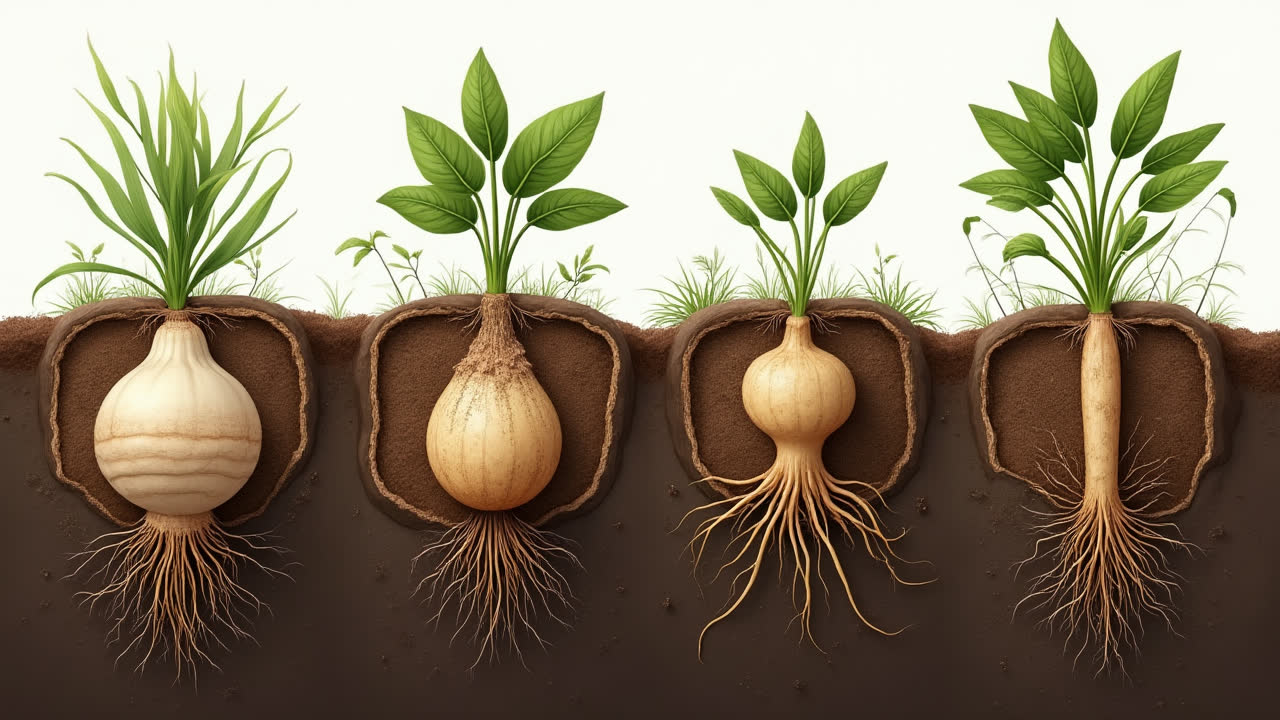
The Complete Guide to Understanding Bulbs, Corms, Tubers, and Rhizomes
If you've ever wondered about the underground plant structures that make your favorite flowers and vegetables grow, you're in the right place. The difference between bulbs, corms, tubers, and rhizomes is something many gardeners find confusing, but once you understand these distinct geophytes, you'll have a much better time planning your garden.
I remember when I first started gardening, I thought all those swollen underground bits were basically the same thing. Boy, was I wrong! Each type has its own unique characteristics, and understanding them makes all the difference in how you plant and care for them.
What Makes Each Structure Unique?
Let's break this down in simple terms, shall we? These underground storage units are nature's way of helping plants survive harsh conditions by storing nutrients and water. It's like having a personal emergency food supply underground!
Each of these structures has evolved differently, which means they work in their own special ways. Think of them as different types of batteries that power your plants - some are more like those layered button batteries, while others are more like the thick, heavy-duty kind you'd find in a flashlight.
Bulbs: Nature's Layered Food Storage
Bulbs are basically a collection of modified leaves that wrap around each other like the layers of an onion. When you cut into a bulb, you can see these distinct layers (called scales) - that's why they're sometimes called "true bulbs." These layers are actually filled with stored food and moisture to help the plant grow.
The fascinating thing about bulbs is that they have this little growth point called a bulbil right in the center. It's like a plant embryo waiting for its moment to shine. And here's something neat - the roots always grow from a specific spot called the basal plate at the bottom.
Some familiar examples of bulbs include:
- Tulips - those spring beauties that come in every color imaginable
- Onions - yes, your kitchen staple is technically a flower bulb!
- Daffodils - heralding the arrival of spring
- Hyacinths - with their incredibly fragrant blooms
- Lilies - elegant flowers that make any garden look sophisticated
Corms: The Compact Powerhouses
Corms might look similar to bulbs from the outside, but they're actually quite different. They're made of swollen stem tissue (not leaves like bulbs) and they're usually flatter and rounder. Some people call them "false bulbs" because of this similarity in appearance.
The structure of a corm is more uniform inside - no layers like you'd find in a bulb. Instead, they have this protective outer covering called a tunic, which can be either smooth with rings (annulate) or netted (reticulate). It's like they're wearing their own little armor!
Plants that develop from corms include:
- Gladiolus - those tall, elegant flower spikes
- Crocus - tiny but mighty spring bloomers
- Freesia - known for their incredible fragrance
Tubers: The Rugged Individualists
Tubers are the rebels of the underground plant world. Unlike bulbs and corms, they don't have a basal plate at all. They're basically swollen stems or roots that store nutrients, and they can grow from multiple points on their surface.
Ever wondered why potatoes have those little "eyes"? Well, each eye is actually a potential growing point. Tubers generally grow larger year after year rather than producing offspring like bulbs do.
There are two main types of tubers:
- Stem tubers - like potatoes (underground stems)
- Root tubers - like sweet potatoes and beets (underground roots)
Rhizomes: The Horizontal Travelers
Rhizomes are unique because they grow horizontally just under the soil surface. They're like underground highways, sending out new shoots and roots as they spread. This is why some plants can spread so quickly - they're literally running underground!
Sometimes I think rhizomes are the most ambitious of all these structures. They just keep growing horizontally, conquering new territory in your garden. You know that beautiful iris garden that keeps expanding? Thank the rhizomes!
Common plants with rhizomes include:
- Ginger - that knobby root you use in cooking
- Iris - with their striking sword-like leaves
- Bamboo - which can spread quite rapidly
- Lily-of-the-valley - those delicate white bells
Comparison Table: Bulbs vs Corms vs Tubers vs Rhizomes
| Feature | Bulbs | Corms | Tubers | Rhizomes |
|---|---|---|---|---|
| Structure | Modified leaves in layers | Swollen stem base | Thickened underground stem/root | Horizontal underground stem |
| Internal appearance | Distinct layers/scales | Solid, uniform | Fleshy with eyes | Segmented sections |
| Growing points | Central bulbil | Multiple nodes/bumps | Multiple "eyes" | Along the stem surface |
| Basal plate | Present | Present | Absent | Absent |
| Growth direction | Vertical | Vertical | Vertical | Horizontal |
| Reproduction | Produces offspring | Produces offspring | Enlarges annually | Produces new shoots |
| Examples | Tulips, onions, lilies | Gladiolus, crocus | Potatoes, beets | Iris, ginger, bamboo |
| Protective covering | Thin, papery skin | Fibrous tunic | Thin skin | Modified leaves |
Why Understanding These Differences Matters
You might be thinking, "Why does all this technical stuff matter?" Well, knowing these differences can make a huge difference in your gardening success. Each type has its own planting depth requirements, watering needs, and storage considerations.
For instance, bulbs typically need to be planted deeper than corms, and tubers should be planted with their "eyes" facing up. Rhizomes, on the other hand, need to be partially exposed to the surface. It's like following a recipe - miss one crucial detail, and the whole thing might not work out!
Identification Tips for Garden Enthusiasts
Want to become a pro at identifying these underground treasures? Here are some quick tips I've picked up over the years:
- If you can see layers when you cut it open, it's definitely a bulb
- Solid inside with a tunic? That's your corm
- Has multiple "eyes" or buds? You're looking at a tuber
- Growing horizontally with nodes? Rhizome alert!
- Check for a basal plate - bulbs and corms have them, tubers and rhizomes don't
Growing Tips for Each Type
Each of these underground storage units has its own preferences when it comes to growing conditions. It's like having different friends who each have their own favorite restaurants and activities!
Bulbs generally like well-draining soil and don't mind getting a bit dry between waterings. Corms are similar but can handle slightly more moisture. Tubers (especially potatoes) are pretty adaptable and can grow in various conditions. Rhizomes often prefer consistent moisture and can spread where they're given room to roam.
Common Misconceptions to Avoid
Let me clear up some myths I've encountered in my gardening journey. One biggie is that all underground plant parts are the same - they're definitely not! Another mistake is thinking you can plant them all the same way. Each type has its specific needs for depth, orientation, and spacing.
Also, just because a plant forms a bulb doesn't mean its close relatives do. For example, potatoes develop tubers, but tomatoes (from the same family) don't form any special underground storage structures at all. Nature keeps us on our toes!
The Fascinating World of Plant Evolution
It's pretty amazing when you think about how these different structures evolved to help plants survive. Bulbs, corms, tubers, and rhizomes all serve the same basic purpose - storing nutrients and water for tough times - but they developed in such different ways.
This diversity is part of what makes gardening so interesting. Each plant has its own strategy for survival, and understanding these strategies helps us be better caretakers of our green friends.
Frequently Asked Questions
Can you eat all types of bulbs, corms, tubers, and rhizomes?
No, not all of these underground structures are edible. While some like potatoes (tubers), onions (bulbs), and ginger (rhizomes) are common foods, many ornamental varieties like tulip bulbs and daffodil bulbs are toxic to humans. Always research whether a specific plant is safe to eat before consuming any part of it.
How do I know when to dig up and divide these different plant structures?
The timing varies by type and species. Bulbs are typically divided when dormant (after foliage dies back). Corms can be divided annually after flowering. Tubers are usually harvested when the plant's top growth dies back. Rhizomes are best divided in early spring or fall when the plant is not actively flowering.
What's the best way to store each type during winter?
Storage requirements differ: Bulbs and corms prefer cool, dry, and dark conditions with good air circulation. Tubers like potatoes need dark, cool storage (45-50°F) with moderate humidity. Rhizomes depend on the species - some like ginger can be stored cool and dry, while others like iris are often best left in the ground in appropriate climate zones.
Final Thoughts
Understanding the difference between bulbs, corms, tubers, and rhizomes opens up a whole new world of gardening possibilities. Once you know what makes each type special, you can better care for your plants and maybe even try growing some new varieties.
Remember, gardening is as much about experimentation as it is about following rules. Don't be afraid to try new things and see what works in your particular garden. Happy growing!