Clavicle vs Collarbone: Understanding the Key Differences
Have you ever wondered about the difference between clavicle and collarbone? If you've injured your shoulder or simply have an interest in human anatomy, you might have heard both terms used by doctors or in medical literature. The confusion between these terms is actually quite common, and today we're going to clear it up once and for all.
When I injured my shoulder during a weekend basketball game last year, I heard the doctor mention both "clavicle" and "collarbone" during the examination. This made me curious—were these two separate bones, or was there something I was missing? As it turns out, the answer is simpler than you might think, but understanding the complete picture requires diving into some fascinating aspects of human anatomy.
Understanding the Clavicle: Anatomy and Function
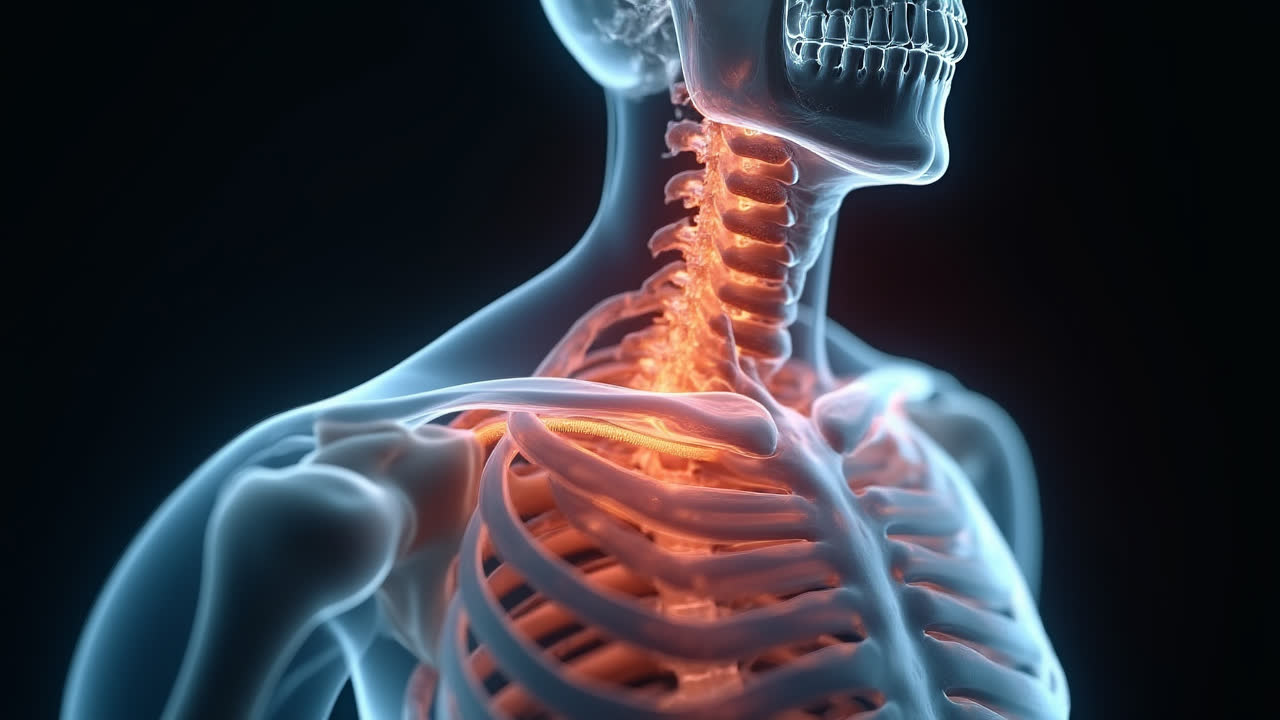
The clavicle is a long, slender bone that runs horizontally across the upper part of the thorax. It's one of the most frequently broken bones in the human body, largely due to its exposed position. Interestingly, it's the only long bone in the body that lies horizontally, which gives it some unique properties compared to other long bones like the femur or humerus.
Anatomically speaking, the clavicle connects the sternum (breastbone) to the scapula (shoulder blade), forming what's known as the shoulder girdle or pectoral girdle. This connection is crucial because it creates the only bony link between the upper limb and the axial skeleton. Each person has two clavicles—one on the left side and one on the right side of the body. The shape of the clavicle resembles an elongated "S," featuring two curves that give it both strength and flexibility.
The clavicle serves several important functions in the human body. First, it acts as a strut that holds the shoulder away from the thorax, allowing for greater range of motion in the arm. Second, it provides attachment points for numerous muscles, including the deltoid, trapezius, and pectoralis major. Third, it helps protect the underlying neurovascular structures that supply the upper limb, including the subclavian vessels and the brachial plexus. Without a properly functioning clavicle, the mechanics of the shoulder would be significantly compromised.
From a developmental perspective, the clavicle is quite unique. It's one of the first bones to ossify (turn from cartilage to bone) during fetal development, beginning around the fifth or sixth week of gestation. It's also one of the last bones to complete growth, with the medial (inner) end not fully fusing until the early to mid-twenties. This extended growth period makes the clavicle particularly vulnerable to growth-related issues during adolescence.
Collarbone: Definition and Characteristics
The term collarbone is commonly used in everyday language to refer to the prominent bone that can be felt just below the neck and above the chest. It got its name because it forms a collar-like structure around the upper part of the thorax. Many people can easily feel their collarbones, especially if they have less subcutaneous fat in that area.
The collarbone consists of three main parts: the sternal (medial) end, which connects to the breastbone; the shaft, which forms the main body of the bone; and the acromial (lateral) end, which connects to the shoulder blade. The sternal end has a large facet that articulates with the manubrium of the sternum, forming the sternoclavicular joint. This joint is remarkably stable despite its small size, thanks to strong ligaments that hold it in place. On the other hand, the acromial end articulates with the acromion process of the scapula, forming the acromioclavicular joint.
From a functional standpoint, the collarbone plays a crucial role in shoulder biomechanics. It serves as a movable strut that allows the scapula to move more freely on the thoracic wall, enhancing the range of motion of the entire upper limb. Without this mobility, activities like reaching overhead or behind the back would be severely limited. Additionally, the collarbone transmits forces from the upper limb to the axial skeleton, distributing the load and reducing stress on any single structure.
When it comes to injuries, the collarbone is notoriously vulnerable. Its superficial location and relatively thin structure make it susceptible to fractures, particularly during falls onto an outstretched hand or direct impacts to the shoulder. Interestingly, the pattern of fracture can often reveal the mechanism of injury. For example, fractures in the middle third of the bone are typically caused by falls, while fractures near the acromial end are often associated with direct trauma to the shoulder.
Clavicle vs Collarbone: The Comparison
Now that we've explored both terms in detail, it's time to address the central question: what's the difference between clavicle and collarbone? The simple answer might surprise you—there is no difference at all! "Clavicle" is simply the anatomical or medical term for the collarbone. Just as the medical profession uses "patella" instead of "kneecap" or "cranium" instead of "skull," "clavicle" is the technical terminology for what we commonly call the collarbone.
This dual naming is common in human anatomy, where structures often have both scientific (typically Latin or Greek-derived) names and common English names. Medical professionals tend to use the technical terms when communicating with colleagues, while they might use the common terms when explaining concepts to patients. It's not unlike how a carpenter might refer to a "miter saw" when talking to another carpenter but call it a "cutting tool" when explaining to a customer.
| Aspect | Clavicle | Collarbone |
|---|---|---|
| Definition | Scientific/medical term for the bone connecting the sternum and scapula | Common English term for the same bone |
| Etymology | Derived from Latin "clavicula" meaning "little key" | Named for its position forming a "collar" around the neck |
| Usage Context | Medical literature, clinical settings, scientific papers | Everyday conversation, patient education |
| Anatomical Structure | S-shaped long bone with sternal and acromial ends | S-shaped long bone with sternal and acromial ends |
| Number in Body | Two (one on each side) | Two (one on each side) |
| Primary Functions | Connects upper limb to axial skeleton, provides muscle attachments, protects neurovascular structures | Connects upper limb to axial skeleton, provides muscle attachments, protects neurovascular structures |
| Common Injuries | Fractures (especially midshaft), acromioclavicular joint separation | Fractures (especially midshaft), acromioclavicular joint separation |
| Developmental Timing | First bone to begin ossification, last to complete growth | First bone to begin ossification, last to complete growth |
As you can see from the comparison table, there are truly no anatomical or functional differences between the clavicle and the collarbone—they are exactly the same structure. The only real difference lies in the terminology and the contexts in which each term is typically used. I remember being confused about this distinction during my anatomy classes, and it's a common point of confusion for many people interested in human anatomy.
Clinical Relevance and Common Injuries
Whether you call it the clavicle or the collarbone, this bone has significant clinical relevance due to its position and vulnerability. Clavicle fractures account for approximately 2-5% of all fractures in adults and nearly 10-15% of fractures in children. These injuries typically result from falls onto the shoulder, direct trauma, or falls onto an outstretched hand where the force is transmitted up the arm to the shoulder girdle.
When a fracture occurs, the pattern is often predictable due to the forces acting on the bone. The lateral fragment (the part connected to the shoulder) is typically pulled downward by the weight of the arm, while the medial fragment (the part connected to the sternum) may be pulled upward by the sternocleidomastoid muscle. This creates the classic "step deformity" that's often visible or palpable after a clavicle fracture. Most fractures occur in the middle third of the bone, which is its thinnest and most vulnerable section.
Treatment of clavicle fractures has evolved over time. Historically, most fractures were treated non-surgically with a figure-of-eight bandage or simple sling. However, recent research has shown better functional outcomes with surgical fixation for certain types of fractures, particularly those with significant displacement or shortening. The decision between surgical and non-surgical management depends on factors like fracture pattern, patient age, activity level, and cosmetic concerns.
Beyond fractures, the joints at either end of the clavicle can also be sources of pathology. The acromioclavicular (AC) joint at the shoulder end is particularly susceptible to separation, commonly known as a "separated shoulder." This typically occurs when a force drives the acromion downward relative to the clavicle, tearing the ligaments that hold the joint together. AC joint separations are graded from I to VI based on severity, with higher grades indicating more ligament damage and greater displacement.
The sternoclavicular (SC) joint at the medial end of the clavicle is less commonly injured but can be subject to instability or arthritis. Dislocation of this joint is rare but potentially serious because of the proximity to vital structures in the neck and upper chest. Posterior dislocations, where the medial end of the clavicle is forced backward, are particularly concerning as they can compromise the trachea, esophagus, or major blood vessels.
Frequently Asked Questions About the Clavicle and Collarbone
How long does it take for a broken clavicle to heal?
The healing time for a broken clavicle typically ranges from 6 to 12 weeks, depending on several factors including the patient's age, the severity of the fracture, and whether the treatment is surgical or non-surgical. Children and adolescents generally heal faster than adults, sometimes in as little as 4-6 weeks. For adults, simple fractures treated non-surgically may take 6-8 weeks to heal sufficiently for normal activities, while more complex fractures requiring surgery might take 8-12 weeks or longer. Complete bone remodeling can take up to a year, though most patients can return to normal activities much sooner. Regular follow-up with your healthcare provider and adherence to rehabilitation protocols are essential for optimal recovery.
Can you exercise with a clavicle fracture?
Exercise with a clavicle fracture should be approached cautiously and always under medical guidance. In the acute phase (first 2-3 weeks), rest is generally recommended to allow initial healing. During this time, gentle range-of-motion exercises for the fingers, wrist, and elbow might be permitted to prevent stiffness, but shoulder movement is typically restricted. As healing progresses (usually after 3-6 weeks), your doctor may recommend beginning gentle pendulum exercises and passive range-of-motion activities for the shoulder. Strengthening exercises are typically introduced only after clear radiographic evidence of healing, usually around 6-8 weeks post-injury. Lower body exercise that doesn't stress the upper body might be permitted earlier, but activities with fall risk should be avoided. Always consult with your healthcare provider before resuming any exercise routine after a clavicle fracture.
Why is the clavicle prone to fractures?
The clavicle is particularly prone to fractures for several anatomical and biomechanical reasons. First, its S-shaped structure creates natural weak points, especially in the middle third where most fractures occur. Second, its superficial position with minimal soft tissue coverage leaves it exposed to direct trauma. Third, the clavicle serves as a strut between the sternum and scapula, meaning it absorbs forces from falls onto outstretched hands or direct shoulder impacts. Additionally, the bone is relatively thin compared to other long bones, and its curvature can create leverage that concentrates stress in certain areas. Developmentally, the clavicle completes ossification relatively late (in the early 20s), making it more vulnerable in adolescents and young adults. Finally, during falls, protective reflexes often place the shoulder in a position that increases load on the clavicle rather than distributing forces through surrounding muscles.
Conclusion: Clearing Up the Confusion
After exploring the anatomy, function, and clinical relevance of this important bone, we can definitively answer the question about the difference between clavicle and collarbone: there isn't one. These terms refer to exactly the same anatomical structure, with "clavicle" being the scientific term derived from Latin and "collarbone" being the common English name.
This dual naming is common throughout human anatomy and reflects the historical development of medical terminology alongside everyday language. Understanding that these terms are synonymous can help avoid confusion when communicating with healthcare providers or studying anatomy.
Whether you call it the clavicle or the collarbone, this S-shaped bone plays a crucial role in shoulder function and upper limb mobility. Its unique position as the only bony connection between the upper limb and the axial skeleton gives it both biomechanical importance and clinical vulnerability. By appreciating both its structure and its significance, we gain a deeper understanding of human anatomy and the intricate design of our bodies.
Next time you hear someone mention either the clavicle or the collarbone, you can smile knowing that they're talking about the same thing—just using different terms from different linguistic traditions. And if you ever find yourself explaining this to someone else who's confused, perhaps my experience of learning this distinction during an actual shoulder injury will help make the explanation more relatable!