Esterification vs Neutralization: Key Differences and Applications
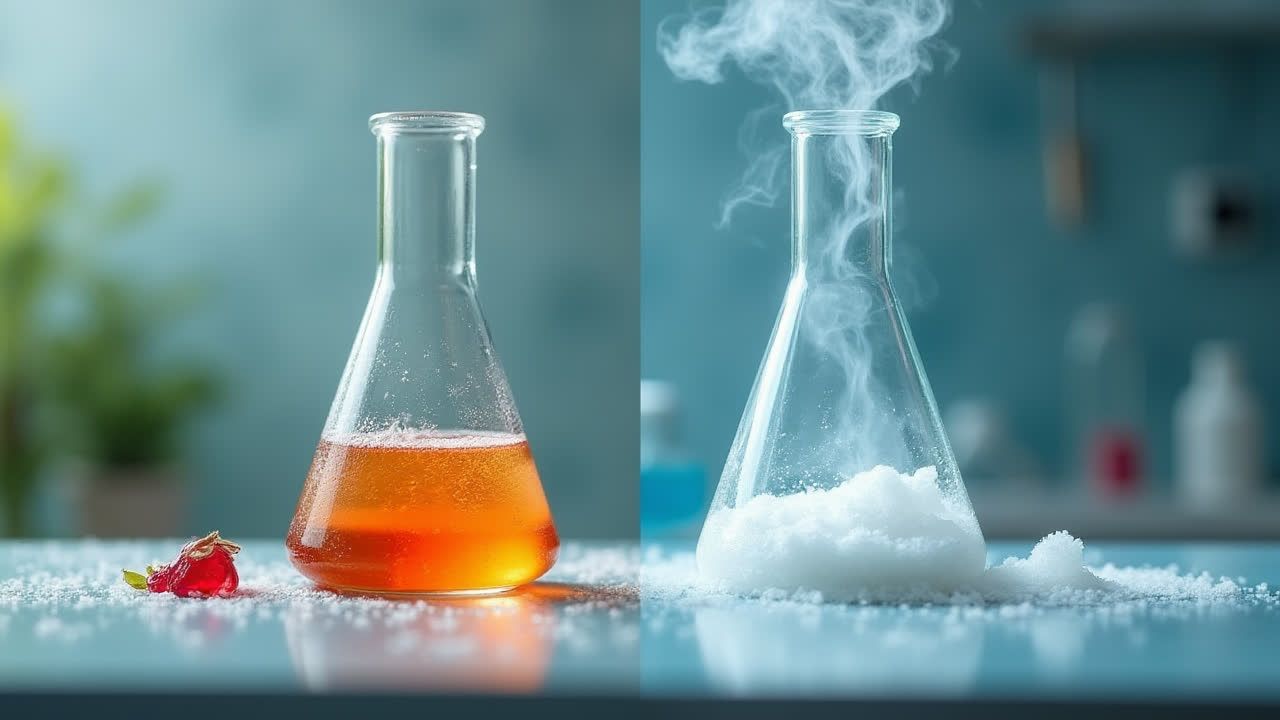
Understanding Esterification: The Formation of Fragrant Compounds
Esterification is a chemical reaction that occurs between an alcohol and an organic acid, resulting in the formation of an ester and water. The process typically requires the presence of an acid catalyst—often sulfuric acid—to facilitate the reaction. I've always been fascinated by how this seemingly simple reaction creates compounds that give fruits their distinctive aromas. Have you ever wondered why a ripe banana smells so appealing? That's esterification at work!
In more technical terms, during esterification, the carboxyl group (COOH) of a carboxylic acid reacts with the hydroxyl group (OH) of an alcohol. This reaction produces an ester molecule and releases water as a byproduct. The general formula for this process can be represented as:
Carboxylic Acid + Alcohol → Ester + Water
One of the most interesting aspects of esterification is its reversibility. Under certain conditions—particularly in the presence of excess water—esters can hydrolyze back into their original components. This property makes esterification reactions dynamic and allows for controlled chemical transformations in various systems. I remember my college professor demonstrating this reversibility by showing how ester scents would gradually change when exposed to humid conditions—a practical example of chemistry in action!
Esters formed through this process aren't just laboratory curiosities; they play crucial roles in our daily lives. From the natural fragrances in essential oils to the artificial flavors in candies, esters contribute significantly to sensory experiences. Beyond their aromatic properties, esters serve as important building blocks for numerous materials we use every day. Polyesters, for instance, are polymeric esters used in fabrics, plastic bottles, and even some medical implants. The versatility of esterification makes it one of the most valuable reactions in organic chemistry and industrial applications.
Neutralization: Balancing Acids and Bases
Neutralization represents a different chemical pathway altogether. It's a reaction that occurs when an acid and a base combine to form water and a salt. At its core, neutralization involves the transfer of protons (H⁺ ions) from the acid to the base, resulting in the formation of water molecules and effectively neutralizing both the acidic and basic properties of the reactants. Sometimes I think of neutralization as a chemical peacekeeper, bringing harmony between opposing forces in solution.
The standard representation of a neutralization reaction can be written as:
Acid + Base → Salt + Water
A classic example that many of us encounter in chemistry classes is the reaction between hydrochloric acid (HCl) and sodium hydroxide (NaOH), which produces sodium chloride (table salt) and water. This reaction doesn't just illustrate neutralization but also emphasizes the importance of stoichiometry—the quantitative relationship between reactants and products in chemical reactions. I still remember my surprise during a lab experiment when I realized the salt we produced was essentially the same compound we sprinkle on our food!
The practical applications of neutralization extend far beyond the chemistry classroom. In agriculture, farmers use limestone (calcium carbonate) to neutralize acidic soils and create better growing conditions for crops. In medicine, antacids work by neutralizing excess stomach acid to relieve indigestion and heartburn. Even our bodies perform countless neutralization reactions to maintain the proper pH balance necessary for biological functions. The environmental impact of neutralization is also significant—acid rain, for instance, can be partially mitigated through natural neutralization processes in soil and water bodies.
What makes neutralization particularly important is its role in maintaining equilibrium in various systems. The pH scale, ranging from 0 (highly acidic) to 14 (highly basic), with 7 representing neutrality, quantifies the concentration of hydrogen ions in a solution. Through neutralization, systems can be adjusted to achieve desired pH levels, which is crucial for everything from industrial processes to maintaining the delicate balance in living organisms. It's rather remarkable how such a fundamental chemical reaction underpins so many aspects of both natural phenomena and human activities.
Comparing Esterification and Neutralization: A Detailed Analysis
| Comparison Factor | Esterification | Neutralization |
|---|---|---|
| Basic Definition | Reaction between an alcohol and an organic acid | Reaction between an acid and a base |
| Reactants | Alcohol and carboxylic acid | Acid and base |
| Products | Ester and water | Salt and water |
| Catalyst Required | Yes (typically sulfuric acid) | No |
| Reversibility | Reversible under specific conditions | Generally irreversible |
| Reaction Rate | Relatively slow without catalyst | Generally rapid |
| pH Change | Minimal pH change | Significant pH change toward neutrality |
| Common Applications | Fragrances, flavorings, plastics, biodiesel | Antacids, wastewater treatment, soil adjustment |
The Chemistry Behind Esterification: Mechanisms and Catalysis
Diving deeper into esterification reveals a fascinating multi-step mechanism. The reaction typically follows what chemists call a nucleophilic acyl substitution pathway. In the presence of an acid catalyst, the carbonyl oxygen of the carboxylic acid becomes protonated, making the carbonyl carbon more susceptible to nucleophilic attack by the alcohol. This forms a tetrahedral intermediate which, after several proton transfers and the elimination of water, results in the formation of an ester.
The role of catalysts in esterification cannot be overstated. Without a catalyst, the reaction would proceed incredibly slowly—sometimes taking days or even weeks to reach completion. Sulfuric acid is commonly used as a catalyst because it not only increases the electrophilicity of the carbonyl carbon but also helps in the elimination of water. In industrial settings, solid acid catalysts like zeolites or ion-exchange resins are often preferred because they can be easily separated from the reaction mixture and reused. I once visited a perfume manufacturing facility where they used specialized catalysts to produce esters with incredibly precise scent profiles—it was chemistry and art merging beautifully!
Temperature also plays a crucial role in esterification kinetics. Generally, higher temperatures accelerate the reaction rate, but excessive heat can lead to unwanted side reactions or degradation of reactants. Many industrial esterification processes operate between 60°C and 150°C, depending on the specific reagents and desired products. The equilibrium nature of esterification presents another challenge—Le Chatelier's principle dictates that to maximize ester yield, either excess alcohol can be used or water can be removed as it forms. Techniques like azeotropic distillation, where a third solvent helps carry water away from the reaction mixture, are commonly employed to drive esterification to completion.
Beyond the traditional carboxylic acid-alcohol esterification, there are several alternative routes to synthesize esters. These include transesterification (the exchange of the alkoxy group of an ester with another alcohol), the reaction of acid chlorides or anhydrides with alcohols, and enzymatic esterification using lipases. Each method offers distinct advantages in terms of yield, selectivity, or reaction conditions. For instance, enzymatic esterification can proceed under mild conditions and often exhibits excellent stereoselectivity, making it invaluable for pharmaceutical applications where specific isomers are required. The diversity of esterification methods highlights the versatility and importance of this reaction in chemical synthesis.
Neutralization in Depth: Ionic Exchanges and Energy Considerations
The molecular dance of neutralization involves more than just the simple combination of acids and bases. At its core, neutralization represents an ionic exchange where the hydrogen ions (H⁺) from the acid combine with hydroxide ions (OH⁻) from the base to form water molecules. Meanwhile, the remaining components—the anion from the acid and the cation from the base—associate to form a salt. This exchange can be represented using ionic equations, which provide a clearer picture of the actual particles involved in the reaction.
Neutralization reactions are typically exothermic, meaning they release heat. The formation of water from H⁺ and OH⁻ ions is an energetically favorable process, with the heat of neutralization for strong acids and bases being approximately -57.1 kJ/mol. This thermal property explains why mixing concentrated acids and bases can lead to dramatic temperature increases—a phenomenon that requires careful consideration in laboratory settings. I still remember a demonstration from my university days where our professor neutralized a strong acid with a strong base in a calorimeter, and we were all surprised by how quickly the temperature rose!
Not all neutralization reactions are created equal, however. The reaction between a strong acid and a strong base results in a neutral salt (pH ≈ 7), but reactions involving weak acids or weak bases produce salts that undergo hydrolysis in water, leading to solutions that may be slightly acidic or basic. This phenomenon explains why a solution of sodium acetate (formed from acetic acid and sodium hydroxide) is slightly basic, while ammonium chloride (from ammonia and hydrochloric acid) creates a slightly acidic solution. Understanding these nuances is crucial for applications requiring precise pH control, such as in pharmaceutical formulations or biochemical research.
The stoichiometry of neutralization provides a powerful analytical tool in the form of titration. By carefully adding a base of known concentration to an acid sample (or vice versa) until the equivalence point is reached, chemists can determine the concentration of unknown solutions with remarkable precision. Indicators that change color at specific pH values, such as phenolphthalein or methyl orange, help identify this crucial point. Modern titration techniques employ pH meters for even greater accuracy. Beyond laboratory analysis, the principles of titration are applied in industries ranging from food production to water treatment, where precise acid-base balance is essential for quality and safety. The mathematical relationship between equivalents of acid and base in neutralization reactions forms the foundation for calculations in acid-base chemistry.
Similarities: Where Esterification and Neutralization Converge
Despite their distinct mechanisms and products, esterification and neutralization share several noteworthy similarities. Both are fundamental chemical reactions that involve the transformation of starting materials into new compounds with different properties. Additionally, both reactions can be classified as substitution reactions, where functional groups are exchanged or replaced. This underlying similarity reflects the elegant patterns that permeate chemical processes, even those that appear quite different on the surface.
Both reactions also involve the participation of water—either as a product (in esterification and neutralization) or potentially as a reactant (in the reverse of esterification, known as hydrolysis). This connection to water molecules highlights the central role that this simple compound plays in organic and inorganic chemistry alike. Furthermore, both reactions can be catalyzed to enhance their efficiency, although the specific catalysts and mechanisms differ significantly between the two processes.
From an industrial perspective, both esterification and neutralization have widespread applications across multiple sectors. They're employed in the production of consumer goods, pharmaceuticals, and industrial chemicals. Both reactions are also utilized in waste treatment processes—esterification can convert waste oils into biodiesel, while neutralization is essential for managing acidic or basic industrial effluents before they're released into the environment. The versatility of these reactions makes them invaluable tools in the chemical industry's toolbox.
Educational significance represents another common thread between these reactions. Both esterification and neutralization are taught as foundational concepts in chemistry education, from high school to university levels. They serve as excellent models for understanding broader chemical principles such as equilibrium, reaction kinetics, and the relationship between molecular structure and reactivity. By comparing and contrasting these reactions, students develop a deeper appreciation for the diversity and interconnectedness of chemical processes. I've found that teaching these reactions side by side helps students grasp the beautiful complexity of chemistry more effectively than presenting them in isolation.
Real-World Applications: Beyond the Laboratory
The practical applications of esterification extend far beyond creating pleasant scents and flavors. In the biodiesel industry, vegetable oils undergo transesterification (a variation of esterification) with methanol to produce fatty acid methyl esters—the main components of biodiesel fuel. This application has gained significant traction as a renewable alternative to petroleum-based diesel. Similarly, in the pharmaceutical sector, esterification is used to modify drug molecules, often improving their lipophilicity and enhancing their ability to cross cell membranes. Some prodrugs are designed as esters that are inactive until enzymatic hydrolysis in the body converts them to their active forms.
The textile industry also heavily relies on esterification processes. Polyesters, formed through the esterification of dicarboxylic acids with diols, constitute one of the most widely used synthetic fibers worldwide. These materials offer durability, wrinkle resistance, and versatility that make them suitable for applications ranging from clothing to industrial fabrics. Additionally, in the food industry, esters are used as emulsifiers and stabilizers, helping to blend ingredients that would normally separate, such as oil and water in salad dressings or mayonnaise.
Neutralization, meanwhile, plays a critical role in environmental remediation. Acid mine drainage, a serious environmental hazard from mining operations, is often treated through neutralization with limestone or other basic materials before the water is released into natural systems. Similarly, scrubbers in industrial smokestacks use neutralization reactions to reduce the emission of acidic pollutants like sulfur dioxide and nitrogen oxides, thereby mitigating acid rain. The controlled neutralization of these compounds represents one of our primary defenses against industrial air pollution.
In medicine, neutralization is the working principle behind antacids, which provide relief from heartburn and acid indigestion by neutralizing excess stomach acid. Common antacids contain bases like calcium carbonate, magnesium hydroxide, or sodium bicarbonate that react with hydrochloric acid in the stomach. The pharmaceutical industry also utilizes neutralization in drug formulation—many active pharmaceutical ingredients are formulated as salts produced through neutralization reactions. These salt forms often offer improved solubility, stability, or bioavailability compared to the free acid or base forms of the drug. The water treatment industry similarly relies on neutralization to adjust the pH of drinking water and wastewater, ensuring both safety for consumption and environmental compatibility upon discharge.
Frequently Asked Questions About Esterification and Neutralization
What are the key factors that affect the rate of esterification?
Several factors significantly impact esterification rates. Temperature is perhaps the most influential—higher temperatures generally accelerate the reaction by providing molecules with more energy to overcome the activation barrier. The concentration of reactants also matters; higher concentrations typically lead to faster reaction rates due to increased molecular collisions. The presence and type of catalyst play a crucial role, with strong acids like sulfuric acid or specialized catalysts like p-toluenesulfonic acid dramatically speeding up the process. The removal of water as it forms can drive the equilibrium toward ester formation, enhancing both rate and yield. Finally, the molecular structure of the reactants affects reactivity—sterically hindered alcohols or carboxylic acids generally react more slowly due to reduced accessibility of their functional groups.
Can neutralization reactions occur in non-aqueous environments?
Yes, neutralization reactions can indeed occur in non-aqueous environments, though the mechanics and products may differ from traditional aqueous neutralizations. In organic solvents, acid-base reactions follow the Brønsted-Lowry or Lewis acid-base concepts rather than strictly producing water and a salt. For example, the reaction between acetic acid and pyridine in toluene produces a pyridinium acetate salt without water formation. Gas-phase neutralizations can also occur, such as when ammonia gas reacts with hydrogen chloride gas to form solid ammonium chloride. These non-aqueous neutralizations are particularly important in organic synthesis, where water-sensitive compounds necessitate anhydrous conditions. They're also relevant in certain industrial processes where water could interfere with desired reactions or product quality. The study of non-aqueous acid-base chemistry has expanded our understanding of proton transfer mechanisms beyond traditional water-based systems.
How are esterification and neutralization used together in industrial processes?
Esterification and neutralization often work in tandem in industrial settings, creating efficient and economically viable processes. In biodiesel production, vegetable oils undergo esterification to convert free fatty acids to esters, followed by neutralization to remove any remaining catalyst and adjust pH. In pharmaceutical manufacturing, drug molecules might be esterified to improve bioavailability, with subsequent neutralization steps to purify the product and form stable salt variants. The polymer industry combines these reactions when producing polyester resins—esterification creates the polymer backbone, while neutralization helps control pH during processing and removes catalyst residues. Wastewater treatment from chemical plants frequently requires both processes: esterification can convert problematic organic acids into more manageable esters, while neutralization adjusts the final pH to environmentally acceptable levels. This complementary relationship between esterification and neutralization allows manufacturers to efficiently transform raw materials into valuable products while managing waste streams and maintaining quality control throughout the production cycle.
Conclusion: The Chemical Distinctions That Shape Our World
The exploration of esterification and neutralization reveals how seemingly similar chemical processes can operate through distinct mechanisms and yield different products with varied applications. While esterification primarily operates in the organic realm, producing the fragrant esters that enhance our sensory experiences and the polymers that structure our material world, neutralization bridges organic and inorganic chemistry, maintaining equilibrium in systems ranging from industrial processes to living organisms.
Understanding the differences between these fundamental reactions extends beyond academic interest—it informs practical applications across diverse fields including environmental science, pharmaceuticals, and materials engineering. The conversion of acids to esters or salts represents chemical transformations that we encounter daily, often without recognition. From the antacid tablet that soothes indigestion to the polyester fabric in clothing, these reactions silently shape our interaction with the material world.
As we continue to face global challenges related to energy, medicine, and environmental sustainability, the principles underlying esterification and neutralization will undoubtedly contribute to innovative solutions. Green chemistry initiatives already leverage esterification for biodiesel production, while advanced neutralization techniques help mitigate industrial pollution. The future may see these reactions optimized further through novel catalysts, enzymatic approaches, or continuous-flow processes that enhance efficiency and reduce environmental impact.
The distinction between esterification and neutralization—one producing esters and the other forming salts—may seem straightforward, but the implications of this difference cascade through countless aspects of chemistry and its applications. By appreciating both the unique characteristics and the surprising similarities of these reactions, we gain a deeper understanding of the chemical principles that govern our world and the transformative potential they hold for addressing future challenges.