Ferrous vs Ferric Iron: Essential Differences You Should Know
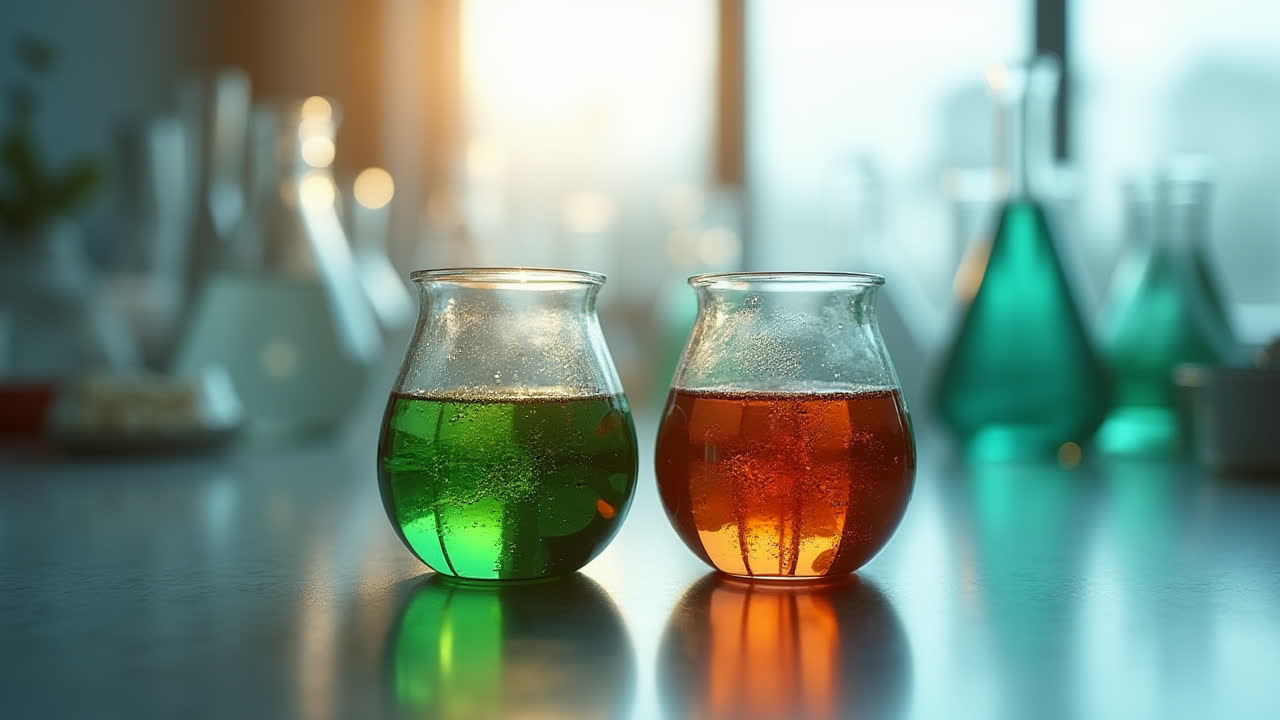
The difference between ferrous and ferric iron lies primarily in their oxidation states. While they're both forms of the same element, their chemical properties, stability, and applications differ significantly. If you've ever wondered why rust forms or how iron supplements work, understanding these two forms is essential.
Iron is one of the most abundant elements on Earth and plays a crucial role in numerous biological and industrial processes. As a transition metal, iron can exist in multiple oxidation states, but the two most common are ferrous (Fe²⁺) and ferric (Fe³⁺). These different forms behave quite differently, and I've often found that even people with some chemistry background mix them up sometimes!
Quick overview: Ferrous iron (Fe²⁺) has a +2 oxidation state, while ferric iron (Fe³⁺) has a +3 oxidation state. This seemingly small difference leads to remarkably different properties and behaviors.
What is Ferrous Iron (Fe²⁺)?
Ferrous iron refers to iron in its +2 oxidation state. In this form, the iron atom has lost two electrons from its outer shell. The electron configuration of elemental iron is 1s²2s²2p⁶3s²3p⁶4s²3d⁶. When iron loses two electrons to form the ferrous state, these electrons come from the 4s orbital, leaving the configuration as 1s²2s²2p⁶3s²3p⁶3d⁶.
Ferrous compounds typically have a pale green or blue-green color when dissolved in water. They're relatively unstable in the presence of oxygen, which is why iron objects start developing a greenish tint before fully rusting. I've noticed this phenomenon on old water pipes in my basement – that greenish layer is actually ferrous compounds forming!
One interesting property of ferrous iron is its solubility in water. Ferrous compounds tend to be more soluble than their ferric counterparts, making them more bioavailable. This is why many iron supplements contain ferrous forms like ferrous sulfate or ferrous gluconate. Your body can absorb these forms more easily, though they sometimes cause digestive discomfort – something I experienced firsthand when taking iron supplements during pregnancy.
Common Ferrous Compounds
- Ferrous oxide (FeO) - Used in pigments and ceramics
- Ferrous sulfate (FeSO₄) - Common in iron supplements and water treatment
- Ferrous chloride (FeCl₂) - Used in wastewater treatment
- Ferrous gluconate - A gentler form used in iron supplements
What is Ferric Iron (Fe³⁺)?
Ferric iron represents iron in its +3 oxidation state, where the atom has lost three electrons. Starting from the same elemental iron configuration, ferric iron loses two electrons from the 4s orbital and one from the 3d orbital, resulting in the configuration 1s²2s²2p⁶3s²3p⁶3d⁵.
This configuration is particularly stable because the five electrons in the d orbitals are distributed one per orbital (half-filled), which is energetically favorable according to Hund's rule. This enhanced stability explains why iron naturally tends to oxidize to the ferric state when exposed to air over time. Ever wonder why rust keeps spreading even when you try to contain it? That's the iron seeking this more stable configuration!
Ferric compounds typically have a reddish-brown or yellow color, which is most famously seen in rust (ferric oxide). They're generally less soluble in water compared to ferrous compounds and can form precipitates that give water a cloudy appearance. If you've ever seen reddish-brown stains in your sink or bathtub, you're looking at ferric iron deposits.
While ferric iron is less bioavailable than ferrous iron, it plays important roles in various biological systems. For example, in our bodies, the iron in hemoglobin cycles between the ferrous and ferric states as it binds and releases oxygen – a fascinating process that enables our very survival!
Common Ferric Compounds
- Ferric oxide (Fe₂O₃) - Rust, used in polishing compounds and pigments
- Ferric chloride (FeCl₃) - Used in water purification and as an etchant
- Ferric sulfate (Fe₂(SO₄)₃) - Used in water treatment and pigments
- Ferric citrate - Used in some iron supplements and as a food additive
Ferrous vs Ferric: Comprehensive Comparison
Let's break down the key differences between these two forms of iron in more detail. Understanding these distinctions can help you grasp everything from rust formation to how our bodies process iron.
| Characteristic | Ferrous Iron (Fe²⁺) | Ferric Iron (Fe³⁺) |
|---|---|---|
| Oxidation State | +2 | +3 |
| Electron Configuration | 1s²2s²2p⁶3s²3p⁶3d⁶ | 1s²2s²2p⁶3s²3p⁶3d⁵ |
| Stability | Less stable, easily oxidizes in air | More stable due to half-filled d orbitals |
| Color in Solution | Usually pale green or blue-green | Typically yellow to reddish-brown |
| Water Solubility | Generally more soluble | Generally less soluble |
| Biological Availability | More bioavailable | Less bioavailable |
| Common Examples | FeSO₄, FeCl₂, FeO | Fe₂O₃, FeCl₃, Fe₂(SO₄)₃ |
| Role in Rust Formation | Intermediate stage | Final rust product |
The Conversion Process: Oxidation and Reduction
The transformation between ferrous and ferric iron occurs through oxidation-reduction (redox) reactions. When ferrous iron (Fe²⁺) loses an electron, it becomes ferric iron (Fe³⁺) – this is oxidation. Conversely, when ferric iron gains an electron to become ferrous iron, that's reduction.
This process happens constantly in nature and is responsible for the rusting of iron objects. When exposed to air and moisture, elemental iron (Fe⁰) first oxidizes to ferrous iron (Fe²⁺), which then further oxidizes to ferric iron (Fe³⁺) in the form of rust. I've watched this process unfold on an old bicycle I left outside one rainy season – within weeks, the transformation was dramatic!
The conversion between these two forms also has important implications for water treatment, soil chemistry, and biological systems. In waterlogged soils with little oxygen, iron tends to exist in the ferrous state, while in well-aerated soils, the ferric form predominates. This difference affects nutrient availability for plants and can even impact the soil's color and structure.
Have you ever noticed how some iron-rich soils have a distinctive reddish color? That's ferric iron compounds at work! On the other hand, waterlogged soils often develop a grayish-green tint due to the presence of ferrous compounds. Nature's chemistry is truly fascinating when you know what to look for.
Applications and Significance
Both ferrous and ferric forms of iron have numerous practical applications across various fields. Their distinct properties make them suitable for different uses:
Ferrous Applications
Ferrous iron is widely used in nutritional supplements due to its higher bioavailability. Many iron pills contain ferrous sulfate, gluconate, or fumarate. It's also used in water treatment to remove phosphates and in various industrial processes as a reducing agent.
In metallurgy, the conversion of iron ore to metallic iron involves the reduction of ferric compounds to the ferrous state and eventually to elemental iron. This fundamental process has been the backbone of human technological development for thousands of years – from the first crude iron tools to modern steel skyscrapers.
Ferric Applications
Ferric compounds find extensive use in water purification as coagulants that help remove suspended particles. Ferric chloride is commonly used for this purpose in municipal water treatment plants. Ferric oxide is used as a pigment (providing that classic rust-red color), polishing compound, and in magnetic recording media.
In medicine, some contrast agents for MRI imaging contain ferric iron compounds. These compounds can enhance the visibility of certain tissues and help diagnose various conditions. I remember being amazed at how clear my knee MRI was after receiving a contrast agent – that's ferric chemistry in action!
Frequently Asked Questions
Which form of iron is better absorbed by the human body?
Ferrous iron (Fe²⁺) is generally better absorbed by the human body compared to ferric iron (Fe³⁺). This is why most dietary iron supplements contain ferrous forms like ferrous sulfate, ferrous gluconate, or ferrous fumarate. The absorption rate of ferrous iron can be 2-3 times higher than ferric iron. However, ferric forms can still be utilized, especially when combined with certain compounds that aid absorption. Your body's ability to absorb iron is also affected by other dietary factors – vitamin C enhances absorption, while calcium, tannins (in tea), and phytates (in some grains) can inhibit it.
Why does iron rust faster in saltwater than in freshwater?
Iron rusts faster in saltwater because salt (sodium chloride) increases the electrical conductivity of water, which accelerates the electrochemical reaction that causes rusting. This process, called galvanic corrosion, involves the flow of electrons between different areas of the metal. The salt ions help complete the electrical circuit needed for this reaction. Additionally, chloride ions from salt can break down the initial protective oxide layer that forms on iron, exposing more metal to oxidation. This is why coastal structures and vehicles near oceans require special anti-corrosion treatments – the conversion of iron to ferrous and then to ferric compounds (rust) happens much more rapidly in these environments.
Can ferric iron be converted back to ferrous iron?
Yes, ferric iron (Fe³⁺) can be converted back to ferrous iron (Fe²⁺) through a reduction reaction. This conversion requires the addition of an electron to the ferric ion. Various reducing agents can accomplish this, including certain chemicals like ascorbic acid (vitamin C), sulfur dioxide, or hydrogen sulfide. In biological systems, specialized enzymes can facilitate this reduction. In industrial processes, electrical current can also be used to reduce ferric to ferrous iron through electrolysis. This redox cycling between ferrous and ferric forms is crucial in many biological and environmental processes, including oxygen transport in blood, photosynthesis in plants, and nutrient cycling in soils.
Conclusion
The difference between ferrous and ferric iron goes well beyond simple chemistry – it affects everything from how our bodies use iron to how our infrastructure weathers over time. While ferrous iron (Fe²⁺) is more soluble and bioavailable but less stable, ferric iron (Fe³⁺) offers greater stability at the cost of reduced solubility and bioavailability.
Understanding these differences can help explain countless phenomena we encounter in daily life, from the rust on old tools to the iron supplements in our medicine cabinets. The next time you see a rusty nail or take an iron supplement, you'll know exactly which form of iron you're dealing with!
While I've tried to cover the most important aspects of this fascinating topic, chemistry is a vast field with endless nuances. There's always more to learn about how these different forms of iron interact with our world. What other iron compounds have you encountered in your daily life?