Fungus Gnats vs Fruit Flies: 7 Critical Differences to Know
Have you ever spotted tiny flying insects around your houseplants or fruit bowl and wondered what exactly they are? You're not alone. Fungus gnats and fruit flies are two common household pests that are frequently mistaken for one another. While both can be annoying little visitors in our homes, they actually have different characteristics, behaviors, and control methods. Understanding these differences is crucial for effectively managing these pests and keeping your home insect-free.
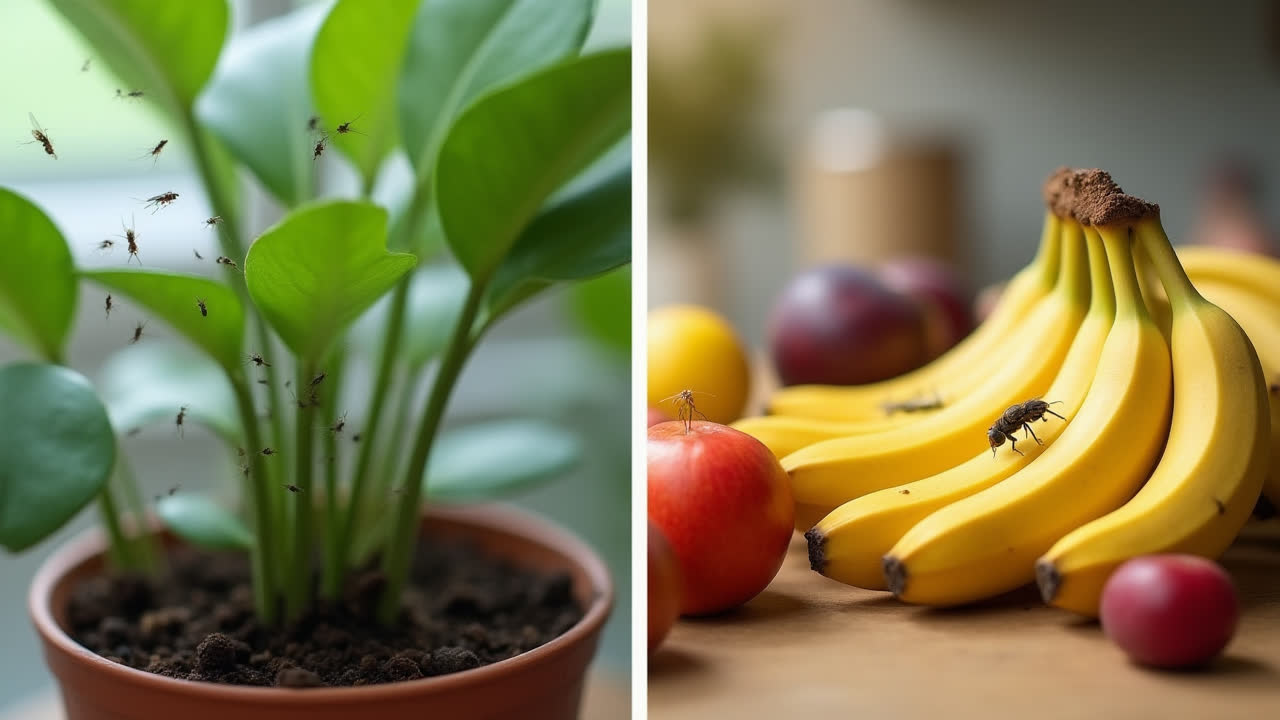
The main difference between these pesky fliers is quite striking when you know what to look for. Fungus gnats feature dangling legs and elongated bodies that make them resemble mini mosquitoes, while fruit flies have a more rounded silhouette that looks like a smaller version of the common house fly. But that's just the beginning – these insects differ in everything from their preferred habitats to the potential threats they pose to your home.
Understanding Fungus Gnats: The Plant Pests
Fungus gnats are small, dark-colored flying insects that belong to the superfamily Sciaroidea. These tiny pests range from 2 to 8 mm in length and are commonly found hovering around houseplants. One of their most distinctive features is their mosquito-like appearance with long legs and slender bodies. Unlike some other household pests, fungus gnats are actually quite fascinating from a biological standpoint – they possess antifreeze proteins that allow them to tolerate cold conditions, which explains why they can sometimes appear even during cooler months.
The lifecycle of fungus gnats is intimately connected to soil and moisture. The larvae stage is particularly noteworthy as they feed primarily on fungi growing in the soil of your houseplants. This feeding activity actually helps decompose organic matter in nature, making them beneficial in outdoor environments. However, when they take up residence in your potted plants, they can become problematic as they may damage delicate plant roots, especially in seedlings and young plants. Some species of fungus gnats can even transmit diseases like pythium, which can be devastating to your indoor garden.
While adult fungus gnats are mostly a nuisance rather than harmful, their presence usually indicates overwatering of plants. They're particularly attracted to consistently moist soil, which provides the perfect breeding ground for the fungi they feed on. I've noticed in my own houseplant collection that plants with constantly damp soil are virtual magnets for these pests. The adults themselves don't cause direct damage to plants, but their presence is a good indicator that conditions might be too wet for optimal plant health. Have you ever noticed them gathering around the drainage holes of your planters? That's a telltale sign your plants might be getting a bit too much water.
Fruit Flies: Kitchen Invaders
On the other hand, fruit flies (Drosophila melanogaster) belong to the family Drosophilidae and are sometimes called common fruit flies or vinegar flies. These insects measure about 3 mm in length and 2 mm in width, with a distinct yellow-brown coloration that sets them apart from their fungus gnat cousins. One of the most distinctive features of fruit flies is their large, brick-red eyes, which are easily visible even to the naked eye. Their body is segmented into the head, thorax, and abdomen, with the abdomen featuring transverse black rings that actually help distinguish between males and females.
Fruit flies are true flies belonging to the order Diptera, meaning they have just two wings instead of four. Their movement pattern is quite interesting – they walk using a tripod gait where three legs swing together while the other three remain stationary. When it comes to feeding, fruit flies use their proboscis both for detecting taste cues and for ingesting food. Unlike fungus gnats, which are primarily associated with plants, fruit flies are drawn to ripening or rotting fruits, vegetables, and other fermenting organic matter. That half-eaten banana you forgot on the counter? It's practically a five-star hotel for these little insects.
The life cycle of fruit flies is remarkably fast, which explains why they can seem to appear out of nowhere and multiply rapidly. From egg to adult, the process can take just about a week under optimal conditions. Females can lay hundreds of eggs at a time on the surface of fermenting foods or other moist, organic materials. I once left a bowl of peaches on my kitchen counter for a weekend getaway, only to return to what seemed like an entire fruit fly civilization! Their attraction to ethanol and other byproducts of fermentation means they're commonly found around not just fruits but also drains, garbage disposals, empty bottles, and trash cans – anywhere that organic matter might be decomposing.
Key Similarities Between Fungus Gnats and Fruit Flies
Despite their differences, fungus gnats and fruit flies do share some common characteristics that contribute to their frequent misidentification. Both are small dipteran flies, measuring about one-eighth of an inch, making them difficult to distinguish without close observation. They're both considered nuisance pests in household environments, causing similar issues such as transferring germs and bacteria like E.coli and Salmonella from dirty surfaces to clean ones, potentially contributing to food contamination.
Both types of flies can be found indoors throughout the year, though they tend to be more prevalent during warmer months when breeding conditions are optimal. They also share similar general habitats – human dwellings – though their specific preferred microhabitats differ. From a taxonomic perspective, both belong to the order Diptera, which encompasses true flies. This shared classification explains some of their basic structural similarities, including having a single pair of wings.
Another similarity worth noting is that both pests can be indicators of underlying issues in your home. Just as fungus gnats might signal overwatering of plants, fruit flies can indicate the presence of rotting food or organic matter that needs attention. In this way, both insects serve as unintentional (and unwelcome) messengers about conditions in your living space that might need addressing. And let's be honest – both can be equally annoying when they're flying around your face or hovering over your freshly prepared meal!
Comparison: Fungus Gnats vs Fruit Flies
| Characteristic | Fungus Gnats | Fruit Flies |
|---|---|---|
| Appearance | Slender body with long legs, resembles tiny mosquitoes | Rounded silhouette, resembles small house flies |
| Size | 2-8 mm long | 3 mm long, 2 mm wide |
| Color | Gray or black | Yellow-brown to black |
| Eyes | Small and difficult to see | Large, brick-red, and prominent |
| Preferred Habitat | Soil of potted plants and gardens | Ripening fruits, vegetables, and fermented materials |
| Larval Food Source | Fungi in soil and organic matter | Rotting fruits and slime in drains |
| Potential Damage | Plant root damage, especially to seedlings | Food contamination and disease transmission |
| Taxonomy | Superfamily Sciaroidea | Family Drosophilidae |
Identification Tips: How to Tell Them Apart
Correctly identifying whether you're dealing with fungus gnats or fruit flies is the crucial first step in effective pest management. The physical appearance offers the most immediate clues. Fungus gnats have slender, elongated bodies with long, dangling legs that give them a mosquito-like appearance. In contrast, fruit flies have more compact, rounded bodies with shorter legs, resembling miniature versions of common house flies. Their movement patterns also differ – fungus gnats tend to fly in more erratic patterns, while fruit flies often hover in one area before making short, direct flights.
Location is another key identifier. If you're noticing small flying insects primarily around your houseplants, particularly when watering, you're likely dealing with fungus gnats. Their presence is strongly tied to moist soil environments. On the flip side, if you're seeing these pests congregating around fruit bowls, wine glasses, garbage cans, or kitchen drains, fruit flies are the probable culprits. I've found this location test to be remarkably reliable – the pests almost never stray far from their preferred environments.
The eyes provide another distinctive feature for identification. Fruit flies have characteristic large, brick-red eyes that are easily visible even to the naked eye, especially when viewed from the side. Fungus gnats, by comparison, have much smaller eyes that are difficult to see without magnification. If you're able to examine the insects more closely (perhaps after trapping some), this eye difference is one of the most definitive ways to distinguish between the two species. Color can also help with identification – fungus gnats tend to be uniformly dark (gray or black), while fruit flies often have a more yellow-brown coloration, particularly on their abdomen.
Control and Prevention Strategies
Managing fungus gnats and fruit flies requires different approaches due to their distinct habitats and lifecycles. For fungus gnats, controlling soil moisture is paramount. Allow the top inch or two of soil to dry out completely between waterings, as this breaks the lifecycle of the gnats by creating an inhospitable environment for eggs and larvae. Yellow sticky traps placed at soil level can help capture adults, while beneficial nematodes or food-grade diatomaceous earth applied to the soil can help control larvae populations. In severe infestations, repotting plants with fresh, sterile soil might be necessary.
For fruit flies, sanitation is the key control strategy. Remove or refrigerate ripening fruits and vegetables, clean up spills immediately, and ensure trash is emptied regularly. Drains can be breeding grounds for fruit flies, so cleaning them with a mixture of baking soda and vinegar followed by boiling water can help eliminate larvae. DIY traps can be effective – a container with apple cider vinegar, a drop of dish soap, and covered with plastic wrap with small holes punched in it works surprisingly well. I've had great success with this simple trap, sometimes capturing dozens of fruit flies overnight.
Prevention strategies overlap somewhat but have important distinctions. For both pests, maintaining clean environments is essential. However, for fungus gnats, focus on proper plant care – avoid overwatering, ensure good drainage in pots, and consider adding a layer of sand or decorative stones on top of the soil to discourage egg-laying. For fruit flies, prompt food disposal, regular cleaning of kitchen surfaces, and careful storage of produce (especially in summer months) are effective preventive measures. Mesh screens on windows and doors can help prevent outdoor populations from making their way inside. Remember that both these pests have short lifecycles, so consistent application of these strategies for a few weeks is usually needed to break their reproductive cycle completely.
Frequently Asked Questions
Are fungus gnats or fruit flies harmful to humans?
While neither fungus gnats nor fruit flies bite humans or cause direct harm, both can be potential carriers of bacteria like E. coli and Salmonella. Fruit flies pose a slightly higher risk of food contamination as they directly interact with food items, potentially transferring bacteria from unsanitary surfaces to food. Fungus gnats primarily remain around plants and soil, making them less likely to contaminate food but they can be vectors for plant diseases. Both are generally considered nuisance pests rather than health hazards, but good hygiene practices are still recommended when dealing with infestations.
How quickly can fungus gnats and fruit flies reproduce?
Both pests have remarkably fast reproduction rates, but fruit flies typically reproduce more rapidly. Fruit flies can complete their entire life cycle from egg to adult in just 8-10 days under optimal conditions, with females capable of laying up to 500 eggs in their lifetime. Fungus gnats have a slightly longer lifecycle of about 17-28 days from egg to adult, with females laying approximately 100-300 eggs in moist soil. This rapid reproduction rate explains why small problems can quickly escalate into full-blown infestations if not addressed promptly, especially during warmer months when development times are shorter.
Can the same traps be used for both fungus gnats and fruit flies?
While there is some overlap in trapping methods, optimally effective traps differ between these pests due to their different attractants and behaviors. Yellow sticky traps work well for fungus gnats because they're attracted to the yellow color, and placing these traps horizontally at soil level maximizes their effectiveness. Fruit flies, however, are more effectively trapped using fermented bait traps containing apple cider vinegar, wine, or overripe fruit with a drop of dish soap to break surface tension. Some commercial traps claim to work for both pests, but they typically use different attractants on different parts of the trap. For the best results, use traps specifically designed for the particular pest you're targeting.
Conclusion
Understanding the difference between fungus gnats and fruit flies is more than just an entomological curiosity – it's essential knowledge for effective pest management in your home. These common household insects, while similar in size, have distinct characteristics, preferred habitats, and control methods. Fungus gnats, with their mosquito-like appearance and affinity for moist soil, primarily affect houseplants and can damage roots. Fruit flies, recognizable by their rounded bodies and red eyes, target ripening produce and can potentially contaminate food.
By correctly identifying which pest you're dealing with, you can implement targeted control strategies that address the specific breeding and feeding patterns of each insect. For fungus gnats, focus on moisture control in plant soil and using beneficial nematodes or sticky traps. For fruit flies, emphasize sanitation, proper food storage, and vinegar-based traps. Remember that both pests reproduce quickly, so consistent application of these strategies over several weeks is usually necessary to completely resolve infestations.
Next time you spot tiny flying insects in your home, take a moment to observe their physical characteristics and location. Are they hovering around your houseplants with dangling legs, or congregating near your fruit bowl with rounded bodies? With the knowledge gained from this article, you'll be able to quickly identify the culprit and take appropriate action, keeping your home both plant-friendly and pest-free. After all, a little knowledge goes a long way in turning the tide in the battle against these tiny but persistent household invaders.