Gallium vs Mercury: Unraveling the Key Differences Between These Liquid Metals
Have you ever wondered about those fascinating metals that barely stay solid at room temperature? Gallium and mercury are two incredible elements that share some surprising similarities while displaying remarkable differences. As someone who's always been captivated by chemistry, I find their contrast particularly intriguing. Both can exist as liquids near room temperature, yet their characteristics diverge significantly when it comes to density, toxicity, and practical applications.
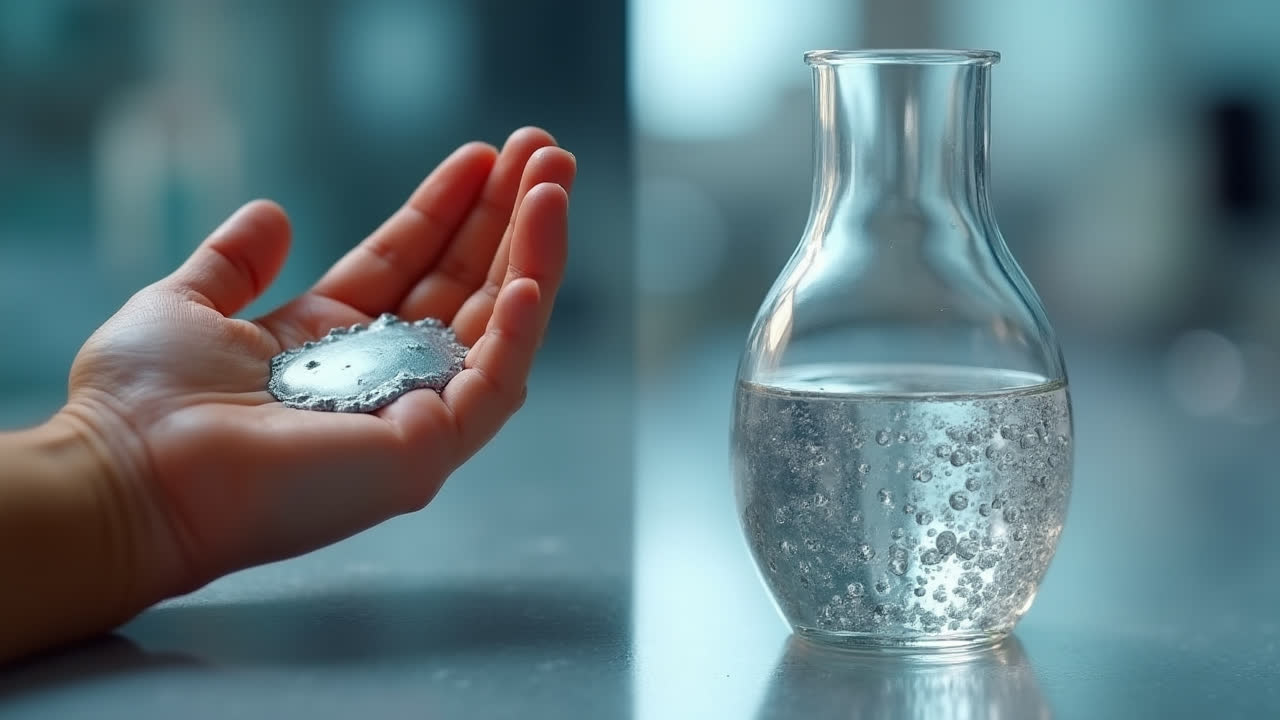
When I first encountered gallium in my early chemistry days, I was amazed by how it could melt in your palm. Meanwhile, mercury had always been that mysterious, silvery liquid we'd see in old thermometers but were warned never to touch. The differences between these two metals go far beyond their appearance, stretching into their atomic structure, safety considerations, and modern technological uses.
Understanding Gallium: The Gentle Giant of Liquid Metals
Picture this: a metal that melts at just 29.8°C, barely above room temperature. Gallium (Ga) is truly unique with its atomic number 31. What strikes me most about gallium is its paradoxical nature - it's remarkably safe to handle, yet packs impressive technological potential. The metal's silvery-white appearance with a subtle bluish tint gives it an almost ethereal quality.
I've observed how gallium's crystalline structure transforms into a dense liquid with surprisingly high surface tension. This transformation is almost mesmerizing to watch. Its low vapor pressure means it won't evaporate easily, making it stable under normal conditions. This stability is something that immediately sets it apart from its more volatile cousin, mercury.
The applications of gallium in modern technology are mind-boggling. From gallium arsenide semiconductors to LED production, this metal is quietly revolutionizing our digital world. In the medical field, gallium compounds show promise in cancer treatment, though this application is still being researched. You've probably used gallium-powered devices today without even realizing it!
Mercury: The Ancient Quicksilver
Mercury (Hg), with atomic number 80, holds the unique distinction of being the only metal that's liquid at standard conditions. Its melting point of -38.83°C means it remains liquid in most earthly environments. This characteristic gave it the ancient name "quicksilver" - quick meaning "alive" in old English, referring to its fluid movement.
The high density of mercury creates quite a spectacle. I remember being fascinated watching videos where heavy objects floated on its surface like corks on water. However, this beauty comes with a dangerous catch: mercury toxicity is severe, affecting the nervous system, kidneys, and brain. The phrase "mad as a hatter" actually comes from mercury poisoning in 19th-century hat makers!
Despite its toxicity, mercury has been historically important in electrical applications, fluorescent lighting, and even dental work. The good news? Modern science is phasing out mercury use in favor of safer alternatives. We're slowly saying goodbye to mercury thermometers and fluorescent bulbs, replaced by digital devices and LED lighting that often incorporate safer materials like gallium compounds.
Comparative Analysis Table
| Comparison Feature | Gallium | Mercury |
|---|---|---|
| Chemical Symbol | Ga | Hg |
| Atomic Number | 31 | 80 |
| Melting Point | 29.76°C | -38.83°C |
| Boiling Point | 2204°C | 356.7°C |
| Density | Very low relative density | Extremely high density |
| Metal Type | Post-transition metal | Transition metal |
| Toxicity Level | Low toxicity | Highly toxic |
| Primary Modern Use | Semiconductors, electronics | Being phased out |
Physical Properties That Matter
The physical differences between gallium and mercury are striking. While both metals can exist as liquids, their densities tell different stories. Mercury's exceptional density - about 13.5 g/cm³ - means you could (hypothetically) stand on its surface if you had special boots. It's so dense that even lead will float on it!
Gallium, on the other hand, has a much lower density, closer to aluminum. This makes it less useful for applications requiring heavy liquids but perfect for electronics where weight matters. I find it fascinating how this density difference influences their behavior - mercury forms perfect droplets due to its high surface tension, while gallium tends to wet most surfaces it contacts.
Temperature plays intriguing roles with both metals. Gallium's melting point at 29.8°C means you can literally melt it in your hand (safely!). Mercury stays liquid in most environments we encounter. But here's a fun fact: in extremely cold conditions, mercury becomes solid and actually brittle enough to shatter like glass!
Safety and Environmental Considerations
Here's where the two metals really diverge. Mercury toxicity is well-documented and severe. It accumulates in the body, crosses the blood-brain barrier, and can cause irreversible damage. The environmental impact is equally concerning - mercury bioaccumulates in the food chain, particularly affecting fish and ultimately humans who consume them.
Gallium, thankfully, presents a much safer profile. While it's not something you'd want to drink, skin contact is generally safe. This safety advantage has led to gallium replacing mercury in many applications. For instance, galinstan (a gallium-indium-tin alloy) now substitutes for mercury in thermometers. It's still a liquid metal but without the toxic baggage.
Environmental agencies worldwide are pushing for mercury reduction. The Minamata Convention on Mercury aims to phase out mercury use globally. Meanwhile, gallium research expands, exploring new applications where we once relied on mercury's unique properties.
Modern Applications: Where They Shine
The technological applications showcase how different these metals truly are. Gallium dominates the modern electronics industry. Every smartphone you use likely contains gallium arsenide components. These semiconductors enable high-speed data transmission and improved battery efficiency. The next generation of solar cells also incorporates gallium compounds for better energy conversion rates.
Mercury's traditional applications are shrinking rapidly. While it still appears in some industrial processes and laboratory equipment, alternatives are constantly being developed. The beautiful but dangerous mercury barometer is giving way to digital alternatives. However, mercury remains crucial in some specialized applications where its unique properties are irreplaceable - at least for now.
Looking to the future, I see gallium's star rising while mercury's dims. The push for green technology and safer materials gives gallium a significant advantage. Who knows? Maybe in a few decades, we'll look back at mercury use the way we now view leaded gasoline - as a necessary but ultimately dangerous phase in human innovation.
Frequently Asked Questions
Is it safe to touch gallium with bare hands?
Yes, gallium is generally safe to handle with bare hands. Unlike mercury, gallium has very low toxicity. However, it's best to wash your hands afterward and avoid contact with jewelry, as gallium can react with some metals.
Why is mercury so much denser than gallium?
The density difference comes down to atomic structure. Mercury has 80 protons and a larger atomic mass compared to gallium's 31 protons. The electron configuration and crystal structure also contribute to this significant density difference.
Can gallium replace mercury in all applications?
While gallium and its alloys can replace mercury in many applications like thermometers, some specialized industrial and scientific uses still require mercury's unique properties. However, research continues to find suitable alternatives for most remaining mercury applications.