History vs Prehistory: Key Differences You Should Know
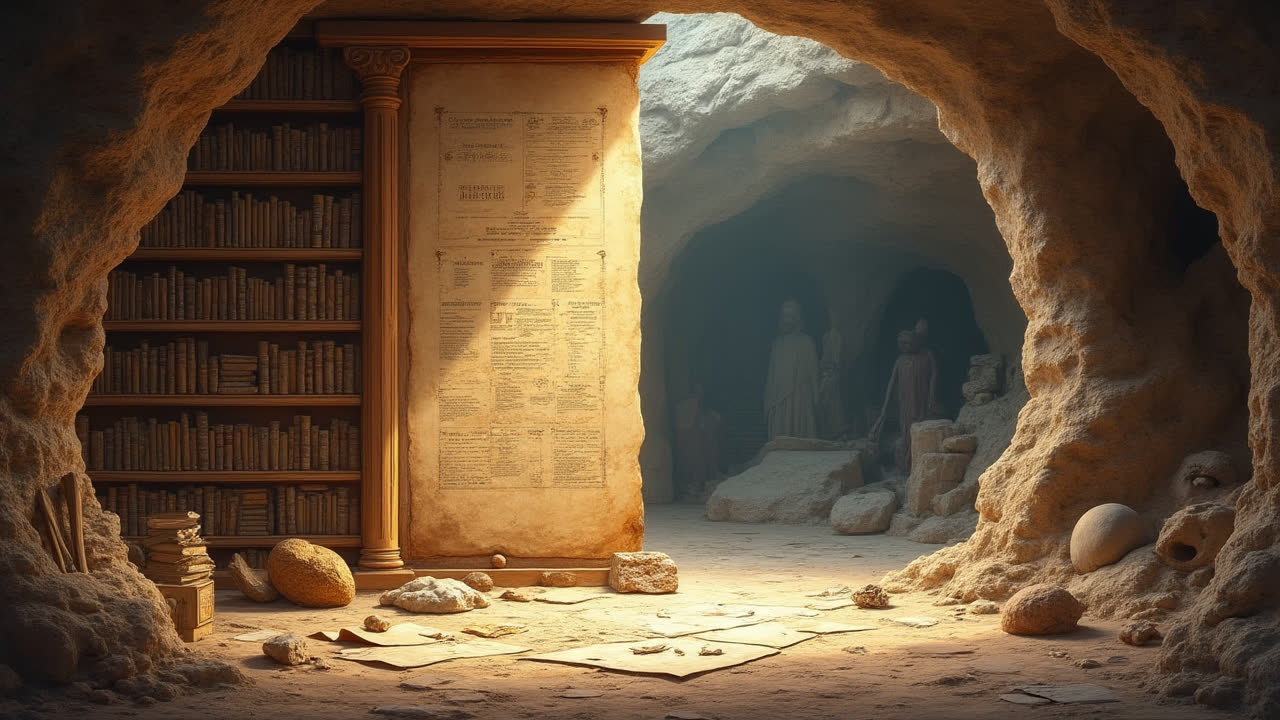
When we look back at the human journey through time, we often use terms like history and prehistory to categorize different epochs. But have you ever wondered what exactly separates these two distinct periods? The distinction might seem obvious at first glance, but there's much more to it than meets the eye. In this article, we'll dive deep into the fascinating boundaries between recorded history and the mysterious era that came before.
The timeline of human existence is incredibly vast, stretching back millions of years. Throughout this extensive period, our ancestors evolved, developed tools, created art, built settlements, and eventually established complex civilizations. However, not all of this time falls under what scholars classify as "history." The dividing line between history and prehistory isn't about specific dates but rather about something more fundamental to how we understand our past.
I've always found it fascinating how something as seemingly simple as the invention of writing could so dramatically reshape our connection to the past. Think about it—without written records, how would we know the names of ancient kings, the details of old battles, or the beliefs of civilizations long gone? It's like trying to understand a story when you've only been shown scattered pictures without any text. This crucial distinction is what makes the study of these two periods so different yet equally important.
What is History? Understanding the Age of Written Records
History, in its most academic sense, refers specifically to the study of the past through written documentation. When historians talk about "history," they're referring to the time period that begins with the invention and implementation of writing systems. This crucial development allowed humans to record events, thoughts, laws, and stories in a way that could be preserved and passed down through generations with greater accuracy than oral traditions alone.
The advent of writing revolutionized human civilization in countless ways. Suddenly, knowledge could be stored externally rather than solely in human memory. Complex administrative systems could develop, religions could codify their beliefs, and rulers could document their achievements for posterity. Perhaps most importantly for our discussion, people could create records that would eventually become the primary sources that historians use to understand past societies.
These historical records come in diverse forms across different civilizations. Early writing appeared on clay tablets in Mesopotamia, papyrus scrolls in Egypt, oracle bones in China, and palm leaves in India. Later, parchment, paper, and eventually digital formats would emerge. Each medium has its own preservation challenges and biases, which historians must carefully consider when interpreting these sources.
It's worth noting that many early written records weren't created to serve future historians. Most were pragmatic documents—inventories, tax records, royal decrees, religious texts—created for immediate practical purposes. Others were deliberately crafted to promote particular viewpoints, especially those commissioned by rulers or religious authorities. Since writing was a privileged skill for much of history, these records often represent elite perspectives rather than those of ordinary people. This presents certain limitations and biases that historians must work to recognize and account for in their research.
I remember visiting a museum once and standing before a glass case containing a clay tablet covered in cuneiform writing from ancient Mesopotamia. What struck me wasn't just its age—around 4,000 years old—but the fact that it was a receipt for beer deliveries! Such an ordinary document, yet it connected me directly to the everyday concerns of people who lived millennia ago. That's the power of written history: it bridges vast stretches of time in remarkably intimate ways.
What is Prehistory? Exploring the Time Before Writing
The term prehistory literally means "before history" and refers to the vast period of human existence before the development of writing systems. This immense timespan encompasses roughly 99% of human evolutionary history, stretching from the emergence of the earliest human-like beings millions of years ago to the relatively recent invention of writing around 5,000 years ago in some regions.
But don't let the "pre" prefix fool you—prehistory doesn't mean this period was somehow less important or less complex than written history. During this time, humans achieved remarkable milestones: the control of fire, the development of increasingly sophisticated stone tools, the domestication of plants and animals, the creation of stunning cave art, the construction of monumental structures like Stonehenge, and the establishment of the first permanent settlements. These achievements laid the essential groundwork for later historical civilizations.
How do we know about prehistory if there are no written records from this time? Archaeologists and anthropologists use various scientific methods to piece together this distant past. They excavate ancient sites to uncover artifacts, analyze fossilized remains, study cave paintings, examine changes in pollen samples to track agricultural development, and use cutting-edge techniques like radiocarbon dating, DNA analysis, and ground-penetrating radar to reveal hidden aspects of prehistoric life.
Prehistory is traditionally divided into three major technological ages: the Stone Age (further subdivided into Paleolithic, Mesolithic, and Neolithic periods), the Bronze Age, and the Iron Age. These classifications are based on the primary materials used for tools and weapons during each period, though the timing of these transitions varied greatly across different regions of the world.
I've always found it somewhat poetic that we have no words directly from prehistoric peoples, yet we can still hear their voices through the objects they left behind. A carefully crafted stone hand-axe, a delicate piece of jewelry, or a painted cave wall—each tells a story about their creators' skills, values, and understanding of the world. These silent artifacts speak volumes when we learn how to listen to them.
Comparative Analysis: History vs Prehistory
| Comparison Factor | History | Prehistory |
|---|---|---|
| Definition | Period of recorded events through writing | Period before writing systems were developed |
| Time Period | Approximately last 5,000 years (varies by region) | From human origins (millions of years) until writing |
| Primary Sources | Written records, inscriptions, manuscripts | Archaeological artifacts, fossils, cave art |
| Research Methods | Textual analysis, archival research | Archaeological excavation, radiocarbon dating |
| Key Researchers | Historians, paleographers | Archaeologists, physical anthropologists |
| Level of Detail | Can be highly specific about events, names, dates | Generally broader patterns with fewer specifics |
| Chronological Precision | Often precise to year or even day | Usually ranges of years or decades |
| Regional Variation | Begins at different times across regions | Ends at different times across regions |
The Transition: From Prehistory to History
The shift from prehistory to history wasn't a sudden, worldwide event. Instead, it occurred at different times in different places, creating a complex patchwork of prehistoric and historic periods across the globe. This transition is particularly fascinating because it allows us to see how the development of writing transformed societies in real time.
The earliest writing systems emerged independently in several regions. In Mesopotamia, cuneiform writing developed around 3400 BCE, primarily for accounting purposes in the increasingly complex urban centers. In Egypt, hieroglyphic writing appeared around 3200 BCE, while in China, oracle bone script dates back to around 1600 BCE. In Mesoamerica, the Olmec and Zapotec civilizations developed writing systems by around 900-600 BCE.
The transition period itself offers unique insights because we sometimes have both archaeological evidence and early written records from the same societies, allowing researchers to compare these different types of sources. For instance, we can examine how Egyptian pharaohs presented themselves in hieroglyphic inscriptions versus what their material remains and monuments tell us. These comparisons often reveal fascinating discrepancies between "official" narratives and archaeological realities.
For many indigenous societies around the world, the transition from prehistory to history occurred through contact with literate colonial powers rather than through independent development. This adds another layer of complexity to understanding these transitions, as the initial written records about these societies were created by outsiders with their own biases and limited understanding of the cultures they were describing.
When I reflect on this transition period, I'm struck by how the invention of writing fundamentally changed our relationship with time itself. Before writing, human memory and oral tradition stretched back perhaps a few generations with any reliability. With writing, suddenly the voices of people long dead could speak directly to future generations. A Sumerian scribe recording grain deliveries likely never imagined that five thousand years later, we would still be reading their words—yet here we are, connected across millennia through these marks on clay.
The Significance and Limitations of the History/Prehistory Distinction
While the division between history and prehistory is useful conceptually, it's important to recognize both its significance and its limitations. This distinction has profound implications for how we understand different periods of human existence and how we value different types of evidence about the past.
The history/prehistory framework reflects a real and meaningful difference in our sources of knowledge. Written records provide types of information that are difficult or impossible to glean from material remains alone—personal names, specific conversations, exact dates, detailed accounts of events, and expressions of thoughts, feelings, and motivations. However, this distinction can sometimes lead to problematic value judgments. There's an unfortunate tendency to view prehistoric societies as "primitive" or less developed simply because they lacked writing, even though many achieved remarkable technological, artistic, and social complexity.
This traditional division has been challenged in recent decades as scholars develop more nuanced approaches to studying the past. For example, historical archaeology combines written sources with material evidence, while ethnohistory integrates anthropological methods with historical texts to better understand indigenous societies. The growing field of oral history recognizes that societies without writing often maintained sophisticated oral traditions that preserved historical knowledge across generations.
Additionally, new scientific techniques are constantly expanding our ability to extract information from prehistoric remains. Ancient DNA analysis can now tell us about prehistoric population movements and relationships; residue analysis can identify what foods were cooked in prehistoric pots; and isotope studies can reveal where ancient individuals grew up and what they ate throughout their lives. These advances are gradually blurring the sharp distinction between what we can know about historic versus prehistoric periods.
I think there's something deeply humbling about recognizing the vast expanse of prehistory. We tend to focus so much on the last few thousand years of written history that we forget it represents just a tiny fraction of human experience. Our ancestors lived rich, complex lives for countless generations before anyone thought to write anything down. They loved, feared, wondered about the stars, created art, told stories, and shaped the world in ways that still affect us today. Their story is our story too, even if they left no written words behind.
Frequently Asked Questions
Why is the invention of writing considered the dividing line between prehistory and history?
Writing is considered the dividing line because it fundamentally changed how information could be preserved and transmitted across generations. Written records provide direct insights into past societies that aren't filtered through archaeological interpretation. They capture specific events, names, dates, and even thoughts and motivations that material remains alone cannot reveal. With writing, societies could document their own experiences and perspectives, creating primary sources that historians can analyze directly. This doesn't mean prehistoric societies were less complex or important—they simply left different types of evidence behind.
Do all regions of the world transition from prehistory to history at the same time?
No, the transition from prehistory to history occurred at vastly different times around the world. The earliest writing systems emerged independently in Mesopotamia (around 3400 BCE), Egypt (around 3200 BCE), China (around 1600 BCE), and Mesoamerica (around 900-600 BCE). Many regions entered "history" only when they came into contact with literate societies through trade or conquest. For example, much of northern Europe remained "prehistoric" until Roman contact or later Christian conversion introduced writing. In parts of Australia, Papua New Guinea, and the Americas, the transition happened only within the last few centuries through European colonization.
How do researchers study prehistory without written records?
Researchers use multiple scientific disciplines and techniques to study prehistory. Archaeology is central, involving the excavation and analysis of material remains like tools, pottery, buildings, and art. Physical anthropology examines human and hominin fossils to understand evolution and lifestyles. Paleobotany studies ancient plant remains to understand diet and environment. Modern scientific methods enhance these traditional approaches—radiocarbon and other dating techniques establish chronologies; DNA analysis reveals genetic relationships; isotope studies track migration and diet; residue analysis identifies substances used in vessels; and ground-penetrating radar locates structures without excavation. These diverse methods together create increasingly detailed pictures of prehistoric societies despite the absence of writing.
Conclusion: Bridging the Gap Between History and Prehistory
The distinction between history and prehistory, while useful, represents more of a continuum than a sharp dividing line. Both periods are essential parts of our human story, offering different but complementary insights into our shared past. Written records provide specific details and perspectives from the people who created them, while material remains offer tangible connections to daily life and can reveal patterns invisible to contemporaries.
As our research methods continue to advance, the boundary between what we can know about historic versus prehistoric periods becomes increasingly blurred. Interdisciplinary approaches that combine traditional historical and archaeological methods with cutting-edge scientific techniques are opening new windows into both periods, allowing us to ask and answer questions that were previously beyond reach.
Perhaps most importantly, recognizing the value of both history and prehistory helps us develop a more complete, balanced understanding of human experience across time. The vast majority of our existence as a species occurred during prehistory, and the foundations of human culture—language, art, music, technology, social organization—all emerged during this period. Written history captures just the most recent chapters of our story, albeit in uniquely detailed ways.
When we integrate insights from both prehistory and history, we gain a richer appreciation for the full scope of human achievement and experience. From the first stone tools crafted millions of years ago to the complex digital information systems of today, we're part of an unbroken chain of innovation and adaptation. Whether documented in written words or preserved in material remains, this shared heritage connects us not just to our immediate ancestors but to all those who came before us in the long journey of human existence.