Mutualism vs Parasitism: 5 Key Differences You Need to Know
Mutualism vs Parasitism: 5 Key Differences You Need to Know
Have you ever wondered how different species interact in nature? When it comes to symbiotic relationships, mutualism and parasitism represent two fascinating yet opposite ends of the spectrum. These relationships shape our ecosystem in ways that might surprise you.
The fundamental distinction between mutualism and parasitism lies in how each partner benefits from the relationship. While mutualistic partnerships thrive on mutual benefit, parasitic relationships involve one organism gaining at another's expense. This crucial difference impacts everything from species evolution to ecosystem stability.
Understanding Mutualism: Nature's Win-Win Relationships
Mutualism represents one of nature's most beautiful arrangements - where both partners actually help each other. Think of it like a perfect business partnership where everyone comes out ahead. In mutualistic relationships, both organisms benefit, creating a sustainable bond that often lasts for generations.
I find it fascinating how these partnerships evolved. Take the relationship between bees and flowers - it's almost like they were designed for each other. While I can't be certain about all the evolutionary pathways, the synergy is undeniable. Some scientists believe these relationships developed gradually over millions of years through natural selection.
Common examples include:
- Bacteria in our digestive system helping us break down food
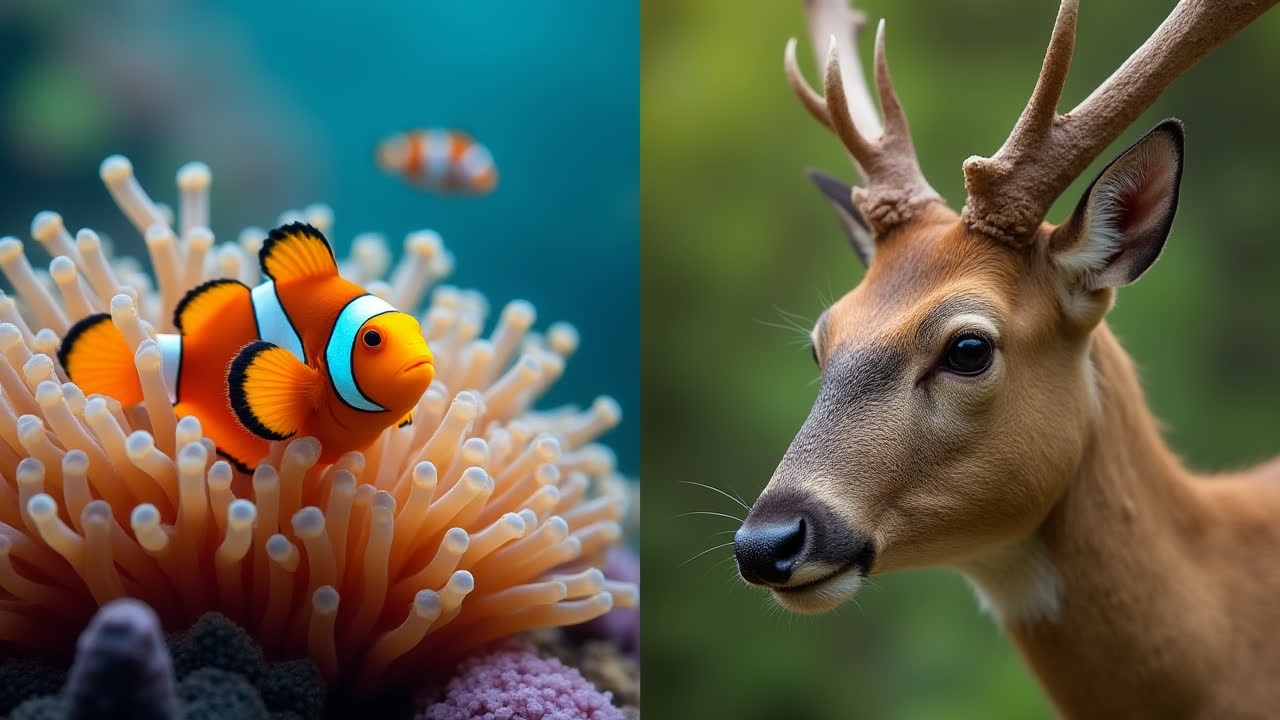
- Clownfish protecting sea anemones from predators while gaining shelter
- Oxpeckers eating ticks off large animals like zebras
- Nitrogen-fixing bacteria in legume roots providing essential nutrients
Parasitism: When One Partner Benefits at Another's Expense
Parasitism takes a darker turn in nature's playbook. Here, one organism thrives while the other suffers - talk about an unfair deal! The parasite relies entirely on its host for survival, but the host gains nothing in return except potential harm.
You know what's particularly interesting? Parasites often don't want to kill their hosts immediately. It's like having a landlord who doesn't want to destroy the apartment building - they need it to survive. This creates a delicate balance where parasites typically cause chronic problems rather than immediate death.
Parasites come in two main varieties:
- Endoparasites: Living inside the host (like tapeworms and roundworms)
- Ectoparasites: Living on the host's surface (like lice and mosquitoes)
Key Differences Between Mutualism and Parasitism
| Aspect | Mutualism | Parasitism |
|---|---|---|
| Benefit Distribution | Both partners benefit | Only parasite benefits |
| Dependency | Both partners need each other | Only parasite needs host |
| Relationship Outcome | Positive for both species | Harmful to host |
| Specificity Level | Less specific interactions | Highly specific relationships |
| Evolution Pattern | Co-evolution together | Parasite adapts to exploit host |
| Survival Impact | Increases survival for both | Decreases host's survival chances |
| Real-world Examples | Bees and flowers, Gut bacteria | Mosquitoes and humans, Tapeworms |
The Impact on Ecosystem Balance
These symbiotic relationships play crucial roles in maintaining ecological balance. Mutualistic partnerships often create stability, while parasitism can regulate population sizes. It's a complex dance where both types of relationships contribute to biodiversity.
Here's something I find remarkable: even parasitism has its place in nature's grand scheme. While it might seem purely negative, parasites can actually help control population explosions that might otherwise disrupt entire ecosystems. Nature has this way of creating balance through seemingly chaotic processes.
I've noticed that many people think of parasites as entirely "bad" and mutualism as entirely "good." But the reality is more nuanced. Some relationships can even shift between these categories depending on environmental conditions.
Real-world Implications: From Medicine to Agriculture
Understanding these relationships isn't just academic - it has practical applications. In medicine, we're learning to work with our mutualistic gut bacteria for better health. In agriculture, farmers use beneficial insects to protect crops from parasites. It's amazing how these biological insights translate into everyday solutions.
Have you ever wondered why some people seem to have stronger immune systems? Part of the answer might lie in their gut microbiome - a mutualistic community helping defend against harmful parasites. This represents one frontier where we're just beginning to understand the full implications.
Evolution and Adaptation in Symbiosis
The evolutionary journey of these relationships tells fascinating stories. Mutualistic pairs often evolve together, developing complementary features. Parasites, on the other hand, become master manipulators, sometimes even controlling their host's behavior to ensure their own survival.
Consider the bumblebee and the flower - they've practically shaped each other's evolution. The flower's color, scent, and structure evolved to attract the bee, while the bee developed specialized body parts for collecting nectar and pollen. It's like watching two friends grow together over millions of years.
I sometimes wonder about the transition points - how do these relationships form? There's evidence suggesting some parasitic relationships might have started as mutualistic ones. Environmental pressures can shift the balance, perhaps turning a helpful partner into a harmful one.
Frequently Asked Questions
Can a relationship be both mutualistic and parasitic?
Yes, some relationships can shift between mutualism and parasitism depending on environmental conditions. For example, certain fungi can be mutualistic with plants in normal conditions but become parasitic during stress or competition for resources.
How do parasites avoid killing their hosts immediately?
Parasites typically evolve to maintain their hosts alive to ensure their own survival. They often cause chronic problems rather than immediate death, allowing them to reproduce and spread to new hosts. This evolutionary strategy balances exploitation with host survival.
Are all symbiotic relationships either mutualistic or parasitic?
No, there's a third type called commensalism, where one organism benefits while the other is neither helped nor harmed. Examples include barnacles on whales or birds nesting in trees. The spectrum of symbiotic relationships is broader than just mutualism and parasitism.
Conclusion: Nature's Intricate Web of Relationships
The contrast between mutualism and parasitism perfectly illustrates nature's complexity. While mutualistic relationships showcase cooperation at its finest, parasitism reminds us that survival sometimes comes at others' expense. Both play essential roles in ecosystem dynamics.
Understanding these relationships helps us appreciate the delicate balance in nature. Whether it's the friendly partnership between a bee and flower or the challenging dynamic between a parasite and its host, each interaction contributes to the rich tapestry of life on Earth.
Perhaps the next time you see a bird pecking at insects on a large animal, you'll think about the mutualism at work. Or when you swat away a mosquito, you'll recognize the parasitic relationship it's trying to establish. Nature's web of relationships continues to amaze us with its complexity and ingenuity.