Osmosis vs Reverse Osmosis: Understanding Key Differences & Applications
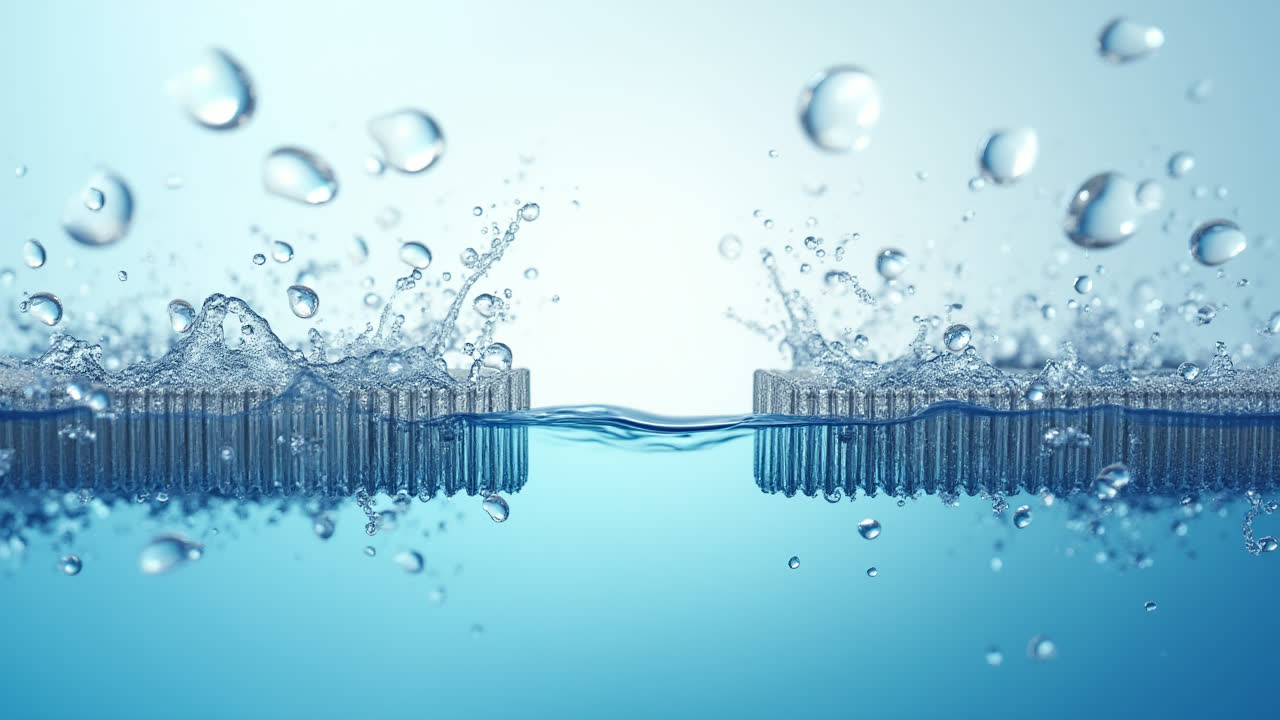
Have you ever wondered how water filters work or why plants can absorb water from soil? The answers lie in understanding osmosis and reverse osmosis – two fundamental processes that control water movement through semipermeable membranes. While they might sound similar, these processes actually work in opposite directions and serve very different purposes in both natural systems and modern technology.
From keeping your houseplants alive to purifying drinking water, these processes play essential roles in everyday life that most people never think about. I've spent years studying water purification systems, and I'm constantly amazed by how these simple scientific principles can solve such complex problems. Let's dive into the fascinating world of membrane science to understand what makes osmosis and reverse osmosis different, how they work, and why they matter.
What is Osmosis?
Osmosis is a natural physical phenomenon that occurs without any external energy input. It's defined as the movement of water molecules from an area of higher water concentration (lower solute concentration) to an area of lower water concentration (higher solute concentration) across a semipermeable membrane. This process continues until equilibrium is reached, where the concentration on both sides becomes equal.
Think about placing a raisin in water and watching it plump up – that's osmosis in action! The raisin contains a higher concentration of sugars and other solutes than the surrounding water. Water molecules naturally move through the raisin's skin (a semipermeable membrane) into the raisin to balance the concentration, causing it to swell.
Osmosis happens in two main types in cellular biology: endosmosis and exosmosis. Endosmosis occurs when cells are placed in a hypotonic solution (with higher water potential than the cell interior), causing water to flow into the cell. Sometimes this can lead to cells bursting if too much water enters. Conversely, exosmosis happens when cells are in a hypertonic solution (with lower water potential than inside the cell), resulting in water flowing out of the cell and causing it to shrink.
The direction of water flow in osmosis always follows the concentration gradient – moving from areas of high water concentration to areas of low water concentration. This principle is fundamental to countless biological processes and plays a crucial role in how living organisms maintain water balance.
Key Applications of Osmosis
In the natural world, osmosis isn't just a scientific curiosity – it's absolutely essential for life as we know it. Plants rely on osmosis for survival, using it to draw water from the soil through their root systems. The concentration of minerals and other solutes inside plant roots is typically higher than in the surrounding soil, creating the perfect conditions for water to naturally flow into the roots through osmosis.
Another fascinating application of osmosis occurs in plant leaves, where it controls the opening and closing of stomata – tiny pores that regulate gas exchange and water loss. When guard cells surrounding the stomata absorb water through osmosis, they swell and curve, opening the pore. When they lose water, they shrink and close the pore, helping plants conserve moisture during dry conditions.
In aquatic environments, osmosis determines whether organisms can survive in different water conditions. Freshwater fish constantly deal with water flowing into their bodies through osmosis (since their cells contain more solutes than the surrounding water). To prevent swelling, they produce dilute urine and absorb salts through their gills. Conversely, saltwater fish face the opposite problem – water tends to flow out of their bodies through osmosis because seawater contains more dissolved salts than their cells. They counter this by drinking seawater and excreting the excess salt.
Medical applications of osmosis include dialysis treatments for kidney failure patients, where a semipermeable membrane allows waste products to diffuse out of the bloodstream while retaining essential blood components. I've spoken with dialysis technicians who are continually impressed by how this simple principle of osmosis can effectively perform some of the crucial functions of a failing organ.
What is Reverse Osmosis?
Reverse osmosis (RO) is essentially osmosis in reverse – hence the name. Unlike natural osmosis, reverse osmosis requires external pressure to overcome the natural osmotic pressure and force water to flow in the opposite direction of its natural tendency. In reverse osmosis, water molecules are pushed from an area of higher solute concentration (lower water concentration) to an area of lower solute concentration (higher water concentration).
This process works because pressure is applied to the side with the concentrated solution, forcing water molecules through the semipermeable membrane while leaving most solutes behind. The membrane has extremely tiny pores that allow water molecules to pass through but block larger molecules like dissolved salts, organic compounds, bacteria, and other contaminants.
Reverse osmosis is an artificial process that doesn't occur spontaneously in nature – it always requires energy input in the form of pressure. The amount of pressure needed depends on the concentration difference across the membrane and the specific characteristics of the solutes involved. For seawater desalination, for example, pressures of 800-1,000 pounds per square inch (psi) are typically required to overcome the natural osmotic pressure.
The technology behind reverse osmosis has advanced significantly in recent decades. Modern RO membranes are typically made from thin-film composite materials that combine durability with exceptional filtration capabilities. These technological improvements have made reverse osmosis systems more efficient, reducing the energy requirements while improving water quality and recovery rates.
Key Applications of Reverse Osmosis
The most widespread application of reverse osmosis is in water purification and desalination. RO systems can remove up to 99% of dissolved salts, particles, colloids, organics, bacteria, and pyrogens from water, making them extremely effective for producing clean drinking water. I've visited desalination plants where massive reverse osmosis systems transform seawater into freshwater, providing crucial water supplies to communities in water-scarce regions.
On a smaller scale, many homes use reverse osmosis systems for drinking water purification. These under-sink or countertop units filter tap water to remove contaminants like lead, chlorine, fluoride, nitrates, and various microscopic organisms. The result is cleaner, better-tasting water without the environmental impact of bottled water. My own home RO system has been running for years, consistently providing high-quality drinking water with minimal maintenance.
In the food and beverage industry, reverse osmosis plays a vital role in concentration processes. For example, fruit juice producers use RO to remove water from juice without applying heat, which helps preserve flavors that might otherwise be damaged during traditional evaporation processes. Similarly, maple syrup producers sometimes use RO to remove water from sap before boiling, reducing energy costs and production time significantly.
Pharmaceutical companies rely on reverse osmosis for producing ultrapure water used in medication manufacturing. The medical field also uses RO water for laboratory testing, equipment sterilization, and other applications requiring water free from contaminants that might interfere with procedures or results.
Interestingly, reverse osmosis also appears in nature, though rarely and through different mechanisms than artificial RO systems. Some bacteria causing cholera produce toxins that essentially reverse the normal flow of water in intestinal cells, creating severe diarrhea that can lead to fatal dehydration if untreated. This is one example of how understanding these water movement processes can help us better comprehend and treat diseases.
Comparing Osmosis and Reverse Osmosis
| Characteristic | Osmosis | Reverse Osmosis |
|---|---|---|
| Direction of flow | From lower solute concentration to higher solute concentration | From higher solute concentration to lower solute concentration |
| Energy requirement | Occurs naturally without external energy | Requires external pressure/energy |
| Type of process | Natural physical phenomenon | Artificial engineered process |
| Primary applications | Plant water uptake, cell hydration, biological processes | Water purification, desalination, concentration processes |
| Membrane type | Typically biological membranes (cell membranes) | Synthetic polymer membranes (thin-film composite) |
| Concentration gradient | Follows concentration gradient | Works against concentration gradient |
| Rate of process | Relatively slow in most natural settings | Can be rapid depending on applied pressure |
| End result | Equilibrium of concentrations | Separation of water from solutes |
Frequently Asked Questions
Why is reverse osmosis considered more effective than regular filtration for water purification?
Reverse osmosis is more effective than conventional filtration methods because it operates at the molecular level. While standard filters typically remove particles down to about 1 micron in size, RO membranes can filter contaminants as small as 0.0001 micron – effectively removing dissolved salts, heavy metals, and even some viruses that would pass through regular filters. Additionally, RO systems don't just trap contaminants (which can eventually lead to saturation and decreased effectiveness) – they actively separate water from contaminants and flush the concentrated waste away, maintaining consistent purification levels over time.
Does reverse osmosis remove beneficial minerals from drinking water?
Yes, reverse osmosis does remove most minerals from water, including beneficial ones like calcium and magnesium. This is because the RO membrane doesn't distinguish between harmful and beneficial dissolved substances – it removes nearly all of them. However, many modern RO systems include remineralization stages that add back beneficial minerals in controlled amounts. It's worth noting that drinking water typically provides only a small percentage of our daily mineral requirements anyway, with most coming from the foods we eat. If mineral content in drinking water is a concern, consider systems with remineralization features or add a small pinch of mineral-rich salt to your RO water.
How does temperature affect osmosis and reverse osmosis processes?
Temperature significantly impacts both osmosis and reverse osmosis by altering water molecule kinetic energy and membrane permeability. In natural osmosis, higher temperatures increase the rate of water movement because water molecules have more kinetic energy to pass through the semipermeable membrane. For reverse osmosis systems, warmer water typically results in higher water production rates but potentially lower rejection of contaminants. This is why industrial RO systems often carefully control water temperature – usually maintaining it between 20-25°C (68-77°F) for optimal balance between efficiency and effectiveness. Extremely cold water requires more pressure to process through RO membranes, while very hot water can damage the membranes and reduce their lifespan.
Conclusion
Understanding the differences between osmosis and reverse osmosis helps us appreciate both the elegant simplicity of nature's water management systems and the ingenious ways humans have adapted these principles for technological advancement. While osmosis moves water along its natural gradient without external energy, reverse osmosis harnesses pressure to force water against its natural flow direction, enabling us to purify water in ways that would otherwise be impossible.
The applications of these processes extend far beyond science classrooms, touching everything from agriculture and medicine to drinking water production and industrial manufacturing. As water scarcity becomes an increasingly pressing global issue, technologies based on reverse osmosis will likely play an even more crucial role in providing clean water to communities worldwide.
Next time you take a sip of filtered water or water your plants, take a moment to appreciate the remarkable molecular dance happening at the microscopic level – it's these fundamental processes of osmosis and reverse osmosis that make so much of our daily life possible.