Piezoelectric vs Pyroelectric vs Ferroelectric: Key Material Differences
Understanding Piezoelectric, Pyroelectric, and Ferroelectric Materials: What Sets Them Apart?
You've probably heard about electronic materials that respond to pressure, temperature changes, and electric fields. But did you know that piezoelectric, pyroelectric, and ferroelectric materials each have their own unique way of generating electrical charges? Let's dive into what makes these fascinating materials tick and why they're so important in modern technology.
Whether you're working with ultrasound equipment, motion sensors, or non-volatile memory, understanding these materials can open up a world of possibilities. I've spent years working with these materials, and I still find them remarkable in their simplicity and versatility.
Breaking Down Piezoelectric Materials
Piezoelectricity is perhaps the most well-known of the three properties. Have you ever wondered how those tiny crystals in your grandmother's old watch kept perfect time? That's piezoelectricity at work! These materials generate an electric charge when you apply mechanical stress to them, and conversely, they deform when an electric field is applied.
The coolest part is how it works at the atomic level. Picture a crystal structure without a center of symmetry - when you squeeze or stretch it, the positive and negative charges actually separate, creating an electric potential difference. It's like nature's own power generator on a microscopic scale.
And get this - piezoelectric materials aren't just limited to crystals. You'll find them in ceramics, polymers, and even some composites. The versatility is mind-boggling when you think about it, which probably explains why we see them in everything from ultrasound machines to the printer sitting on your desk.
Unveiling Pyroelectric Properties
Now, pyroelectric materials are the temperature-sensitive cousins in this family. Unlike their mechanical stress-loving relatives, these materials generate electric charges when their temperature changes. I remember testing these in the lab and being amazed at how sensitive they were to even the slightest temperature fluctuation.
What's unique about pyroelectricity is its temporary nature. The charge only appears during temperature changes - once the temperature stabilizes, the effect disappears. Think of it as a thermal detective that only reports activity when conditions are changing, which makes it perfect for applications like motion sensors.
You've probably encountered pyroelectric materials more often than you realize. Those security lights that turn on when you walk by? That's pyroelectric sensors detecting your body heat. Pretty neat, right?
Exploring Ferroelectric Wonders
Ferroelectric materials are the memory masters of the group. They possess spontaneous polarization - meaning they have a built-in electric dipole moment even without an external field. What sets them apart is their ability to remember: when you apply an electric field, they can flip their polarization and maintain it even after the field is removed.
The crystal structure of ferroelectric materials is fascinating. Inside these crystals, charged ions can shift positions when influenced by an electric field, creating that reversible polarization effect. It's like having tiny magnetic compasses that you can reorient and they'll stay that way.
Have you ever wondered how non-volatile memory works? Many advanced memory technologies rely on ferroelectric materials because they can retain information without continuous power. It's this "memory effect" that makes them incredibly valuable in our digital world.
Comparing the Three Material Types
| Property | Piezoelectric | Pyroelectric | Ferroelectric |
|---|---|---|---|
| Charge Generation Mechanism | Mechanical stress/pressure | Temperature changes | External electric field |
| Polarization Nature | Temporary, stress-induced | Temporary, temperature-dependent | Spontaneous and reversible |
| Memory Effect | No permanent memory | No permanent memory | Retains polarization state |
| Primary Stimulus | Mechanical force | Thermal changes | Electric field application |
| Common Applications | Sensors, actuators, ultrasound | Motion detectors, thermal imaging | Memory devices, capacitors |
| Reversibility | Direct and reverse effect | One-directional response | Bi-directional switching |
| Material Examples | Quartz, PZT, PVDF | LiTaO3, TGS, ZnO | BaTiO3, PZT, SrBi2Ta2O9 |
| Energy Conversion | Mechanical ↔ Electrical | Thermal → Electrical | Electrical → Polarization |
Real-World Applications That Will Surprise You
The applications of these materials are everywhere, and some might surprise you. Piezoelectric materials are the unsung heroes in acoustic guitars, converting string vibrations into electrical signals. They're also crucial in those inkjet printers that somehow manage to drop tiny droplets with incredible precision.
Pyroelectric materials have found their way into some unexpected places. Beyond the obvious motion sensors, they're used in thermal imaging cameras that help firefighters see through smoke. I once saw thermal imaging used to detect heat leaks in buildings - now that's practical!
Ferroelectric materials are pushing the boundaries of what's possible in electronics. The latest ferroelectric RAM technologies might soon change how we think about computer memory. Imagine instant-on devices that don't lose data even when the power goes out. It's not science fiction anymore.
The Future of Smart Materials
As we move toward more sustainable and efficient technologies, these materials are becoming increasingly important. Piezoelectric energy harvesting could power small devices using ambient vibrations, reducing our reliance on batteries. I've seen prototypes that harvest energy from walking, car traffic, and even ocean waves.
The future might bring materials that combine these properties in novel ways. Imagine sensors that respond to pressure, temperature, and electric fields simultaneously. Such multifunctional materials could revolutionize fields from healthcare to renewable energy.
What's really exciting is the ongoing research into making these materials more efficient and environmentally friendly. Lead-free piezoelectric ceramics are becoming more viable, addressing environmental concerns while maintaining performance.
Practical Considerations for Working with These Materials
If you're planning to work with any of these materials, there are some important considerations to keep in mind. Material selection depends heavily on your specific application requirements. For example, piezoelectric materials vary greatly in their sensitivity and coupling coefficients.
Temperature stability is crucial for pyroelectric applications. Some materials perform better in specific temperature ranges, and understanding these limits can save you from costly mistakes. Trust me, I've learned this the hard way!
For ferroelectric materials, fatigue becomes a concern with repeated switching cycles. Not all materials can handle millions of polarization reversals without degrading. It's like asking a light switch to work perfectly for decades - some are better built for it than others.
Looking Ahead
The field of smart materials continues to evolve, and the line between these three categories is sometimes blurring. Some materials exhibit multiple properties, creating opportunities for innovative applications. It's an exciting time to be involved in materials science.
Whether you're an engineer, researcher, or simply curious about how things work, understanding these materials opens up new perspectives on the technology around us. From the phone in your pocket to the medical equipment saving lives, these materials play a crucial role in our daily lives.
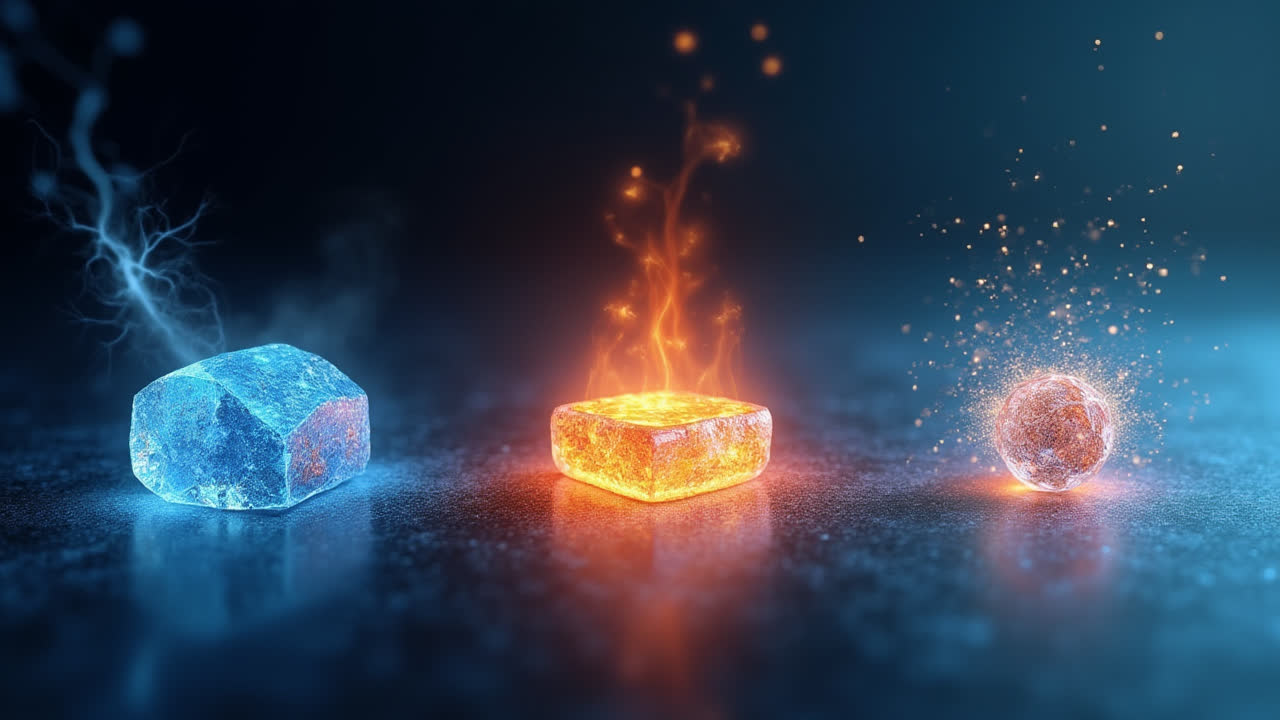
Remember, the key difference lies in how each material generates or responds to electrical charges. Piezoelectric materials respond to mechanical stress, pyroelectric materials to temperature changes, and ferroelectric materials to electric fields while maintaining polarization memory. Each has its unique superpowers, if you will, making them indispensable in specific applications.
Frequently Asked Questions
Are all piezoelectric materials also pyroelectric?
No, not all piezoelectric materials are pyroelectric. While there's some overlap - all pyroelectric materials are piezoelectric - the reverse isn't true. Piezoelectric materials require a specific crystal structure without a center of symmetry, while pyroelectric materials need additional characteristics to respond to temperature changes.
Which material type is best for energy harvesting applications?
Piezoelectric materials are generally best for energy harvesting from mechanical sources like vibrations, footsteps, or wind. For thermal energy harvesting, pyroelectric materials can be more effective. The choice depends on your energy source and the efficiency requirements of your application.
How long can ferroelectric materials retain their polarization?
Ferroelectric materials can retain their polarization state for extended periods, ranging from seconds to years, depending on the material and environmental conditions. Many modern ferroelectric memories have retention times measured in decades at room temperature, making them suitable for non-volatile data storage applications.
References:
- https://en.wikipedia.org/wiki/Piezoelectricity
- https://en.wikipedia.org/wiki/Pyroelectricity
- https://commons.wikimedia.org/w/index.php?curid=126917008
- https://commons.wikimedia.org/w/index.php?curid=68386898
- https://commons.wikimedia.org/w/index.php?curid=107227497
- https://www.cypress.com/file/46186/download