Scavenger vs Decomposer: Key Differences Explained
Scavenger vs Decomposer: Understanding Nature's Recyclers
Have you ever wondered what happens to dead plants and animals in nature? The answer lies with two fascinating groups of organisms: scavengers and decomposers. These natural recyclers play an absolutely crucial role in maintaining healthy ecosystems by breaking down dead organic matter. While both groups contribute to nutrient cycling, they operate in distinctly different ways.
Let me share something that blew my mind when I first learned about it - without these organisms, our world would be buried under mountains of dead matter! The ecosystem depends heavily on these nature's cleanup crew to keep things running smoothly. The primary difference between these two groups is how they approach their role in breaking down dead material.
In this comprehensive guide, we'll explore the fascinating world of scavengers and decomposers, examining their unique characteristics, roles, and the important differences between them. Whether you're a nature enthusiast, student, or just curious about how nature works, this article will provide you with everything you need to know about these essential ecosystem players.
What are Scavengers? Nature's First Responders
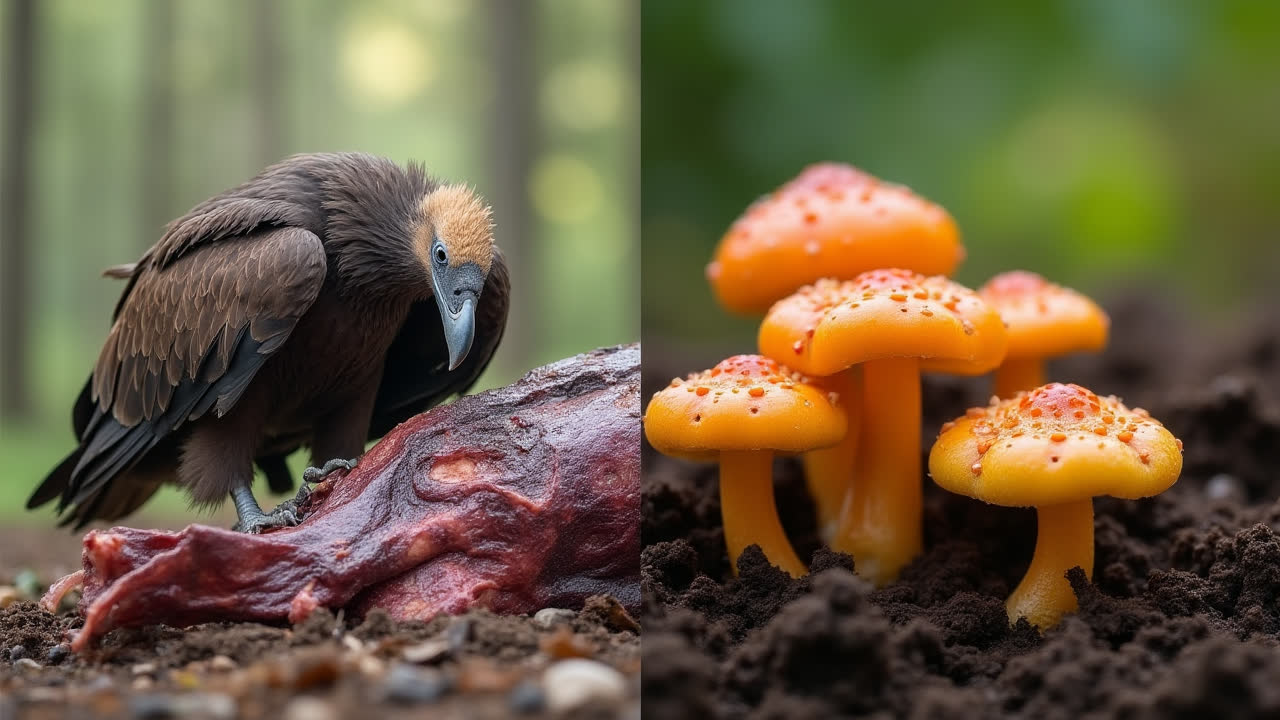
Scavengers are rather like nature's first responders, arriving at the scene to handle dead organisms before they become a health hazard. These animals primarily feed on dead plants, animals, or carrion, playing a critical role in preventing disease spread and maintaining ecosystem cleanliness. I've always found it fascinating how scavengers can detect carrion from miles away!
Most scavengers are carnivores that specialize in consuming dead animals. However, it's important to understand that scavengers don't hunt and kill their prey - they wait for other circumstances to provide their meals. This patient approach to feeding makes them unique among carnivores. Some of the most recognizable scavengers include vultures, hyenas, and crows, though many people don't realize that certain insects and crustaceans also fall into this category.
The term detritivores is often used interchangeably with scavengers, highlighting their role in consuming detritus or waste materials. Scavengers occupy the third trophic level in food webs, positioned between primary consumers and top predators. Their efficiency in locating and consuming dead matter is truly remarkable - some vultures can spot a carcass from several miles away!
Let's look at some specific examples of scavengers across different animal groups. Birds like vultures and crows are perhaps the most visible scavengers in many ecosystems. Mammals such as hyenas, coyotes, and even polar bears regularly scavenge for food. In aquatic environments, crabs play a crucial role as scavengers, consuming dead fish and other marine organisms. Even tiny insects like dung beetles, flesh flies, and certain ant species serve as nature's cleanup crew.
Understanding Decomposers: The Molecular Recyclers
While scavengers handle the visible breakdown of dead matter, decomposers work at a microscopic level, completing the recycling process. These organisms - primarily fungi, bacteria, and certain invertebrates - break down organic material into its basic molecular components. The biological term for decomposers is saprotrophs, which literally means "feeding on death."
What makes decomposers particularly special is their ability to release nutrients directly back into the ecosystem. They're like nature's chemical engineers, converting complex organic compounds into simpler forms that plants can absorb and use. Without decomposers, the nutrient cycle would grind to a halt, and life as we know it couldn't exist.
Fungi are perhaps the most visible decomposers, often appearing as mushrooms or mold on decaying wood and other organic matter. These remarkable organisms secrete digestive enzymes that break down complex molecules extracellularly - essentially digesting their food outside their bodies before absorbing the nutrients. I remember being amazed when I first learned that the largest living organism on Earth is actually a fungus!
Soil bacteria represent another crucial group of decomposers. These microscopic organisms are involved in numerous nutrient cycles, including the nitrogen, carbon, and phosphorus cycles. They work tirelessly to convert organic matter into forms that plants can utilize. Earthworms, while sometimes considered scavengers, also function as decomposers by consuming soil and organic matter, producing nutrient-rich castings that enhance soil fertility.
The Key Differences Between Scavengers and Decomposers
Now that we've explored both groups individually, let's examine the fundamental differences between scavengers and decomposers. Understanding these distinctions helps us appreciate how nature has evolved different strategies for recycling organic matter.
The most significant difference lies in the scale of breakdown. Scavengers work at a macro level, consuming and breaking down large pieces of dead organic matter into smaller fragments. Decomposers, on the other hand, operate at a molecular level, breaking down these smaller pieces into basic nutrients. Think of it as a two-stage process: scavengers handle the rough work, while decomposers do the fine detail.
Another crucial distinction is in the types of organisms involved. Scavengers are primarily animals - birds, mammals, insects, and crustaceans that actively seek out and consume dead matter. Decomposers are mainly microorganisms like bacteria and fungi, along with some invertebrates like earthworms. This difference in organism types reflects their different approaches to nutrient recycling.
The materials they consume also differ significantly. Scavengers directly consume dead plants, animals, and carrion. Decomposers, however, work on the materials that scavengers leave behind - including the waste products of scavengers themselves! This sequential relationship ensures that nothing goes to waste in nature's recycling system.
| Characteristic | Scavengers | Decomposers |
|---|---|---|
| Definition | Animals that feed on dead plants, animals, or carrion | Organisms that break down organic material at molecular level |
| Alternative Names | Detritivores | Saprotrophs |
| Organism Types | Mainly animals (birds, mammals, insects) | Mainly microorganisms and invertebrates |
| Level of Breakdown | Large organic materials into small pieces | Small pieces into molecular components |
| What They Consume | Dead plants, animals, and carrion | Materials left by scavengers and small organic particles |
| Examples | Vultures, hyenas, crabs, dung beetles | Fungi, bacteria, earthworms |
| Size Scale | Macro level (visible to naked eye) | Micro level (mostly microscopic) |
| Role in Ecosystem | Initial breakdown of dead matter | Final decomposition and nutrient release |
The Ecological Importance of Both Groups
You might be wondering why we need both scavengers and decomposers - couldn't one group handle everything? The answer reveals the elegant efficiency of natural ecosystems. Both groups are absolutely essential, and their complementary roles ensure that nutrients are recycled effectively and efficiently.
Scavengers provide the crucial first step in breaking down large dead organisms. Without them, ecosystems would be littered with carcasses, creating health hazards and preventing nutrients from being recycled. Their rapid response to dead matter prevents disease spread and maintains ecosystem cleanliness. I've seen this firsthand in areas where scavenger populations have declined - the accumulation of dead matter becomes a serious problem!
Decomposers complete the recycling process by releasing nutrients back into the soil and water. These nutrients become available for plants, which form the foundation of most food chains. Without decomposers, nutrients would remain locked in dead organic matter, eventually depleting the ecosystem's resources. The work of decomposers ensures that life can continue in a sustainable cycle.
Together, scavengers and decomposers form nature's recycling system, ensuring that energy and nutrients flow continuously through ecosystems. This partnership has evolved over millions of years, creating an incredibly efficient system that supports all life on Earth. When either group is disrupted, the entire ecosystem can suffer significant consequences.
Real-World Examples and Applications
Understanding the roles of scavengers and decomposers isn't just academic - it has practical applications in various fields. In agriculture, farmers rely on decomposers to maintain soil fertility. The presence of earthworms in soil is often used as an indicator of soil health, while beneficial bacteria and fungi help crops access nutrients more effectively.
In wildlife conservation, protecting scavenger populations has become increasingly important. Vulture populations worldwide have declined dramatically due to poisoning and habitat loss, leading to increased disease risks in some regions. Conservation efforts now recognize the crucial ecological service these birds provide.
Composting is perhaps the most direct application of decomposer knowledge in everyday life. When we compost kitchen scraps and yard waste, we're essentially creating ideal conditions for decomposers to work their magic. The resulting compost enriches garden soil with nutrients, demonstrating the practical value of understanding these natural processes.
Even in urban environments, scavengers and decomposers play important roles. City pigeons, rats, and insects act as scavengers, while countless microorganisms break down organic waste in parks, gardens, and even in the cracks of sidewalks. These urban recyclers help maintain some semblance of natural nutrient cycling even in heavily developed areas.
Threats and Conservation Concerns
Both scavengers and decomposers face numerous threats in the modern world. Habitat loss, pollution, and climate change affect these organisms just as they do more charismatic species. The decline of scavenger populations can have cascading effects throughout ecosystems, disrupting the natural recycling process.
Chemical pollution poses a particular threat to decomposers. Pesticides, herbicides, and other agricultural chemicals can kill beneficial soil bacteria and fungi, reducing soil fertility and disrupting nutrient cycles. This creates a vicious cycle where farmers must use more fertilizers to compensate for the loss of natural decomposition processes.
Climate change affects both groups by altering temperature and moisture patterns that these organisms depend on. Decomposition rates change with temperature, potentially disrupting the balance between carbon storage and release in ecosystems. Some scavenger species may struggle to adapt to rapidly changing environmental conditions.
Conservation efforts must consider the roles of these often-overlooked organisms. Protecting scavenger habitats, reducing chemical pollution, and maintaining healthy soil ecosystems are all crucial for preserving the natural recycling systems that support all life on Earth.
Teaching About Scavengers and Decomposers
For educators and parents, teaching about scavengers and decomposers offers excellent opportunities to demonstrate ecological concepts. Simple experiments like observing leaf litter decomposition or creating worm bins can help students understand these processes firsthand.
Field trips to local parks or nature reserves can reveal scavengers and decomposers in action. Look for fungi growing on fallen logs, observe insects breaking down dead plant matter, or watch birds scavenging for food. These real-world observations make abstract concepts concrete and memorable.
Creating classroom compost bins allows students to witness decomposition up close. They can observe how different materials break down at different rates and learn about the conditions that decomposers need to thrive. This hands-on approach makes learning about nutrient cycling engaging and relevant.
Digital resources, including time-lapse videos of decomposition and interactive simulations of nutrient cycles, can supplement hands-on activities. These tools help visualize processes that normally occur too slowly or at too small a scale for direct observation.
The Future of Decomposition Research
Scientific research continues to reveal new insights about scavengers and decomposers. Recent studies have discovered previously unknown species of decomposer bacteria and fungi, some with potential applications in biotechnology and waste management.
Researchers are exploring how decomposer communities might be manipulated to address environmental challenges. For example, certain fungi show promise in breaking down plastic waste, while specific bacterial communities could help remediate contaminated soils.
Climate change research increasingly focuses on how altered decomposition rates might affect global carbon cycles. Understanding these processes is crucial for predicting future climate scenarios and developing mitigation strategies.
The field of synthetic biology is beginning to explore how engineered microorganisms might enhance natural decomposition processes. While controversial, these approaches could offer solutions for managing organic waste in challenging environments like space stations or extreme climates.
Frequently Asked Questions
Can an organism be both a scavenger and a decomposer?
Yes, some organisms can function as both scavengers and decomposers. Earthworms are a perfect example - they consume dead plant material (acting as scavengers) and also break down organic matter in soil through their digestive processes (acting as decomposers). Their dual role makes them particularly important in ecosystem nutrient cycling.
What would happen if all decomposers disappeared?
If all decomposers disappeared, the consequences would be catastrophic. Dead organic matter would accumulate indefinitely, nutrients would remain locked away and unavailable to plants, and eventually, all ecosystems would collapse. The buildup of dead material would create massive health hazards, and the carbon cycle would be severely disrupted, potentially affecting global climate patterns.
Why don't scavengers get sick from eating dead animals?
Scavengers have evolved remarkable adaptations to safely consume carrion. Vultures, for instance, have extremely acidic stomach acid that kills most bacteria and viruses. Their immune systems are also specially adapted to handle pathogens commonly found in decaying matter. These evolutionary adaptations allow them to perform their ecological role without succumbing to disease.
Conclusion: The Vital Partnership
The relationship between scavengers and decomposers represents one of nature's most essential partnerships. While scavengers break down large organic matter into manageable pieces, decomposers complete the process by releasing nutrients back into the ecosystem. This two-stage system ensures efficient recycling of organic matter and maintains the flow of energy through food webs.
Understanding these organisms helps us appreciate the complexity and efficiency of natural ecosystems. It also highlights the importance of protecting all species, not just the charismatic ones. Every organism, from the majestic vulture to the microscopic bacterium, plays a crucial role in maintaining the balance of life on Earth.
As we face environmental challenges like climate change and habitat loss, recognizing the importance of scavengers and decomposers becomes even more critical. These nature's recyclers remind us that in ecosystems, nothing is truly waste - everything is part of a continuous cycle of life, death, and renewal. By protecting and understanding these organisms, we help ensure the health and sustainability of our planet's ecosystems for generations to come.