Facebook
Pin
Email
(📅 Update Date: Feb 23, 2026)
Scent Booster vs Fabric Softener: The Ultimate Laundry Companion Guide
Ever stood in the laundry aisle, bewildered by the array of laundry enhancers? You're not alone. The battle between scent boosters and fabric softeners confuses even the most seasoned laundry veterans. But here's the real deal – these two laundry aids serve distinctly different purposes, and understanding this difference can revolutionize your washing experience.
I'll be honest with you – I once added both products to a single wash thinking I'd get the ultimate laundry experience. The result? An overly scented mess that needed a second rinse cycle. Let's explore what makes these products unique and how to use them effectively.
What Are Scent Boosters and How Do They Work?
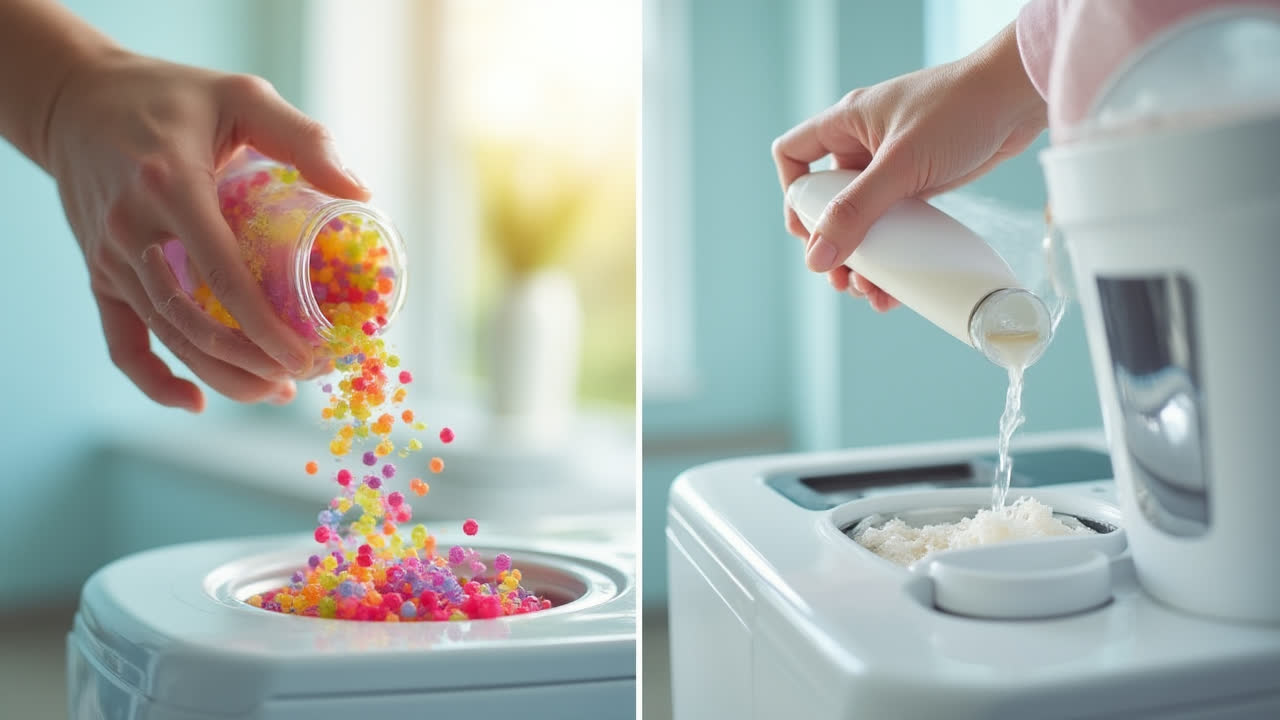
Picture this: you've just washed your favorite sweater, and it already smells fresh. But you want that amazing fragrance to last longer than just the first wear. That's where scent boosters come in. These tiny beads or pellets are essentially fragrance powerhouses designed to elevate your laundry game.
The technology behind scent boosters is pretty fascinating. They're formulated with time-release technology that allows the fragrance molecules to linger on fabric fibers for weeks. Most contain polyethylene glycol (PEG) 8000, which acts as a carrier agent for the fragrance. When you toss them in the washing machine, they dissolve slowly, releasing their scent throughout the wash cycle.
Here's the catch though – while they make your clothes smell amazing, they don't actually clean or soften them. It's like putting perfume on top of regular deodorant; it's an additional layer of fragrance, not a replacement for your main products.
Understanding Fabric Softeners: More Than Just Scent
Now, fabric softeners are the multi-taskers of the laundry world. Unlike their scent-focused cousins, these products actually change the texture of your clothes. They contain lubricating ingredients that coat fiber surfaces, making them feel smoother and softer to the touch.
Think about towels that start off fluffy but become stiff and scratchy after multiple washes. That's because machine washing causes fabric fibers to become frayed and hardened, especially with natural materials like cotton and wool. Fabric softeners combat this mechanical stress by creating a protective layer on your fabrics.
You can use fabric softener in three main forms: liquid (added during the rinse cycle), powder (mixed with detergent), or dryer sheets (added to the dryer). Each has its own pros and cons, but they all work on the same basic principle – reducing static, preventing wrinkles, and softening fabrics.
But here's something interesting I've noticed: not all fabric softeners have strong scents. Some focus purely on the softening aspect while leaving a subtle or no fragrance. It's worth reading labels carefully to find the right balance for your preferences.
Key Differences Between Scent Boosters and Fabric Softeners
| Feature |
Scent Booster |
Fabric Softener |
| Primary Function |
Enhance scent only |
Soften fabrics and reduce static |
| Physical Form |
Beads or pellets |
Liquid, powder, or dryer sheets |
| When to Add |
Beginning with detergent |
Final rinse cycle or dryer |
| Effect on Fabric Texture |
None |
Significantly softens |
| Static Reduction |
None |
Reduces static cling |
| Wrinkle Prevention |
None |
Helps prevent wrinkles |
| Scent Duration |
Long-lasting (weeks) |
Usually moderate |
| Price Point |
Generally higher |
Generally lower |
When to Use Each Product
Honestly, choosing between these products isn't always an either/or situation. Many people use both, and I've found that strategy pretty effective. Let me break down the best scenarios for each:
Use scent boosters when:
- You want clothes that smell amazing for extended periods
- Your regular detergent doesn't leave enough fragrance
- You're washing items stored in wardrobes for long periods
- You're preparing clothes for special occasions
Use fabric softeners when:
- You're dealing with static-prone fabrics like synthetics
- Your towels and bedding feel rough or scratchy
- You want to minimize ironing time and effort
- You're washing delicate fabrics that need extra care
I've learned through trial and error that using both can be tricky. The key is moderation – don't go overboard with either product. I usually use a full dose of fabric softener but only half the recommended amount of scent booster to avoid overwhelming my senses or, worse, irritating my skin.
Here's a personal tip I swear by: for athletic wear and workout clothes, skip both products. They can interfere with moisture-wicking properties and cause odor retention. Trust me on this – your gym clothes will thank you.
Cost Considerations and Value for Money
Let's talk dollars and sense here. Scent boosters typically cost more than fabric softeners, especially when you consider cost per load. A single bottle of scent booster might run you $8-15, while fabric softener usually ranges from $5-10 for similar usage periods.
But is it worth the extra money? That depends on your priorities. If you value long-lasting fragrance above all else, scent boosters might justify their higher price tag. However, if you're more concerned with fabric care and softness, sticking to fabric softener gives you more practical benefits for less money.
I've found store brands work surprisingly well for both products. They might not have the same marketing buzz, but many contain similar ingredients at half the price. It's worth experimenting to find what works for your budget and laundry needs.
Common Mistakes to Avoid
After years of doing laundry (and making my fair share of mistakes), here are some pitfalls to watch out for:
First, don't overuse these products. More isn't always better. Too much scent booster can actually leave residue on your machine, while excessive fabric softener can build up on fabrics and reduce their absorbency.
Second, avoid using fabric softener on certain fabrics like microfiber, athletic wear, and flame-resistant materials. It can compromise their special properties. Similarly, be cautious with scent boosters if anyone in your household has sensitive skin or allergies.
Lastly, never use fabric softener with towels every wash. While it makes them feel softer initially, it can reduce their absorbency over time. I learned this the hard way when my favorite bath towels started repelling water rather than absorbing it!
FAQ Section
Frequently Asked Questions
Can I use scent boosters and fabric softeners together?
Yes, you can use both products together, but with caution. Use reduced amounts of each to avoid overwhelming fragrances or product buildup. Many people find success using a full dose of fabric softener with half the recommended amount of scent booster.
Are scent boosters safe for all washing machines?
Scent boosters are generally safe for all washing machines, including high-efficiency (HE) models. However, check the manufacturer's instructions and avoid using excessive amounts to prevent residue buildup in your machine.
How long does the scent from boosters typically last?
The scent from boosters can last anywhere from 2-12 weeks, depending on the brand, storage conditions, and how frequently you wear the garments. Items stored in closed wardrobes tend to retain the scent longer than frequently worn pieces.