Transitive vs Intransitive Verbs: The Complete Guide to Verb Types
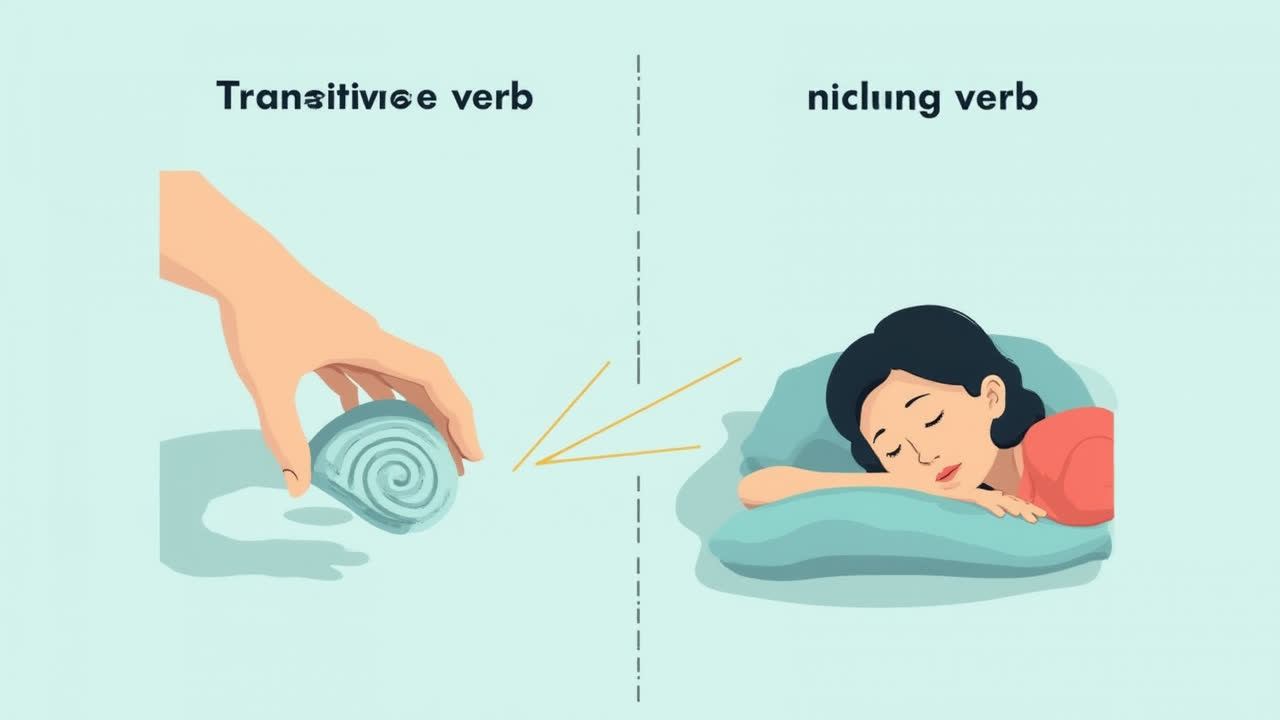
Understanding the difference between transitive and intransitive verbs is essential for mastering English grammar. These two verb types form the foundation of sentence structure and directly influence how we construct meaningful sentences. Have you ever wondered why some verbs need an object while others stand perfectly fine on their own? That's where the distinction becomes crucial.
As someone who struggled with this concept during my own language learning journey, I can tell you that once you grasp this difference, your writing and speaking will immediately improve. I still remember my English teacher marking my essays with "incomplete sentence" when I failed to include an object with a transitive verb. It was frustrating until the concept finally clicked!
In this comprehensive guide, we'll explore everything you need to know about these fundamental verb types. We'll look at clear definitions, practical examples, and helpful techniques to distinguish between them. By the end, you'll confidently identify and use both verb classifications in your everyday communication.
What Are Transitive Verbs?
A transitive verb is an action verb that requires an object to receive the action and complete its meaning. Without this object, the sentence would feel incomplete, leaving the reader wondering "what?" or "whom?" after the verb. These verbs essentially transfer (or transit) their action to something or someone else, which explains their name.
Think of transitive verbs as "relationship verbs" — they need a partner (the object) to make complete sense. When I teach this concept to my students, I often use a simple hand gesture: cupping one hand (representing the verb) and placing an object into it with the other hand. This visual helps them remember that transitive verbs "hold" or "carry" their objects.
Examples of Transitive Verbs in Sentences:
- "She baked a delicious chocolate cake." (Cake is the object receiving the action of baking)
- "The company hired fifty new employees." (Employees is the object receiving the action of hiring)
- "My brother wrote an interesting novel." (Novel is the object receiving the action of writing)
- "They moved the heavy furniture." (Furniture is the object receiving the action of moving)
In each example above, if we removed the object, the sentence would feel unfinished. "She baked" leaves us wondering what was baked. "The company hired" makes us ask whom they hired. This incompleteness is the hallmark of transitive verbs — they need that object to fully express their meaning.
Some transitive verbs can take both a direct object and an indirect object, creating even more complex relationships within the sentence. The direct object receives the action directly, while the indirect object is affected by the action but doesn't receive it directly.
Examples with Direct and Indirect Objects:
- "She gave her sister (indirect object) a gift (direct object)."
- "Dad bought me (indirect object) a new laptop (direct object)."
- "The teacher assigned the students (indirect object) homework (direct object)."
What Are Intransitive Verbs?
An intransitive verb is an action verb that does not require an object to complete its meaning. Unlike their transitive counterparts, intransitive verbs express complete thoughts without needing to transfer their action to something else. The action begins and ends with the subject performing it.
I like to think of intransitive verbs as "independent verbs" — they're self-contained and don't need an object to support them. During my time teaching English in Japan, I noticed students often tried to force objects after every verb. Learning to recognize intransitive verbs helped them construct more natural-sounding sentences.
Examples of Intransitive Verbs in Sentences:
- "The baby sleeps peacefully." (No object needed; the action of sleeping is complete)
- "She arrived late to the meeting." (No object needed; the action of arriving is complete)
- "The audience laughed loudly." (No object needed; the action of laughing is complete)
- "Birds fly south for the winter." (No object needed; the action of flying is complete)
While intransitive verbs don't take objects, they can still be followed by adverbs, prepositional phrases, or other modifiers that provide additional information about how, when, where, or why the action occurred. However, these elements don't receive the action; they merely describe it in more detail.
Intransitive Verbs with Modifiers:
- "The children played in the garden." ("In the garden" is a prepositional phrase describing where, not an object)
- "He spoke with confidence." ("With confidence" describes how he spoke, not what he spoke)
- "The old man died peacefully in his sleep." (The modifiers describe the manner of dying)
Many verbs commonly associated with physical movements or states of being function as intransitive verbs. Verbs like run, sleep, sit, stand, arrive, appear, and exist typically don't need objects to complete their meaning, though some can be used transitively in different contexts.
The Dual Nature: Verbs That Can Be Both Transitive and Intransitive
Here's where things get interesting—and sometimes confusing! Many English verbs can function as either transitive or intransitive depending on how they're used in a sentence. This flexibility is part of what makes English so expressive but can also present challenges for learners.
I remember struggling with this concept myself when teaching advanced grammar to college students. One particularly bright student asked if there was a definitive list of transitive and intransitive verbs. Unfortunately, there isn't—context is everything. The same verb might be transitive in one sentence and intransitive in another.
Examples of Verbs That Can Be Both:
- Run:
Intransitive: "She runs every morning." (No object)
Transitive: "She runs a successful business." (Business is the object) - Eat:
Intransitive: "Let's eat before we leave." (No object)
Transitive: "She ate an apple." (Apple is the object) - Sing:
Intransitive: "Birds sing in the morning." (No object)
Transitive: "The choir sang a beautiful hymn." (Hymn is the object) - Read:
Intransitive: "I like to read before bed." (No object)
Transitive: "She read the entire novel in one day." (Novel is the object)
This dual nature of many verbs means that determining whether a verb is being used transitively or intransitively depends entirely on the context of the sentence. You need to ask: "Is the verb transferring its action to an object, or is the action complete without an object?"
Sometimes, when a verb can be used both ways, the meaning might shift slightly between its transitive and intransitive uses. The verb "grow," for example, means something different in "The plant grows" (intransitive) versus "The farmer grows tomatoes" (transitive). Being aware of these subtle shifts in meaning can help you use these versatile verbs more effectively.
Comprehensive Comparison: Transitive vs Intransitive Verbs
Let's compare these two verb types across multiple dimensions to deepen our understanding of their differences and practical implications. This comparison will help clarify how these verb types function in different grammatical contexts.
| Comparison Point | Transitive Verbs | Intransitive Verbs |
|---|---|---|
| Definition | Requires an object to complete meaning | Does not require an object to complete meaning |
| Basic Structure | Subject + Verb + Object | Subject + Verb |
| Question after verb | Answers "what?" or "whom?" | No "what?" or "whom?" question applies |
| Passive Voice | Can be converted to passive voice | Cannot be converted to passive voice |
| Direct/Indirect Objects | Can take direct and sometimes indirect objects | Takes no objects |
| Common Examples | Build, create, carry, hit, make, tell | Arrive, die, fall, happen, sit, sleep |
| Prepositional Phrases | May have them, but also requires objects | May have them instead of objects |
| Sentence Completeness | Incomplete without an object | Complete without an object |
This table highlights the fundamental differences between transitive and intransitive verbs. One particularly important distinction is the ability to form passive voice sentences. Since intransitive verbs don't take objects, they can't be reformed into passive constructions. If you can turn a sentence into passive voice, you know you're dealing with a transitive verb.
Why Understanding Verb Transitivity Matters
You might be wondering, "Why should I care about whether a verb is transitive or intransitive?" I asked myself the same question when I first encountered these terms. But I've since discovered that understanding verb transitivity is far more than just an academic exercise—it has real practical applications for effective communication.
First and foremost, recognizing whether a verb is transitive or intransitive helps prevent common grammatical errors. Have you ever written a sentence that somehow felt incomplete but you couldn't figure out why? Chances are, you used a transitive verb without providing the necessary object. Or perhaps you've inadvertently created an awkward sentence by forcing an object after an intransitive verb. Understanding transitivity helps you avoid these pitfalls.
For non-native English speakers, this distinction is particularly crucial because transitivity patterns often differ between languages. A verb that's transitive in English might be intransitive in Spanish, French, or Japanese, and vice versa. I've seen this confusion firsthand while teaching English abroad, where students would directly translate sentence structures from their native language, creating errors in English.
Beyond basic grammar, understanding transitivity also enhances your writing style. Thoughtful manipulation of transitive and intransitive verbs can add variety and rhythm to your prose. Intransitive verbs often create more direct, punchy statements, while transitive verbs can convey more complex relationships between subjects and objects.
Perhaps most importantly, mastering verb transitivity gives you better control over passive and active voice. Since only transitive verbs can form passive constructions, knowing which verbs are transitive allows you to make informed stylistic choices about when to use passive voice (sparingly, in most cases) and when to stick with active constructions.
Practical Tips for Identifying Transitive and Intransitive Verbs
Distinguishing between transitive and intransitive verbs becomes second nature with practice, but here are some practical techniques that can help you identify them more easily:
The "What?" Test
One of the simplest ways to identify a transitive verb is to ask "what?" or "whom?" after the verb. If the question makes sense and requires an answer to complete the thought, you're likely dealing with a transitive verb. If the question seems odd or unnecessary, the verb is probably intransitive.
For the sentence "She baked a cake," ask: "She baked what?" The answer is "a cake," indicating that "baked" is being used transitively.
For the sentence "The baby sleeps," asking "The baby sleeps what?" doesn't make sense, indicating that "sleeps" is intransitive.
The Passive Voice Test
Try reformulating the sentence in passive voice. If this is possible, the verb is transitive; if not, it's intransitive. This works because passive constructions require an object from the active sentence to become the subject of the passive sentence.
"She wrote a letter" can become "A letter was written by her." This transformation is possible, so "wrote" is transitive.
"They arrived late" cannot be meaningfully transformed into passive voice, indicating that "arrived" is intransitive.
The Removal Test
Try removing what you think might be the object. If the sentence still makes complete sense without it, the verb is probably being used intransitively. If the sentence becomes incomplete or changes meaning significantly, the verb is likely transitive in that context.
In "They built a house," removing "a house" leaves "They built," which feels incomplete. This suggests "built" is transitive.
In "The dog barked loudly," removing "loudly" leaves "The dog barked," which still makes complete sense. This confirms that "barked" is intransitive (and "loudly" is simply an adverb, not an object).
Remember that many verbs can function both ways, so always analyze the specific sentence context rather than trying to memorize lists of transitive or intransitive verbs. That said, becoming familiar with commonly used verbs in each category can be helpful as you develop your understanding.
Frequently Asked Questions About Transitive and Intransitive Verbs
Can a verb be both transitive and intransitive at the same time in one sentence?
No, a verb cannot be both transitive and intransitive simultaneously in a single usage. In each specific instance, a verb functions either transitively (with an object) or intransitively (without an object). However, many verbs in English can function in either way depending on the sentence construction. For example, in "She sings beautifully" the verb "sings" is intransitive, while in "She sings opera arias" the same verb "sings" is transitive because it takes "opera arias" as its direct object. The key is to analyze each specific usage rather than labeling the verb itself as inherently transitive or intransitive.
How do linking verbs like "be," "seem," and "become" fit into the transitive/intransitive classification?
Linking verbs like "be," "seem," "become," "appear," and "feel" don't fit neatly into either the transitive or intransitive category because they function differently from action verbs. Rather than showing action, linking verbs connect the subject to additional information about the subject (called a subject complement). Technically, most grammarians classify linking verbs as intransitive because they don't take direct objects. What follows a linking verb is either a predicate nominative (a noun or pronoun) or a predicate adjective that describes the subject, not an object receiving an action. In "She is a doctor," the noun "doctor" renames the subject rather than receiving an action from it.
How do phrasal verbs fit into the transitive/intransitive distinction?
Phrasal verbs (combinations of verbs and prepositions or adverbs that create a new meaning) can be either transitive or intransitive, following the same principles as simple verbs. Transitive phrasal verbs require an object, while intransitive phrasal verbs don't. For example, "give up" can be transitive in "She gave up her career" (where "her career" is the object) or intransitive in "Don't give up!" (where no object is required). Some phrasal verbs, like "look after," are always transitive and need an object to make sense. Others, like "get up," are typically intransitive. The key is to consider whether the phrasal verb as a whole unit requires an object to complete its meaning in the specific context.
Conclusion: Mastering Transitive and Intransitive Verbs
Understanding the difference between transitive and intransitive verbs is a fundamental aspect of mastering English grammar. The distinction might seem technical at first, but as we've explored throughout this article, it has practical implications for constructing clear, effective sentences.
Remember the core difference: transitive verbs transfer their action to an object, while intransitive verbs express complete actions without requiring objects. Many verbs can function both ways depending on context, so always analyze how a verb is being used in a specific sentence rather than trying to categorize the verb itself.
As you continue to develop your language skills, pay attention to verb transitivity in your reading and writing. Notice how skilled writers use transitive and intransitive verbs to create different effects. Practice identifying these patterns in everyday language, and you'll find that your understanding of sentence structure deepens significantly.
Do you have questions about transitive or intransitive verbs that weren't covered in this guide? The world of English grammar is vast and sometimes complex, but breaking it down into manageable concepts like verb transitivity makes it more accessible. With practice and attention, you'll soon be using these verb types confidently and correctly in your own communication.